Bell pepper Nutrition facts
Bell pepper, also known as sweet pepper, is one of the most commonly employed chili peppers in the Capsicum annuum family. Sweet peppers are fruit pods on the capsicum plant grown for their subtle hotness yet sweet, delicate peppery flavor they extend to the recipes. Botanically, it is a small perennial shrub in the nightshade or Solanaceae family, of the genus, Capsicum.
Scientific name: Capsicum annuum L.
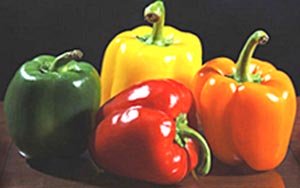 |
| Beautiful bell peppers. Note for bright color, blocky peppers with a smooth surface, and healthy green stem. Photo courtesy: DING52 |
Sweet peppers, unlike their fellow capsicum members, characteristically have a bell-shape, and crunchy, thick fleshy textured pods. In comparison with fellow chili-pepper members, bell (sweet) peppers feature dramatically far less pungency that ranges from zero to very minimal on the hotness scale. For the same reasons, they are treated much like any other day-to-day vegetables instead of spices in the cuisine.
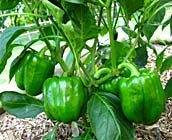 |
| Peppers in Capsicum annuum plant. Photo courtesy: OakleyOriginals |
Peppers are native to Mexico and other Central American regions, from where they spread to the rest of the world through the Spanish and Portuguese explorers during the 16th and 17th centuries. Today, they are grown widely in many parts of the world as an important commercial crop.
As in other chili pepper varieties, bell peppers also have several cultivar types. However, their plant type and fruit pod (bell shape and 3-5 lobed) are common hallmarks in almost all cultivars.
In structure, sweet pepper features blocky, cube-like outer flesh enveloping around many tiny, cream-colored, round, and flat seeds. The seeds are clinging to the central core (placenta).
For harvesting, peppers are handpicked at different stages of maturity depending on the preferences of local markets. All varieties of young, immature peppers feature green color pods, irrespective of their final destined color. As the fruit matures, it gradually acquires its true genetic color; orange, red, purple, yellow, and green.
The hotness of peppers is measured in Scoville heat units (SHU). On the Scoville scale, a sweet bell pepper scores 0, while a jalapeno pepper around 2,500-4,000, and a Mexican habanero- 200,000 to 500,000 units.
Health benefits of Bell pepper
Bell pepper contains an impressive list of plant nutrients that are found to have disease-preventing and health-promoting properties. Unlike other chili peppers, it has very few calories and fats. 100 grams provides just 31 calories.
Sweet (bell) pepper contains small levels of capsaicin, a health benefiting alkaloid compound. Early laboratory studies on experimental mammals suggest that capsaicin has anti-bacterial, anti-carcinogenic, analgesic, and anti-diabetic properties. When used judiciously, it is also found to reduce triglycerides and LDL cholesterol levels in obese individuals.
Fresh bell peppers, red or green, are a rich source of vitamin-C. This vitamin is particularly concentrated in red peppers at the highest levels. 100 g red pepper provides about 127.7 µg or about 213% of RDA of vitamin-C.
Vitamin C is a potent water-soluble antioxidant. Inside the human body, it is required for collagen synthesis. Collagen is the main structural protein in the body required for maintaining the integrity of blood vessels, skin, organs, and bones. Regular consumption of foods rich in this vitamin helps the human body protect from scurvy, develop resistance against infectious agents (boosts immunity), and scavenge harmful, pro-inflammatory free radicals from the body.
It also contains healthy levels of vitamin-A. 100 g of sweet pepper has 3,131 IU or 101% of vitamin A. Additionally, antioxidant flavonoids such as alpha and beta carotenes, lutein, zeaxanthin, and cryptoxanthin are also found in them. Together, these antioxidant substances in sweet peppers help protect the body from the injurious effects of free radicals generated during stress and disease conditions.
Bell pepper has adequate levels of essential minerals. Some of the main minerals in it are iron, copper, zinc, potassium, manganese, magnesium, and selenium. Manganese is used by the body as a co-factor for the antioxidant enzyme, superoxide dismutase. Selenium is an antioxidant trace element that acts as a co-factor for the enzyme, superoxide dismutase.
Further, capsicum (sweet pepper) is also good in the B-complex group of vitamins such as niacin, pyridoxine (vitamin B-6), riboflavin, and thiamin (vitamin B-1). These vitamins are essential in the sense that the body requires them from external sources to replenish. B-complex vitamins facilitate cellular metabolism through various enzymatic functions.
| Principle | Nutrient Value | Percent of RDA |
|---|---|---|
| Energy | 31 Kcal | 1.5% |
| Carbohydrates | 6.03 g | 4% |
| Protein | 0.99 g | 2% |
| Total Fat | 0.30 g | 1% |
| Cholesterol | 0 mg | 0% |
| Dietary Fiber | 2.1 g | 5.5% |
| Vitamins | ||
| Folates | 46 µg | 12% |
| Niacin | 0.979 mg | 6% |
| Pyridoxine | 0.291 mg | 22% |
| Riboflavin | 0.085 mg | 6.5% |
| Thiamin | 0.054 mg | 4.5% |
| Vitamin A | 3131 IU | 101% |
| Vitamin C | 127.7 mg | 213% |
| Vitamin E | 1.58 mg | 11% |
| Vitamin K | 4.9 µg | 4% |
| Electrolytes | ||
| Sodium | 4 mg | <1% |
| Potassium | 211 mg | 4.5% |
| Minerals | ||
| Calcium | 7 mg | 1% |
| Copper | 0.017 mg | 2% |
| Iron | 0.43 mg | 5% |
| Magnesium | 12 mg | 3% |
| Manganese | 0.112 mg | 5% |
| Phosphorus | 26 mg | 4% |
| Selenium | 0.1 µg | <1% |
| Zinc | 0.25 mg | 2% |
| Phyto-nutrients | ||
| Carotene-β | 1624 µg | -- |
| Carotene-α | 20 µg | -- |
| Cryptoxanthin-β | 490 µg | -- |
| Lutein-zeaxanthin | 51 µg | -- |
Selection and storage
Fresh bell peppers can be readily available in the markets year-round. Buy fresh harvest featuring firm, bright fruits that feel heavy for their size.
Avoid excessively soft, lusterless, pale green color peppers. Furthermore, avoid those with surface cuts/punctures, bruises, spots, and shriveled stems.
Once at home, they should be kept in the refrigerator in a plastic bag where they stay fresh for about 3-4 days. They may sustain chill injuries if stored for extended periods.
Preparation and serving methods
In general, fresh bell peppers are treated just like any other vegetables in the kitchen. Their firm, crunchy texture together with delicate sweet flavor makes them one of the most sought-after vegetables for cooking.
To prepare, wash bell peppers in cold running water. Cut the stem end and discard it. This way, you can see its inside structure. Remove seeds from the central core. Now you have a hollow "cup shape" pepper. Chop it using a paring knife into cubes, rings, or strips as in onions.
Although sweet peppers have the least capsaicin levels unlike other chili peppers, still they may inflict a burning sensation on hands and may cause irritation to mouth/nasal passages, eyes, and throat. Therefore, it may be advised for some sensitive individuals to use thin hand gloves and face masks while handling them.
Here are some serving tips:
 |
| Bell pepper salad and Pizza. |
Fresh, raw bell peppers are being used as vegetables in cuisine. They can be eaten raw in salads or cooked in stir-fries.
In many parts of South Asia, they mixed with other vegetables like potato (aloo-simla mirch), carrots, aubergine, green beans, etc., along with tomato, garlic, onion, mustard seeds, cumin, and other spices in various mouth-watering stir-fries (sabzi).
They can also be stuffed with rice, meat, cheddar cheese, dried fruits, nuts, etc., and, then cooked/roasted.
They can also be grilled and served with sauce, cheese, and olive oil or with dips.
-
Grilled peppers employed in delicious chickpeas (boiled garbanzo beans) salad with cucumber, tomatoes, scallions, pine nuts.
Finely chopped sweet peppers can be used in Chinese-style vegetable stir-fries and noodles.
Sweet peppers are one of the popular ingredients in Italian pizza and pasta.
Safety profile
The pungency level in bell peppers is almost 0-Scoville heat units (SHU). However, the seeds and central core may carry some amount of capsaicin, which when eaten may cause severe irritation and hot sensation in the mouth, tongue, and throat.
Note some of these points while handling capsicum annuum members in general:
Capsaicin in chilies, especially cayenne peppers, initially elicit inflammation when it comes in contact with the mucosa of the oral cavity, throat, and stomach, and soon produces a severe burning sensation that is perceived as hot through free nerve endings in the mucosa. Eating cold yogurt may help reduce this burning pain by diluting capsaicin concentration, and preventing its contact with the stomach mucosa
Avoid touching eyes with pepper-contaminated fingers. If done so, rinse your eyes thoroughly with cold water to reduce irritation.
They may aggravate underlying gastroesophageal reflux (GER) condition. (Medical disclaimer).
Also read ≻≻
≻≻ Poblano peppers nutrition facts.
≻≻ Jalapeno peppers nutrition facts.
≺≺-Back to Vegetables from Bell pepper. Visit here for impressive list of vegetables with complete illustrations of their nutrition facts, medicinal properties, and health benefits.
≺≺-Back to Home page.
Further Resources:
USDA National Nutrient Database. (opens in new window)
Stanford School of Medicine Cancer information Page- Nutrition to Reduce Cancer Risk (Link opens in new window).