Garlic Nutrition facts
Since time immemorial, garlic recognized as a prized herb in almost all cultures for its medicinal properties as well as culinary uses. This wonderful herbal plant, grown for its underground root or bulb, contains numerous health-promoting phytonutrients that have proven benefits against coronary artery diseases, infections, and cancers.
The herb plant belongs to the family of Alliaceae, in the genus, Allium; and scientifically known as Allium sativum. It is believed to be originating in the mountainous Central Asia, from where it spread all over the temperate and subtropical regions of the world.
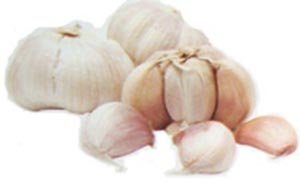
|
| Garlic bulbs with individual "cloves". |
Allium sativum is a perennial herb but grown as an annual crop. The methods applied for its cultivation are similar to those of growing onions.
A completely grown A. sativum plant reaches about 50 to 60 cm in height and bears an underground bulbous root containing about 8-20 bulb-lets known as cloves. The whole bulb itself is encased within several layers of white or mauve-tinged, papery-thin coverings.
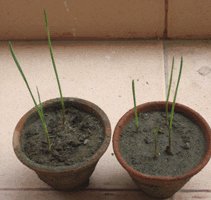
|
| Garlic chives as a potherb. |
Several cultivar varieties exist from extra-large elephant garlic to small sized solo garlic. Allium oleraceum or field garlic is a wild, tall variety commonly grown in the United Kingdom.
Unlike in onion, garlic flowers are sterile and therefore do not produce seeds. New plant sets can be raised by planting the individual sections of the bulb.
Health benefits of Garlic
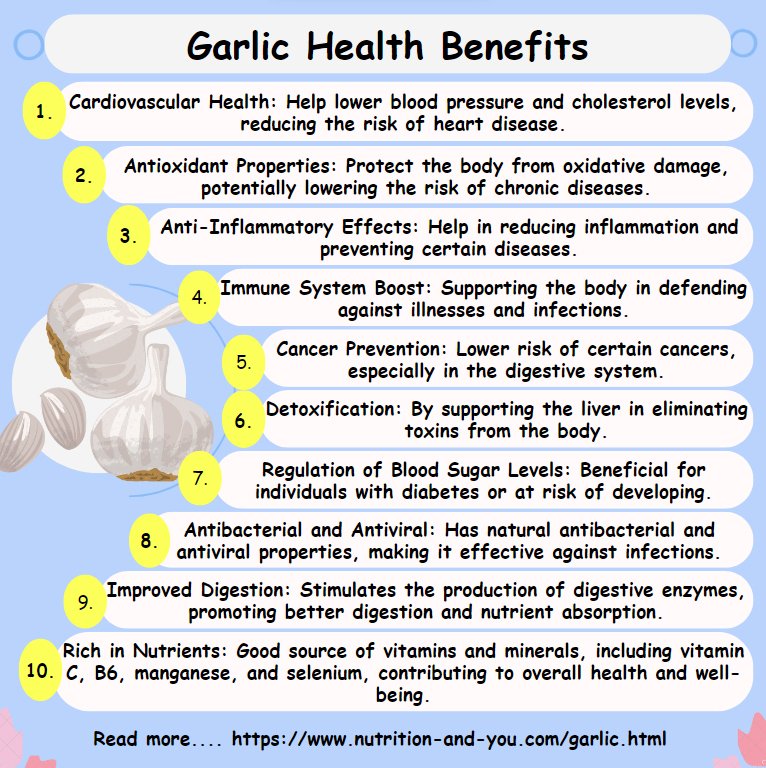
Strong flavored, garlic cloves contain many unique phytonutrients, minerals, vitamins, and antioxidants that have proven health benefits. The total measured antioxidant strength (ORAC value) is 5346 µmol TE/100 g.
Its bulbs contain organic thiosulfinate compounds such as diallyl disulfide, diallyl trisulfide and allyl propyl disulfide. Upon disruption of the bulb (while crushing, cutting, etc.), these compounds convert into allicin through an enzymatic reaction.
Laboratory studies show that allicin reduces cholesterol production by inhibiting the HMG-CoA reductase enzyme within the liver cells.
Allicin decreases blood vessel stiffness through the facilitation of nitric oxide (NO) release. Nitric oxide relaxes blood vessels and thereby, brings a reduction in the total blood pressure. Further, it blocks platelet clot formation and has fibrinolytic action inside the blood vessels. This function of allicin helps decrease the overall risk of coronary artery disease (CAD), peripheral vascular diseases (PVD), and stroke.
Research studies also suggest that consumption of garlic is associated with a possible decrease in the incidence of stomach cancer.
Allicin and other essential volatile compounds were also found to have antibacterial, antiviral, and anti-fungal activities.
Garlic is an excellent source of minerals and vitamins that are essential for optimum health. The bulbs are one of the richest sources of potassium, iron, calcium, magnesium, manganese, zinc, and selenium. Selenium is a heart-healthy mineral and is an essential cofactor for antioxidant enzymes within the body. The human body uses manganese as a co-factor for the antioxidant enzyme, superoxide dismutase. Iron is essential for red blood cell formation.
It contains many flavonoid antioxidants like β - carotene, zeaxanthin, and vitamins like vitamin-C. Vitamin C helps the body develop resistance against infectious agents and scavenge harmful, pro-inflammatory free radicals.
Garlic cloves have amazingly high levels of vitamins and minerals. Just 100 g provides (in % of recommended daily allowance):
95% of vitamin B-6 (pyridoxine),
52% of vitamin C,
33% of copper,
21% of iron,
18% of calcium,
26% Selenium, and
73% of manganese
 |
| Principle | Nutrient Value | Percent of RDA |
|---|---|---|
| Energy | 149 Kcal | 7.5% |
| Carbohydrates | 33.06 g | 25% |
| Protein | 6.36 g | 11% |
| Total Fat | 0.5 g | 2% |
| Cholesterol | 0 mg | 0% |
| Dietary Fiber | 2.1 g | 5.5% |
| Vitamins | ||
| Folates | 3 µg | 1% |
| Niacin | 0.700 mg | 4% |
| Pantothenic acid | 0.596 mg | 12% |
| Pyridoxine | 1.235 mg | 95% |
| Riboflavin | 0.110 mg | 8% |
| Thiamin | 0.200 mg | 17% |
| Vitamin A | 9 IU | <1% |
| Vitamin C | 31.2 mg | 52% |
| Vitamin E | 0.08 mg | 0.5% |
| Vitamin K | 1.7 µg | 1.5% |
| Electrolytes | ||
| Sodium | 153 mg | 10% |
| Potassium | 401 mg | 8.5% |
| Minerals | ||
| Calcium | 181 mg | 18 % |
| Copper | 0.299 mg | 33% |
| Iron | 1.70 mg | 21% |
| Magnesium | 25 mg | 6% |
| Manganese | 1.672 mg | 73% |
| Phosphorus | 153 mg | 22% |
| Selenium | 14.2 µg | 26% |
| Zinc | 1.160 mg | 10.5% |
| Phyto-nutrients | ||
| Carotene-ß | 5 µg | -- |
| Crypto-xanthin-ß | 0 µg | -- |
| Lutein-zeaxanthin | 16 µg | -- |
Selection and storage
Garlic bulbs are harvested when their lower leaves turn yellow and show signs of dryness. Later, the bulbs are air-dried in the shade for a few weeks before being sold in the market.
In the store, several forms of garlic are available, whole bulbs, dried, individual cloves, processed cloves, dry powder, or paste.
Dry bare bulbs can be stored at room temperature and placed in a cold dark environment away from humidity where they stay in good condition for several weeks. Garlic paste, however, should be stored in the refrigerator.
Medicinal uses
Garlic herb has been in use for a long time in many traditional Indian and Chinese medicines as a remedy for cold, cough, bronchitis, etc.
Garlic oil has been used as a local applicant for "ringworm" (fungal dermatitis) infection of the skin.
In modern medicine, this exotic herb is advocated as a health-benefiting food for its anti-microbial, anti-cancer, anti-diabetic, immune boosting, and cholesterol-lowering properties.
Culinary uses
Cloves, as well as tender green tops of the garlic plant, are used in a variety of recipes, especially as a seasoning/garnishing.
In general, leaves are less pungent than the cloves and are employed in recipes in a similar way like onion tops or scallions.
To prepare; its outer covers are peeled away by hand to expose a creamy-white, smooth bulblet (clove) that is either chopped using a paring knife or crushed using a garlic press just before adding to the recipes.
Here are some serving tips:
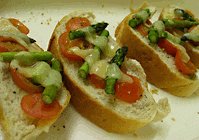
|
| Bruschetta with asparagus, tomato, and cheese toppings. Photo courtesy: rizkapb |
Garlic is one of the common ingredients employed to enhance the flavor of vegetable, meat, and seafood preparations.
Its cloves are added to give a spicy, pungent flavor to the preparations like bread, toast, and Bruschetta (grilled bread slices rubbed with garlic paste with toppings such as olive oil, pepper, tomato, cheese, meat).
The cloves have also been used in the preparation of seasonal soups, chutney, and sauces.
Tender garlic tops are used like vegetables just like scallions and chives along with vegetables, eggs in some recipe preparations in East Asian countries.
Undesirable effects
The sulfide compounds in the garlic are metabolized to allyl methyl sulfide, which is excreted through sweat and breath producing an unpleasant body odor and breath (halitosis).
Safety profile
Its cloves contain allicin that acts as a blood thinner. It is, therefore, advised to avoid in patients on anticoagulants like warfarin as the resultant combination might cause excessive bleeding.
Garlic-in-oil, as in the pickle preparations, favors the growth of Clostridium botulism, which may result in a condition known as botulism (paralysis of the nervous system). It is, therefore, advised that garlic preparations should be preserved inside the refrigerator and should be used as quickly as possible. (Medical disclaimer).
≻≻-Back to Herbs from Garlic. Visit here for an impressive list of all varieties of herbs with complete illustrations of their nutrition facts and health benefits.
≻≻-Back to Home page.
Further Resources:
USDA National Nutrient Database. (opens in new window)
Stanford School of Medicine Cancer information Page- Nutrition to Reduce Cancer Risk (Link opens in new window).
Pennington Nutrition Series. (pdf-opens in new window)