Tomatillo Nutrition facts
Tomatillo, also known as tomate, is a small spherical-shaped berry in the tomato family of fruits. Tomate, chiefly employed as a vegetable, originated in Mexico and was cultivated by the Aztecs centuries before the Spanish explorers introduced it elsewhere.
Binomially, it is a member of Solanaceae or nightshade family of fruits and vegetables, which also includes tomato, ground-cherry, potato, eggplant, chili peppers, etc. Its lovely tart and sweet flavors make it one of the much sought-after ingredients in Central American sauce preparations.
Some of the common names include tomate verde, miltomate, husk tomato, tomate de cascara, tomate de fresadilla, etc. Scientific name: Physalis philadelphica (Physalis ixocarpa).
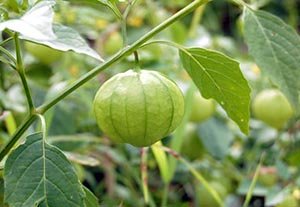 |
| Tomatillo plant (P. philadelphica). Courtesy: ilovebutter. |
Tomatillo is a small annual, glabrous shrub featuring similar growth characteristics as that of tomatoes. It reaches about 30-60 cm in height and bears beautiful yellow flowers that appear about 60 days after seedling. However, unlike in tomato, tomatillo berry develops inside a thin, semi-transparent calyx or husk, resembling somewhat like that of a Taiwanese lantern. Later as the fruit matures, its calyx splits apart to expose the green berry from the inside.
Tomatillo measures about 2.5-4 cm across and weighs about 30-50 g. On the interior, the juicy pulp contains tiny seeds, just as in the tomatoes.
Health benefits of Tomatillos
Tomatillos are low in calories. 100 g of berries provide just 32 calories. For comparison, they carry a bit more calories, fat, and protein than tomatoes. (100 g tomato just has 18 calories). Besides, they contain many health-benefiting plant nutrients such as dietary fiber, minerals, antioxidants, and vitamins.
Unlike tomatoes, tomatillo does not carry lycopene. On the other hand, it is rich in different kinds of antioxidant phytochemicals known as withanolide. Ixocarpalactone-A is one such withanolide present in tomatillo which has been found to have antibacterial and anti-cancer properties.
Tomatillo contains small amounts of antioxidant vitamins like A, C, and E. Further; the berry consists of flavonoid antioxidants such as ß-carotene, zeaxanthin, and lutein. These compounds possess antioxidant properties and, together with vitamin A, are essential for ocular health. Besides, Vitamin A is also required for maintaining the integrity of mucosa and skin. Consumption of natural vegetables and fruits rich in flavonoids helps protect from lung and oral cavity cancers.
Fresh tomate is one of the vegetables that has the least sodium to potassium ratio (0:6). Potassium is an important component of cell and body fluids that help regulate heart rate and blood pressure.
Further, the fruit has more minerals weight per weight basis than that in the tomatoes. They are also a good source of copper, iron, phosphorous, manganese, and other minerals.
| Principle | Nutrient Value | Percent of RDA |
|---|---|---|
| Energy | 32 Kcal | 1.5% |
| Carbohydrates | 5.84 g | 4.5% |
| Protein | 0.96 g | 1.5% |
| Total Fat | 1.02 g | 4% |
| Cholesterol | 0 mg | 0% |
| Dietary Fiber | 1.9 g | 4% |
| Vitamins | ||
| Folates | 7 µg | 2% |
| Niacin | 1.850 mg | 11.5% |
| Pyridoxine | 0.056 mg | 4% |
| Thiamin | 0.044 mg | 4% |
| Vitamin-A | 114 IU | 4% |
| Vitamin-C | 11.7 mg | 20% |
| Vitamin-E | 0.38 mg | 2% |
| Vitamin-K | 10.1 µg | 8.5% |
| Electrolytes | ||
| Sodium | 1 mg | 0% |
| Potassium | 268 mg | 6% |
| Minerals | ||
| Calcium | 7 mg | 1% |
| Copper | 0.079 mg | 10% |
| Iron | 0.62 mg | 8% |
| Magnesium | 20 mg | 5% |
| Manganese | 0.153 mg | 6.5% |
| Phosphorus | 39 mg | 5.5% |
| Selenium | 0.5 µg | 1% |
| Zinc | 0.22 mg | 2% |
| Phytonutrients | ||
| Carotene-ß | 63 µg | -- |
| Carotene-α | 10 µg | -- |
| Lutein-zeaxanthin | 467 µg | -- |
| Lycopene | 0 µg | -- |
Selection and storage
Central and Yucatán peninsula in Mexico and Guatemala are the main husk-tomato growing regions in Mesoamerica. It is grown in small parts of California, Louisiana, and other Southern states in the US. Fresh fruits are generally imported from Central American countries.
|
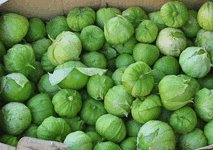
| Fresh tomatillos. Photo courtesy: La Grande Farmer's market. |
Fresh tomatillos can be available around the year in the market, especially in the stores selling Latin-American vegetables. While buying, look for fresh, firm, unripe berries featuring a bright green color, as they have a piquantly tart flavor and, for the same reason, are preferred in the recipes. Avoid sticky and yellow, or purple ones, as they appear over-mature, soft, and out of flavor.
To store, place them in the fridge, inside the vegetable compartment, and set at the right temperature and humidity where they stay fresh for up to two weeks. To preserve longer, remove the husk and store the green fruits inside the refrigerator placed in a zip pouch.
Preparation and serving methods
|
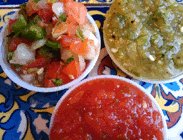
| Tomatillo salsa and sauces. Photo courtesy: Adam_d |
To prepare, peel the husk by hand and wash them thoroughly in cold water to remove sticky residue from the surface. Fresh tomatillos can be used raw and cooked in recipes.
Here are some serving tips:
Tomatillos are the main ingredients used in a variety of Mexican mole (sauce) preparations.
The berries are commonly employed in Enchilada Verde (green) sauce.
To prepare salsa verde, cooked and pureed green tomato is blended with roasted jalapeno, onions, garlic, herbs like cilantro and served over tortilla, seafood, fritters, etc.
Guacamole is a popular avocado based Mexican spread prepared with chopped tomatillo, peppers, onion, lime juice, and served with tortilla chips.
Safety profile
As a member of the nightshade family plants, tomatillos may often cause allergic reactions in some sensitized persons with symptoms of skin and eye itching, runny nose, and gastrointestinal disturbances like pain abdomen, vomiting, and diarrhea.
Cross-reactions with other members like eggplant, tomato, etc., may also occur. It is, therefore, advised to avoid them in food in cases of known allergic conditions. (Medical disclaimer).
Also read ≺≺-
≻≻-Tamarillo (Tree tomato) Nutrition facts and health benefits.
≻≻-Cherry Tomatoes Nutrition facts and health benefits.
≻≻-Tomato Nutrition facts and health benefits.
≺≺ Back to Vegetables from Tomatillo. Visit here for an impressive list of vegetables with complete illustrations of their nutrition facts and health benefits.
≺≺ Back to Home page.
Further reading: