Pineapple nutrition facts
One of the most prized and popular fruits, pineapple or "ananas" has an interesting history to narrate. Originally indigenous to local Paraguayans in South America, it spread from its native land by the local Indians up through the South and Central Americas and to the West Indies. Later, it was brought to Spain when Columbus discovered the Americas in 1493. In the 15th and 16th centuries, it spread to the rest of the world by the European sailors (just like tomatoes) who carried it along with them to protect themselves from scurvy, a disease caused by the deficiency of vitamin C.
Scientifically, it is known as Ananas comosus and belongs to the family of Bromeliaceae, in the genus; Ananas.
 |
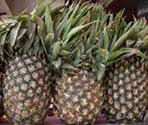 |
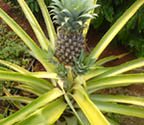
| Pineapple fruit in Ananus comosus plant. Photo courtesy: derek rose | Fresh fruits in a fruit-shop. |
Pineapple is a tropical, perennial, drought-tolerant plant. It reaches up to 5-8 ft in height and spreads around about 3-4 feet radius cover. It is essentially a short, stout stem with a rosette of waxy, long, needle-tipped leaves.
The plant bears several long, oval to cylindrical fruits during each season lasting from March until June.
Botanically, the A. comosus can be described as a compound (multiple) fruit. The whole pineapple actually develops from the aggregation of many smaller fruits fused together around the central core.
Its flesh is juicy and fleshy with the stem serving as a supporting fibrous core. The outer skin features a rough, tough, and scaly rind. The color of the ripe fruits may be yellow, orange-yellow, or reddish.
Inside, its juicy flesh may range from creamy white to yellow and has a mix of sweet and tart taste with rich flavor. Each fruit measures up to 12 inches in length and weighs 1 to 8 pounds or more.
8 Amazing Health Benefits of Pineapple fruit
Fresh pineapple is low in calories. Nonetheless, it is a storehouse for several unique health-promoting compounds, minerals, and vitamins that are essential for optimum health.
100 g fruit provides just about 50 calories; equivalent to that of apples. Its flesh contains no saturated fats or cholesterol. Nonetheless, it is a rich source of soluble and insoluble dietary fiber like pectin.
Pineapple fruit contains a proteolytic enzyme bromelain that digests food by breaking down protein. Bromelain also has anti-inflammatory, anti-clotting, and anti-cancer properties. Studies have shown that consumption of pineapple regularly helps fight against arthritis, indigestion, and worm infestation.
Fresh pineapple is an excellent source of antioxidant vitamin; vitamin-C. 100 g fruit contains 47.8 or 80% of this vitamin.
Vitamin-C is required for the collagen synthesis in the body. Collagen is the main structural protein in the body required for maintaining the integrity of blood vessels, skin, organs, and bones. Regular consumption of foods rich in vitamin C helps the body protect from scurvy; develop resistance to combat infectious agents (boosts immunity) and scavenge harmful, pro-inflammatory free radicals from the body.
It also contains a small amount of Vitamin A (provides 58 IU per 100 g) and β -carotene levels. These compounds are known to have antioxidant properties. Vitamin-A is also required to maintain healthy mucosa, and skin, and is essential for vision. Studies suggest that the consumption of natural fruits rich in flavonoids helps the human body protect itself from lung and oral cavity cancers.
Further, ananas fruit is rich in the B-complex group of vitamins like folates, thiamin, pyridoxine, riboflavin, and minerals like copper, manganese, and potassium. Potassium is an important component of cell and body fluids and helps control heart rate and blood pressure.
Copper is an essential cofactor for red blood cell synthesis. Manganese is a co-factor for the enzyme superoxide dismutase, which is a very powerful free radical scavenger.
Please visit this page to view the infographic featuring pineapple nutrition facts per 100g: Pineapple nutrition infographic....
| Principle | Nutrient Value | Percent of RDA |
|---|---|---|
| Energy | 50 Kcal | 2.5% |
| Carbohydrates | 13.52 g | 10% |
| Protein | 0.54 g | 1% |
| Total Fat | 0.12 g | <1% |
| Cholesterol | 0 mg | 0% |
| Dietary Fiber | 1.40 g | 4% |
| Vitamins | ||
| Folates | 18 μg | 4.5% |
| Niacin | 0.500 mg | 4% |
| Pyridoxine | 0.112 mg | 9% |
| Riboflavin | 0.018 mg | 1.5% |
| Thiamin | 0.079 mg | 6.5% |
| Vitamin A | 58 IU | 2% |
| Vitamin C | 47.8 mg | 80% |
| Vitamin E | 0.02 mg | <1% |
| Vitamin K | 0.7 μg | 0.5% |
| Electrolytes | ||
| Sodium | 1 mg | 0% |
| Potassium | 109 mg | 2.5% |
| Minerals | ||
| Calcium | 13 mg | 1.3% |
| Copper | 0.110 mg | 12% |
| Iron | 0.29 mg | 3.5% |
| Magnesium | 12 mg | 3% |
| Manganese | 0.927 mg | 40% |
| Phosphorus | 8 mg | 1% |
| Selenium | 0.1 μg | <1% |
| Zinc | 0.12 mg | 1% |
| Phyto-nutrients | ||
| Carotene-β | 35 µg | -- |
| Crypto-xanthin-β | 0 mcg | -- |
Selection and storage
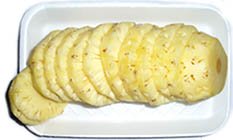 |
| Pineapple fruit-sliced. |
Pineapple (ananas) season lasts from March until June when fresh fruits are available in the markets at their best. In the store, choose fruits that are heavy for their size. While larger fruits will have a greater proportion of edible flesh, they make no difference in quality over a small size pineapple.
Choose fruit that should be free of soft spots, mold, bruises, and darkened "eyes," all of which are an indication that the fruit is past its prime. Some people judge freshness, ripeness, and quality by tapping a finger against the side of the fruit.
A good, ripe pineapple has a dull, solid sound, while a hollow thud indicates immaturity and poor quality. It stops ripening as soon as it picks up. Therefore, choose those with a fragrant sweet smell at the stem end. Avoid those that smell musty, sour, or fermented.
Ripe fruits perish soon if left at room temperature and should be eaten rather immediately after purchase. Moreover, they are chill sensitive and therefore, cannot be stored in the refrigerator for long periods. However, if not readily eaten, you may clean the fruit and place the whole or cut sections wrapped inside a thin plastic cover in the refrigerator for 1-2 days.
Preparation and serving method
Pineapple can be cut and peeled in many ways. Normally, the crown and base ends of the fruit are chopped off with a knife. To peel the fruit, place its base side down and carefully slice off the skin, carving out any remaining "eyes" with the knife. Once the rind is removed, cut it into desirable chunks.
One may also use a pineapple corer/slicer machine to make the job easier. While they provide a quick and convenient method for peeling and coring pineapples, sometimes, they result in a wastage of a good amount of fruit since oftentimes it is difficult to calibrate different sizes and shapes of pineapples. Similarly, some markets offer devices that will peel and core the ananas, but once again, this process may result in the wastage of some fruit.
Here are some serving tips:
 |
 |
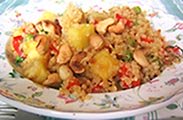
| quinoa stir-fry with cashew and pineapple chunks. Photo courtesy: rusvaplauke |
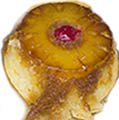
Pineapple cupcake. Photo courtesy: rberteig |
Fresh ananas sections are a great addition to fruit salads and in toppings.
Fresh pineapple juice can be a refreshing intra-day drink.
It is also used in the preparation of desserts, jams, and jellies.
The fruit chunks and juice are often employed in a variety of delicious recipes, mainly as a flavoring agent.
Safety profile
Pineapple fruit contains a proteolytic enzyme bromelain that may cause excessive uterine bleeding if consumed in large quantities during pregnancy. (Medical disclaimer).
Read further on..
≺≺ How Can I Get Rid of Pain Naturally?
≺≺ Back to Fruits from Pineapple. Visit here for an impressive list of all varieties of fruits with complete illustrations of their nutrition facts and health benefits.
≺≺ Back to Home page.
Further reading and Resources:
Stanford School of Medicine Cancer information Page-Nutrition to Reduce Cancer Risk