Peaches Nutrition facts
Delicious and widely popular peaches are native to China, from where they spread to the rest of the world via the ancient silk route. Peach fruits belong to the genus: Prunus, in the family of Rosaceae. Scientific name: Prunus persica.
Technically, peach fruit is a "drupe" having similar features as that of other Prunus members including plums, nectarine, almonds, and damson.
 |
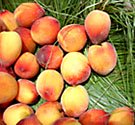 |
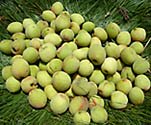
| White-green variety peach | Yellow-red variety |
The peach is described as a small deciduous tree. It grows up to 25 to 30 feet tall and is widely grown in the United States, Europe, and China for its juicy fruits.
There are several cultivars of peach grown all over the world, which differ in color, size, and growth inherent to the soil, and climate attributes specific to that particular region.
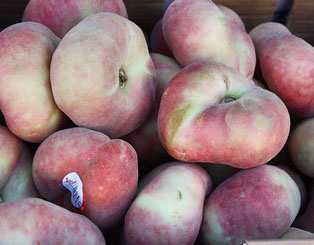 |
| Donut or flat peach. Photo: Gary soup |
Each year, a peach tree blossoms in the spring. Normally it bears many, almost uniform-sized, fruits between May and September. Its fruit is about the size of a small apple, measuring about 7-10 cm in diameter and weighing about 100-120 grams. Its fuzzy outer surface features longitudinal furrows extending from its stem end to the tip. Depending on the pit that is free or firmly attached to the pulp, peaches are classified into freestone or clinging stone varieties.
Donut peach or Saturn peaches, (Prunus persica var. platycarpais) a flattened disc-like freestone fruit drawn inward like a disc at its center. They have white flesh and a similar peach flavor and taste.
Internally, the flesh is soft, juicy, sweet, and tart with a pleasant fruity aroma. Depending on the variety, its flesh may feature a white to creamy-yellow color with a centrally placed single pit. The stone encloses an almond or apricot-like kernel inside the hard shell (pit). The kernels can be edible only in small quantities.
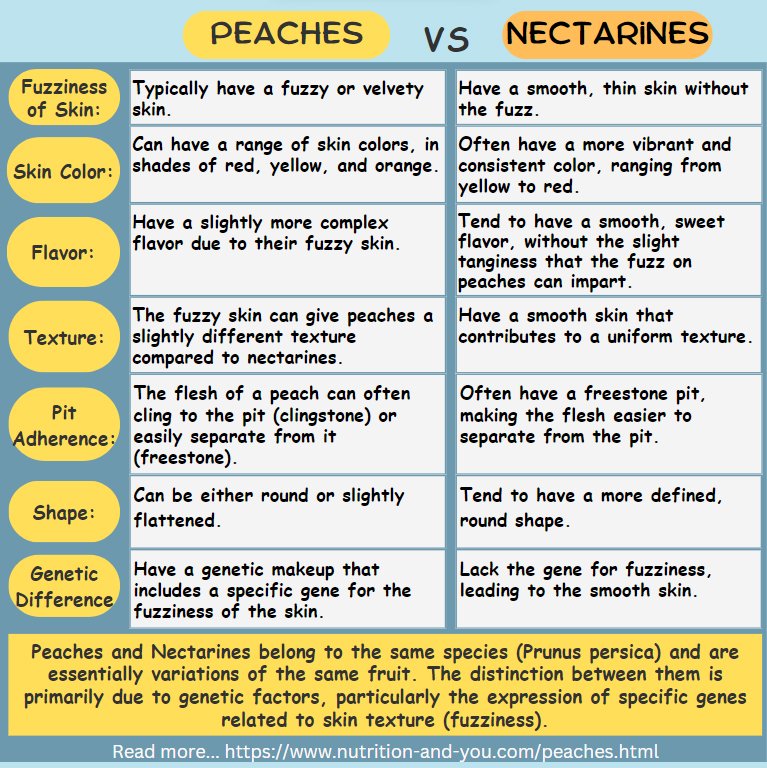
Peaches and nectarines are closely related fruits, belonging to the same species (Prunus persica). The distinction between them is primarily due to genetic factors, particularly the expression of specific genes related to skin texture (fuzziness).
See the differences between Peaches and Nectarines in an infographic:
 |
Health Benefits of Peaches
Wonderfully delicious peaches are low in calories (100 g just provides 39 calories) and contain no saturated fats. Nonetheless, they are packed with numerous health-promoting compounds, minerals, and vitamins.
The total measured antioxidant strength (ORAC value) of 100 g peach fruit is 1814 TE (Trolox equivalents).
Fresh peaches are a moderate source of antioxidant, vitamin-C. Vitamin C has antioxidant effects and is required for connective tissue synthesis inside the human body. Consumption of foods rich in vitamin C helps develop resistance against infectious agents and help scavenge harmful free radicals.
Fresh fruits are also a small source of vitamin-A and ß-carotene. ß-carotene is a pro-vitamin, which converts into vitamin A inside the body.
Vitamin A is essential for night vision. It is also essential for maintaining healthy mucosa and skin. Consumption of natural fruits rich in vitamin A is known to offer protection from lung and oral cavity cancers.
They are rich in many vital minerals such as potassium, fluoride, and iron. Iron is required for red blood cell formation. Fluoride is a component of bones and teeth and is essential for the prevention of dental caries. Potassium is an important component of cells and body fluids that help regulate heart rate and blood pressure.
Peaches contain health promoting flavonoid poly phenolic antioxidants such as lutein, zeaxanthin, and ß-cryptoxanthin. These compounds help act as protective scavengers against oxygen-derived free radicals and reactive oxygen species (ROS) that play a role in aging and various disease processes.
| Principle | Nutrient Value | Percent of RDA |
|---|---|---|
| Energy | 39 Kcal | 2% |
| Carbohydrates | 9.54 g | 7% |
| Protein | 0.91 g | 1.5% |
| Total Fat | 0.25 g | 1% |
| Cholesterol | 0 mg | 0% |
| Dietary Fiber | 1.5 g | 4% |
| Vitamins | ||
| Folates | 4 µg | 1% |
| Niacin | 0.806 mg | 5% |
| Pantothenic acid | 0.153 mg | 3% |
| Pyridoxine | 0.025 mg | 2% |
| Riboflavin | 0.031 mg | 2.5% |
| Thiamin | 0.024 mg | 2% |
| Vitamin A | 326 IU | 11% |
| Vitamin C | 6.6 mg | 11% |
| Vitamin E | 0.73 mg | 5% |
| Vitamin K | 2.6 µg | 2% |
| Electrolytes | ||
| Sodium | 0 mg | 0% |
| Potassium | 190 mg | 4% |
| Minerals | ||
| Calcium | 6 mg | 0.6% |
| Copper | 0.068 mg | 7.5% |
| Iron | 0.25 mg | 3% |
| Magnesium | 9 mg | 2% |
| Manganese | 0.61 mg | 3% |
| Phosphorus | 11 mg | 2% |
| Zinc | 0.17 mg | 1.5% |
| Phyto-nutrients | ||
| Carotene-ß | 162 µg | -- |
| Crypto-xanthin-ß | 67 µg | -- |
| Lutein-zeaxanthin | 91 µg | -- |
Selection and Storage
Peaches can be available year-round; however, the season for fresh fruits lasts from May until October. In the stores, look for fresh ones featuring rich color and may still have a slight whitish "bloom" on their surface indicating freshness, and that they have not been overhandled.
Avoid ones with excessive softness, or with surface cuts and bruises. Ripe fruits yield gentle pressure and feature a sweet aroma.
Slightly hard but mature fruits can be kept at room temperature until they ripen. The ripening process can be enhanced by applying ethylene (similar to the ripening of bananas). Storing inside a paper bag concentrates this gas and hastens the ripening process.
Ripe fruits can be kept in the refrigerator but preferably be brought back to room temperature before eating to enjoy their rich flavor.
Dried peaches are also available in the select stores along with raisins, currants, apricots, dates, etc.
Preparation and Serving tips
Wash them in cold running water just before using. Fresh ripe peaches should be enjoyed as a whole along with the skin. If not, make a deep lengthwise incision into the fruit until you reach the hard kernel, and then extract the seed. You can peel the skin just like you would with apples using a paring knife.
Like apples, sliced peach fruit sections undergo a browning process when exposed to air, caused by the enzymatic conversion of ferrous oxide to ferric oxide. If you need to serve sliced peaches, immerse the slices in water with a few drops of fresh lemon juice to prevent this discoloration.
To peel the skin, score a small cross at the base end using a knife. Dip in boiling water just for a minute and immediately immerse in cold water to cool quickly. Then peel its skin away from the cross.
Here are some serving tips:
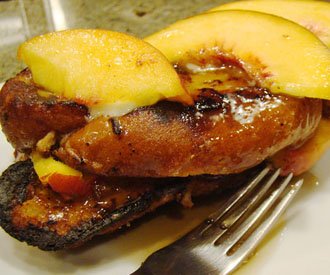 |
| Peach recipe. Photo courtesy: norwichnuts |
Peach sections are a great addition to fruit salads.
Fresh fruits are being used in a variety of fruit cocktails along with grapes, pineapple, cherry, and plums.
Peaches are being used in the preparation of pie, baklava, charlottes, tarts, desserts, jams, and jellies.
They can also be used in various traditional recipes.
Safety profile
Peaches are less allergic to foods. Consumption of peach kernels in large amounts over a period of time, however, can cause weakness and stomachache.(Medical Disclaimer).
≻≻-Back to Fruits from Peaches. Visit here for an impressive list of all varieties of fruits with complete illustrations of their nutrition facts and health benefits.
≻≻-Back to Home page.
Further reading and Resources: