Kale Nutrition facts
Kale or borecole in one of a kind, nutritious leafy green that is rich in numerous health-benefiting polyphenolic flavonoid compounds such as lutein, zeaxanthin, and β -carotene, and vitamins. It is widely cultivated in Europe, Japan, and the United States for its crispy, “frilly“ leaves.
Botanically, the plant belongs to the “cabbage” (Brassica) family, in the subgroup of Brassica oleracea (acephala group). It characteristically has headless cabbage-like leafy greens. Other common vegetables in this family are broccoli, cauliflower, brussels sprouts, etc.
|
|
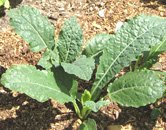
| Plain leaf kale or borecole. (Photo courtesy by Gatohoser) |
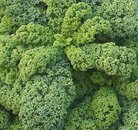
Curley leaf, Scottish variety. |
Kale is an annual plant that prefers well in rich organic soil and prefers a cooler climate and light frosting conditions to flourish. Its succulent, curly leaves feature a “rosette” pattern and may have a dark green to blue-green color depending on the cultivar type. In growth and appearance, it closely resembles collard greens. Farmers plan the crop, particularly keeping in mind for autumn and winter harvest, since frost, and cold weather conditions help in better yield and further enhance its flavor.
Some of the important cultivars grown around are -Scottish curly leaf (Brassica napus (Pabularia Group)), Red Russian, Blue curled, Winterbor.
Tuscan kale, also known as cavalo nero or lacinato kale, is a popular winter-season green in the Northern parts of Italy. It features distinctive very long, curly, blue-green leaves with an embossed surface resembling dinosaur skin, giving its name as dinosaur kale.
Health benefits of Kale (borecole)
Kale is a very versatile and nutritious green leafy vegetable. This leafy vegetable has been popular since ancient Greek and Roman times, cultivated for its low fat, no cholesterol but health-benefiting antioxidant-rich greens.
Kale, like other members of the Brassica family, contains health-promoting phytochemicals, sulforaphane, and indole-3-carbinol to protect against prostate and colon cancers.
Di-indolyl-methane (DIM), a metabolite of indole-3-carbinol is an effective immune modulator, antibacterial and antiviral agent through its action of potentiating "Interferon-Gamma" receptors.
Borecole is a very rich source of ß-carotene (2873 mg/100 g), lutein, and zeaxanthin (6261 mg/100 g). These flavonoids have potent antioxidant and anti-cancer activities. β -carotene converts to vitamin A in the human body.
Zeaxanthin, an important dietary carotenoid, is selectively absorbed into the retinal macula lutea in the eyes where it is thought to provide antioxidant and protective light-filtering functions. Thus, it helps prevent retinal detachment and offers protection against "age-related macular degeneration disease" (ARMD) in older adults.
Fresh leaves are also rich in polyphenolic antioxidant compounds flavones like apigenin and flavonols such as isorhamnetin, kaempferol, quercetin,, etc.
It is very rich in vitamin-A. 100 grams of fresh leaves carry 4812 IU of this vitamin, providing 160% of RDA. Vitamin A is essential for maintaining healthy mucosa, skin, and vision. Foods rich in this vitamin are known to offer protection against lung and oral cavity cancers.
It is one of the excellent vegetable sources for vitamin-K; 100 g provides about 312% of recommended intake. Vitamin K has a potential role in bone health by promoting osteoblastic (bone formation and strengthening) activity. Adequate vitamin-K levels in the diet help limit neuronal damage in the brain; thus, has an established role in the treatment of patients who have Alzheimer's disease.
100 g of fresh leaves contain 93.4 mg or 156% of daily recommended levels of vitamin C . Scottish curly leaf variety has even more of this vitamin (130 mg/100g). Vitamin C is a powerful antioxidant, which helps the body develop resistance against infectious agents and scavenge harmful oxygen-free radicals.
This leafy vegetable is notably good in many B-complex groups of vitamins such as niacin, vitamin B-6 (pyridoxine), thiamin, pantothenic acid, etc; essential for substrate metabolism in the body.
It is also a rich source of minerals like copper, calcium, sodium, potassium, iron, manganese, and phosphorus. Potassium is an important component of cells and body fluids that helps control heart rate and blood pressure by countering the effects of sodium. Manganese is used by the body as a co-factor for the antioxidant enzyme, superoxide dismutase. Iron is required for cellular oxidation and red blood cell formation.
Nutrients in kale offer protection from vitamin-A deficiency, osteoporosis, and iron-deficiency anemia, and are believed to protect from cardiovascular diseases and colon and prostate cancers.
| Principle | Nutrient Value | Percent of RDA |
|---|---|---|
| Energy | 35 Kcal | 2% |
| Carbohydrates | 4.42 g | 3% |
| Protein | 2.92 g | 5% |
| Total Fat | 1.49 g | 5% |
| Cholesterol | 0 mg | 0% |
| Dietary Fiber | 4.1 g | 11% |
| Vitamins | ||
| Folates | 62 µg | 15.5% |
| Niacin | 1.180 mg | 7% |
| Pantothenic acid | 0.370 mg | 7% |
| Pyridoxine | 0.147 mg | 11% |
| Riboflavin | 0.347 mg | 27% |
| Thiamin | 0.113 mg | 9% |
| Vitamin-A | 4812 IU | 160% |
| Vitamin-C | 93.4 mg | 156% |
| Vitamin-K | 389.6 µg | 325% |
| Electrolytes | ||
| Sodium | 53 mg | 3.5% |
| Potassium | 348 mg | 7% |
| Minerals | ||
| Calcium | 254 mg | 25% |
| Copper | 0.053 mg | 6% |
| Iron | 1.60 mg | 20% |
| Magnesium | 33 mg | 8% |
| Manganese | 0.920 mg | 40% |
| Phosphorus | 55 mg | 8% |
| Selenium | 0.9 µg | 1.6% |
| Zinc | 0.39 mg | 3.5% |
| Phyto-nutrients | ||
| Isorhamnetin | 23.6 mg | -- |
| Kaempferol | 46.8 mg | -- |
| Quercetin | 22.6 mg | -- |
Selection and storage
Kale is available at its best during winter months from November until March. Exposure of crop to light frost, in fact, enhances its eating quality. While harvesting, individual lower leaves may be picked either progressively as the main stem elongates or the whole plant is cut at the stem and packed in bundles. In the store, buy fresh green leaves featuring crispy, crunchy, brilliant dark blue-green color.
Borecole, like chard, is an extremely perishable leafy vegetable, so should be used quickly once harvested. If at all to be stored in the refrigerator, set its temperature below 35 degrees F and a high humidity level to maintain vitality.
Preparation and serving methods
As in spinach, borecole should be washed thoroughly in clean running water and swished in saline water for about 10-15 minutes in order to remove soil, dirt, and any fungicide/insecticide residues.
Just before cooking, remove tough stems, and separate wilted leaves from healthy ones. The leaves are generally blanched before use in the dishes.
Here are some serving tips:
-
Fresh, young, tender, crispy borecole can be used raw in salads.
Mature leaves and stalks typically cooked or Sautéed.
Tuscan kale leaves are popular winter staples all over the Mediterranean, used in soups (ribollita toscana), stews, salads, pizza, and pasta.
It is also used in a variety of traditional kale recipes with potatoes, green beans, poultry, and meat.
In Japan, fresh kale juice is quite a popular drink.
Safety profile
Because of its high vitamin-K content, patients taking anti-coagulants such as warfarin are encouraged to avoid kale since it increases the vitamin-K concentration in the blood, which is what the drugs are attempting to lower. This effectively raises the dose of the drug and can lead to toxicity.
Its leaves carry 0.2 g/100 g of oxalic acid, a value far less than some other comparable greens such as spinach (0.97 g/100) and purslane (1.31 g/100 g). It may be consumed, however with caution, even in individuals with known oxalate urinary tract stones. Adequate intake of water is advised to maintain normal urine output. (Medical Disclaimer).
Read further on:
≻≻ Do Potassium-Rich Foods Help Lower Blood Pressure?
≻≻-Back to Vegetables from Kale nutrition. Visit here for an impressive list of vegetables with complete illustrations of their nutrition facts and health benefits.
≻≻-Back to Home page.
Further Resources:
Stanford School of Medicine Cancer information Page- Nutrition to Reduce Cancer Risk.
Kale in the Garden- Extension Utah State University.