Fennel bulb Nutrition facts
Delicate, sweet-flavored fennel bulb is one of the routinely found vegetables featured in Mediterranean cuisine. Its succulent enlarged bulb imparts a unique “anise-like" sweet flavor to the recipes.
Bulb fennel is cultivated for its beautiful, squatted stems in many regions of southern Europe, especially in Italy. It is also known as Florence fennel, finocchio, and sweet fennel.
Fennel is a member of the Apiaceae (parsley family) and is related to carrots, caraway, anise, cumin, dill, etc. Scientific name: Foeniculum vulgare var. azoricum.
|
|
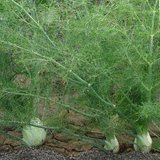
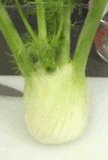
| Bulb fennel (F. vulgare var. azoricum). | Close-up view. Photo courtesy: Joelk75 |
Bulb fennel is a cool-season perennial herb but grown as an annual vegetable crop. Unlike seed fennel, bulb fennel is a small herb reaching just up to 2 feet in height. As the plant grows further, its thick lower leaves overlap in layers to form a swollen, bulb-like structure just above the soil surface. At maturity, its bulb measures about 3-5 inches in width and about 3 inches in length.
As the plant begins to develop the bulb, farmers often pull surrounding soil to create a mound around the stem to obtain long blanched fronds.
8 amazing Health benefits of Fennel bulb
Fennel bulb is a winter-season vegetable. It has some noteworthy essential oils, flavonoid anti-oxidants, minerals, and vitamins that have been known to offer health benefits. These versatile qualities, it found use in culinary as well as in medicine since ancient times.
Bulb fennel is one of the very low-calorie vegetables. 100 g bulb carries just 31 calories. Further, it contains generous amounts of fiber (3.1 g/100 g or 8% of RDI) but little fat, and zero cholesterol.
The fresh bulb gives off a sweet anise-like flavor. Much of this comes from the aromatic essential oils like anethole, estragole, and fenchone (fenchyl acetate) in the fennel. Anethole has been found to have anti-fungal, and anti-bacterial properties.
The bulbs have moderate amounts of minerals and vitamins that are essential for optimum health. Their sweet fronds indeed hold several vital vitamins such as pantothenic acid, pyridoxine (vitamin B-6), folic acid, niacin, riboflavin, and thiamin in small but healthy proportions.
100 g fresh bulbs provide 27 µg of folates. Folic acid is essential for DNA synthesis and cell division. Adequate folate levels in the diet during pregnancy can help prevent neural tube defects in newborn babies.
Also, fennel bulb contains moderate levels of the water-soluble vitamin, vitamin-C. 100 g of fresh bulbs provide 12 mg or 20% of vitamin C. Vitamin C helps the human body develop resistance against infectious agents and scavenge harmful, pro-inflammatory free radicals. Further, it has small amounts of vitamin A.
The bulbs have an excellent level of heart-friendly electrolyte, potassium. 100 g provides 414 mg or 9% of daily recommended levels. Potassium is an essential electrolyte inside the cell. It helps reduce blood pressure and rate of heartbeats by countering the effects of sodium.
Fennel also contains small amounts of minerals such as copper, iron, calcium, magnesium, manganese, zinc, and selenium.
| Principle | Nutrient Value | Percent of RDA |
|---|---|---|
| Energy | 31 Kcal | 1% |
| Carbohydrates | 7.29 g | 6% |
| Protein | 1.24 g | 2% |
| Total Fat | 0.20 g | 1% |
| Cholesterol | 0 mg | 0% |
| Dietary Fiber | 3.1 g | 8% |
| Vitamins | ||
| Folates | 27 µg | 7% |
| Niacin | 0.640 mg | 4% |
| Pantothenic acid | 0.232 mg | 5% |
| Pyridoxine | 0.047 mg | 4% |
| Riboflavin | 0.032 mg | 2.5% |
| Thiamin | 0.010 mg | 1% |
| Vitamin A | 134 IU | 4.5% |
| Vitamin C | 12 mg | 20% |
| Electrolytes | ||
| Sodium | 52 mg | 3% |
| Potassium | 414 mg | 9% |
| Minerals | ||
| Calcium | 49 mg | 5% |
| Copper | 0.066 mg | 7% |
| Iron | 0.73 mg | 9% |
| Magnesium | 17 mg | 4% |
| Manganese | 0.191 mg | 1% |
| Phosphorus | 50 mg | 9% |
| Selenium | 0.7 µg | 1% |
| Zinc | 0.20 mg | 2% |
Selection and storage
Fresh bulb-fennels can be readily available in the local farmer markets in the early autumn or spring seasons. However, they also sold most of the year-round, especially in the supermarkets. In the United States, bulb fennels are labeled as "sweet-anise" in the markets because of their anise-like flavor.
To harvest, firmly hold at its bulb base and gently pull the whole plant off the soil. Trim roots and cut off its top green leafy stems since they rob nutrients off the fennel frond.
In the stores, choose tender, pearly white fennel bulbs that are compact, heavy in hand, and have an attractive anise-like sweet flavor. Buy medium-sized bulbs, each weighing about 5-10 ounces.
Gigantic and over-mature bulbs are quite stringy and have a less intense flavor. Avoid dried-out, shriveled bulbs and those with yellow discoloration, spots, splits, and bruises.
At home, place them in a zip pouch (plastic bag) and store them inside the vegetable compartment of the refrigerator as you do in case of leeks. They stay fresh for up to five days, however, prolonged storage would lead to loss of nutrients and some flavor.
Preparation and serving methods
Fennel bulb is used as a vegetable to add flavors to various dishes, particularly in salads, stews, and soups. Its blanched bulb has a unique aroma and light, sweet, subtle licorice taste.
Sweet fennel is one of the favorite winter season vegetables in the whole of France and Italy.
To prepare, trim off the base as in onions. Cutaway top leafy stalks just above the bulb. Remove the tough outer one or two layers as they are stringy and unappetizing or use them to prepare the vegetable stock. Then, its clear white frond may be cut into cubes, sticks, or slices as one may desire to add in the recipes.
Here are some serving tips:
|
|
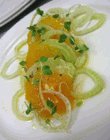
| Fennel-orange-watercress salad. Courtesy: Jon Juan |
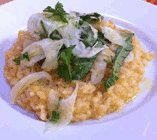
Crab risotto, fennel and herb dish. Courtesy: naan |
Thinly sliced raw finocchio is eaten alone, served with a dip, or added to vegetable salads ((Insalata di Finocchi)).
It can be steamed, braised, or sautéed, and added to a variety of dishes.
Finocchio features in the popular Christmas-Eve seafood stew/soup in Apulia region of southern Italy.
Fennel bulb can be added to flavor meat, fish, pork, and poultry recipes.
≻≻-Read Fennel seeds nutrition facts and health benefits.
≻≻-Back to Vegetables from Fennel bulb. Visit here for an impressive list of vegetables with complete illustrations of their nutrition facts and health benefits.
≻≻-Back to Home page.
Further reading and Resources:
Stanford School of Medicine Cancer information Page- Nutrition to Reduce Cancer Risk.
Growing sweet fennel- PDF.