Cloves Nutrition facts
Cloves are one of the highly prized spices, widely recognized all over the world for their medicinal and culinary qualities. The spice buds are actually the "flower buds" from an evergreen rainforest tree native to Indonesian "spice islands".
Botanically, clove-spice belongs to the family of Myrtaceae, in the genus; Syzygium, and scientifically named as Syzyigium aromaticum.
|
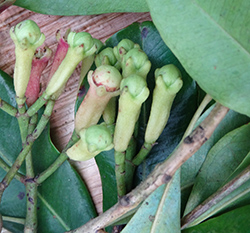
| Immature, green clove spice buds |
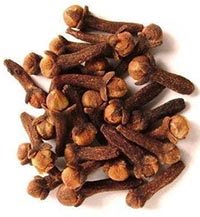 |
| Clove-dry |
At their early stages of development, clove flower buds are pale in color which, gradually turn green, and finally, develop into bright-red clove buds by the time of harvesting. The buds normally are picked up by hand when they reach 1.5-2 cm in length, then sundried and graded before dispatching to the markets.
Structurally, each bud consists of a long calyx, terminating into four spreading sepals and four unopened petals. These closed petals develop into a small ball (dome) at the top. The sweet aroma of cloves comes from an essential oil, eugenol in them.
Medicinal Properties and Health Benefits of Cloves
The active principles in the clove are known to have antioxidant, antiseptic, local anesthetic, anti-inflammatory, rubefacient (warming and soothing), carminative and anti-flatulent properties.
The spice contains health benefiting essential oils such as eugenol. It is a phenylpropanoid class of chemical compounds that gives pleasant, sweet aromatic fragrances to the clove bud. Eugenol has local anesthetic and antiseptic properties, hence, useful in dental care essentials as well as in treatment procedures.
The other important constituents in this spice include:
essential oils: acetyl eugenol, β-caryophyllene, and vanillin, maslinic acid;
tannins: gallotannic acid, methyl salicylate (painkiller);
the flavonoids: eugenin, kaempferol, rhamnetin, and eugenitin.
Triterpenoids: such as oleanolic acid, stigmasterol, and campesterol
also, several sesquiterpenes.The active principles in the cloves increase the gut motility and digestion power through improved gastrointestinal enzyme secretions. Thus, it helps relieve indigestion and constipation problems.
The spice also contains a good amount of minerals like potassium, manganese, iron, selenium, and magnesium. Potassium is an essential electrolyte of cells and body fluids that helps control heart rate and blood pressure. The human body uses manganese as a co-factor for the antioxidant enzyme, superoxide dismutase.
Further, the spice buds contain very good amounts of vitamin A and beta-carotene levels. These compounds are known to have antioxidant properties. The body also requires vitamin A for maintaining healthy mucosa, and skin, and for healthy vision. Consumption of natural foods rich in flavonoids helps to protect the body from lung and oral cavity cancers.
Additionally, this spice is a good source of vitamin K, vitamin B6 (pyridoxine), thiamin (vitamin B-1), vitamin C , and riboflavin. Consumption of foods rich in vitamin C helps the body develop resistance against infectious agents and scavenge harmful oxygen-free radicals.
| Principle | Nutrient Value | Percent of RDA |
|---|---|---|
| Energy | 47 Kcal | 2% |
| Carbohydrates | 10.51 g | 8% |
| Protein | 3.27 g | 6% |
| Total Fat | 0.15 g | 0.5% |
| Cholesterol | 0 mg | 0% |
| Dietary Fiber | 5.4 g | 14% |
| Vitamins | ||
| Folates | 68 µg | 17% |
| Niacin | 1.046 mg | 6.5% |
| Pantothenic acid | 0.338 mg | 7% |
| Pyridoxine | 0.116 mg | 9% |
| Riboflavin | 0.066 mg | 5% |
| Thiamin | 0.072 mg | 6% |
| Vitamin A | 13 IU | 0.5% |
| Vitamin C | 11.7 mg | 20% |
| Vitamin E | 0.19 mg | 1% |
| Vitamin K | 14.8 µg | 12% |
| Electrolytes | ||
| Sodium | 94 mg | 6% |
| Potassium | 370 mg | 8% |
| Minerals | ||
| Calcium | 44 mg | 4% |
| Copper | 0.231 mg | 27% |
| Iron | 1.28 mg | 16% |
| Magnesium | 60 mg | 15% |
| Manganese | 0.256 mg | 11% |
| Phosphorus | 90 mg | 13% |
| Selenium | 7.2 µg | 13% |
| Zinc | 2.32 mg | 21% |
| Phyto-nutrients | ||
| Carotene-ß | 8 µg | -- |
| Crypto-xanthin-ß | 0 µg | -- |
| Lutein-zeaxanthin | 464 µg | -- |
Selection and storage
Clove buds can be readily available year-round in the spice markets. Good quality buds should release a sweet fragrance when squeezed between the thumb and index fingers. In the store, buy whole buds instead of powder since oftentimes they may contain adulterated spicy powders. The buds should be wholesome with stem and sepals, and compact.
Whole cloves should be stored in a cool dark place in closed containers for many months and can be milled using a "hand mill" as and when required. Ground/powder clove should be stored in the refrigerator in airtight containers and should be used as early as possible since it loses its flavor quickly.
Medicinal uses
The essential oil, eugenol in this spice has been in therapeutic use in dentistry as a local anesthetic and antiseptic for teeth and gum.
Eugenol also has been found to reduce blood sugar levels in diabetics, but further detailed studies are required to establish its benefits.
Its decoction is sometimes used in treating flatulence and indigestion in traditional medicine preparations.
It is also thought to have a natural anti-parasite (kills intestinal worms) function.
The essential volatile oils function as a rubefacient, meaning that they irritate the skin and expand the blood vessels, increasing the flow of blood to make the skin feel warmer, making it a popular home remedy for arthritis and sore muscles, used either as a poultice or in hot baths.
Clove oil is also used in aromatherapy.
Culinary uses
In order to keep the fragrance and flavor intact, clove is generally grounded just before preparing dishes and added at the last moment in the kitchen, since prolonged cooking results in evaporation of its essential oils.
-
This popular spice has been used in the preparation of many regular dishes in Asian and Chinese cuisine since ancient times. Along with other spices like pepper, turmeric, ginger, etc. is being used in marinating chicken, fish, and meat.
Some Indian vegetarian, chicken, and rice dishes (biryani) contain cloves, and in the Middle East, it is used in meat and rice dishes.
The spicy buds also feature in the preparation of soups, barbecue sauces, pickling, and as one of the ingredients in curry powders.
Safety profile
Consumption of dishes prepared with a large quantity of clove can cause gastrointestinal irritation and central nervous system disorders. Individuals with stomach ulcers, ulcerative colitis, and diverticulitis conditions should avoid food prepared with this spice. Eating cloves is also avoided during pregnancy.(Medical disclaimer)
≻≻-Back to Spices from cloves. Visit here for an impressive list of healthy spices with complete illustrations of their nutrition facts and health benefits.
≻≻-Back to Home page.
Further reading: