Cilantro (Coriander leaves) Nutrition facts
Cilantro (leaf coriander) is one of the traditional Mediterranean herbs commonly recognized as leaf-coriander in Asia. It is widely employed in savory dishes in almost all parts of the world. It carries many important plant-derived chemical compounds that are known to have disease-preventing and health-promoting properties. Plant coriander is quite similar to dill regarding utility where both its leaves as well as seeds can be used in cuisine.
Botanically, coriander herb belongs to the family of Apiaceae, of the genus: Coriandrum. Scientific name: Coriandrum sativum.
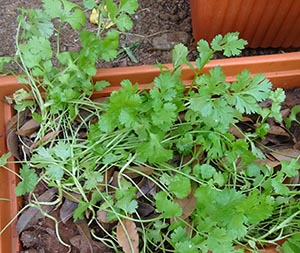 |
| Cilantro herb-Coriandrum sativum. |
Cilantro herb is native to the Mediterranean, and Asia Minor (Turkey) regions. It is a perennial herb but grown as an annual. It requires well-draining, fertile soil supplemented with warm summer climates to flourish. The plant is allowed to reach only about 9 to 15 inches in height in order to gather only its leaves. If left to grow further, it may reach about 5-7 feet in height, bears tiny, white, or light pink flower umbels by midsummer, followed by a bounty of round to oval, aromatic coriander seeds.
Leaf-coriander features dark green, smooth, hairless, soft leaves that vary in shape from broad-lobed at the base and slender, feathery higher up near its flowering tops. Its leaves and stem possess a mildly citrus flavor.
Coriander seeds are tiny, yellowish-brown, round to oval with vertical ridges. They are used as a spice and have a flavor that is aromatic, sweet, and citrusy, but also a bit peppery.
Health benefits of cilantro leaves (coriander)
Cilantro herb is very low in calories and contains no cholesterol. However, its deep-green leaves possess good amounts of antioxidants, essential oils, vitamins, and dietary fiber, which may help reduce LDL or "bad cholesterol" levels in the blood.
Its leaves and seeds contain many essential volatile oils such as borneol, linalool, cineole, cymene, terpineol, di-pentene, phellandrene, pinene, and terpinolene.
The leaves and stem tips are also rich in numerous antioxidant polyphenolic flavonoids such as quercetin, kaempferol, rhamnetin, and apigenin.
The herb is a good source of minerals like potassium, calcium, manganese, iron, and magnesium. Potassium is an important component of cells and body fluids that help regulate heart rate and blood pressure. Iron is essential for red blood cell production. The human body uses manganese as a co-factor for the antioxidant enzyme, superoxide dismutase.
It is also rich in many vital vitamins, including folic acid, riboflavin, niacin, vitamin A, beta carotene, and vitamin C, which are essential for optimum health. Vitamin C is a powerful natural antioxidant. 100 g of cilantro leaves provide 30% of the daily recommended levels of vitamin C.
It provides 6,748 IU of vitamin-A per 100 g, about 225% of the recommended daily intake. Vitamin-A, an important fat-soluble vitamin, and antioxidant, is also required for maintaining healthy mucosa and skin and is also essential for vision. Consumption of natural foods rich in vitamin A and flavonoids (carotenes) may help protect from lung and oral cavity cancers.
Cilantro is one of the richest herbal sources for vitamin K; provide about 258% of DRI. Vitamin K has a potential role in bone mass building through the promotion of osteoblastic activity in the bones. It also has an established role in the treatment of Alzheimer's disease patients by limiting neuronal damage in their brains.
Wonderful! Cilantro leaves provide only 23 calories/100 g, but their phytonutrients profile is no less than any superfoods around us!
This humble backyard herb
provides (% of RDA/100g):
15% of folates,
11% of vitamin B-6 (pyridoxine),
45% of vitamin C,
225% of vitamin A,
258% of vitamin K,
22% of iron and
18% of manganese.
(Note: RDA-Recommended daily allowance).
| Principle | Nutrient Value | Percent of RDA |
|---|---|---|
| Energy | 23 Kcal | 1% |
| Carbohydrates | 3.67 g | 3% |
| Protein | 2.13 g | 4% |
| Total Fat | 0.52 g | 2% |
| Cholesterol | 0 mg | 0% |
| Dietary Fiber | 2.80 g | 6.5% |
| Vitamins | ||
| Folates | 62 µg | 15.5% |
| Niacin | 1.114 mg | 7% |
| Pantothenic acid | 0.570 mg | 11% |
| Pyridoxine | 0.149 mg | 11% |
| Riboflavin | 0.162 mg | 12% |
| Thiamin | 0.067 mg | 5.5% |
| Vitamin A | 6748 IU | 225% |
| Vitamin C | 27 mg | 45% |
| Vitamin E | 2.50 mg | 17% |
| Vitamin K | 310 mcg | 258% |
| Electrolytes | ||
| Sodium | 46 mg | 3% |
| Potassium | 521 mg | 11% |
| Minerals | ||
| Calcium | 67 mg | 7% |
| Iron | 1.77 mg | 22% |
| Magnesium | 26 mg | 6.5% |
| Manganese | 0.426 mg | 18.5% |
| Phosphorus | 48 mg | 7% |
| Selenium | 0.9 mg | 2% |
| Zinc | 0.50 mg | 4.5% |
| Phyto-nutrients | ||
| Carotene-α | 36 µg | -- |
| Carotene-ß | 3930 µg | -- |
| Crypto-xanthin-ß | 202 µg | -- |
| Lutein-zeaxanthin | 865 µg | -- |
Selection and storage
Fresh cilantro leaves, as well as seeds, can be readily available in the markets and herb stores all around the year. Always buy fresh cilantro sprigs for superior flavor and nutritional benefits of vital vitamins and antioxidants like β -carotene, vitamin-C, and folates. While buying, look for vibrant green leaves with firm stems. Its leaves should be free from any spoilage or yellow discoloration.
Try to buy fresh leaves from the local organic farms since the herb has an intense, refreshing flavor in addition to that it will assure you of superior quality that is free from pesticide residues.
Once at home, wash in clean water, and discard roots, old or any spoiled leaves. Fresh cilantro (coriander) should be stored in the refrigerator in a zip pouch or wrapped in a slightly damp paper towel. Use as early as possible since it loses flavor and nutrients quickly if kept for longer periods. Coriander seeds, as well as oil, are available in the markets. The seeds are primarily used as a spice.
Medicinal uses
The herb parts (leaves, root, and stem) of the cilantro (coriander) plant have been found to have antiseptic and carminative properties.
The herb contains many phytochemical compounds; phenolic flavonoid antioxidants like quercetin and essential oils have found application in many traditional medicines as an analgesic, aphrodisiac, antispasmodic, flatus-relieving (carminative), depurative, deodorant, digestive, fungicidal, lipolytic, stimulant and stomachic. (Medical-disclaimer).
Coriander seed oil has been found application in many traditional medicines as an analgesic, aphrodisiac, antispasmodic, deodorant, digestive, carminative, fungicidal, lipolytic (weight loss), stimulant and stomachic.
Culinary uses
Fresh leaves should be washed thoroughly in the water to remove sand and dirt and to rid of any residual pesticides. While in the kitchen, it is used just before preparing recipes to keep the fragrance and aromatic flavor intact.
Cilantro (coriander) leaves have been in use in the preparation of many popular dishes in Asian and East European cuisine since ancient times. When added in combination with other household herbs and spices, it enhances the flavor and taste of vegetable, chicken, fish, and meat dishes.
The herb has also been used in the preparation of soups, and sauces. The popular Mediterranean cilantro pesto uses fresh cilantro, red pepper, garlic cloves, olive oil, pumpkin seeds with few drops of lemon juice, is a great addition to pasta, in sandwiches, or as a marinade for fish, poultry, etc., dishes.
Freshly chopped and sautéed coriander leaves are an excellent addition to a green salad.
Coriander seed powder is one of the main ingredients used in the preparation of garam masala powder.
≻≻-Also Read Coriander seeds nutrition facts.
≻≻-Back to Herbs from Cilantro. Visit here for an impressive list of all varieties of herbs with complete illustrations of their nutrition facts and health benefits.
≻≻-Back to Home page.
Further Resources:
Stanford School of Medicine Cancer information Page-Nutrition to Reduce Cancer Risk.
UC Vegetable Research & Information center- Cilantro production in California -pdf.