Chili peppers Nutrition facts
Chili peppers, despite their fiery hotness, are one of the very popular spices known for their medicinal and health-benefiting properties. The chili is a fruit pod of the plant belonging to the nightshade family (Solanaceae), of the genus, Capsicum.
Scientific name: Capsicum annuum. Some of other common members in the Solanaceae family are tomato, aubergine, potato, etc.
|
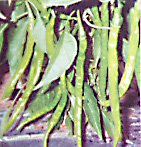 |
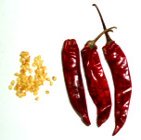
| Dry chili peppers with seeds. | Raw green chilies in a Capsicum annuum plant. |
Chili plant is a small, perennial shrub with a woody stem growing up to a meter in height. It is native to the Central American region, where it employed as one of the main spice ingredients in Mexican cuisine for centuries. Later, it was introduced to the rest of the world by Spanish and Portuguese explorers during the 16th and 17th centuries. Today, chili pepper is grown widely in many parts of the world as an important commercial crop.
Several cultivars of chili peppers are grown all around the world. Depending upon cultivar type, a chili plant produces flowers that subsequently develop into fruit pods of variable size, shape, color, and pungency. Moreover again, depending on the cultivar type, their hotness ranges from mild and fleshy (Mexican bell peppers) to fiery as in tiny, Nag Jalokiya chili peppers of the Indian subcontinent.
The hotness of chili is measured in “Scoville heat units” (SHU). On the Scoville scale, a sweet bell pepper scores 0, a jalapeño pepper around 2,500-4,000 units, and Mexican habañeros may have 200,000 to 500,000 units.
Inside, each chili fruit pod features numerous tiny, white, or cream-colored, ovoid, flat seeds that cling to the central white placenta.
To harvest, chilies are picked up while they are green, or when they reach maturity and dried on the plant itself. In general, they are ready for harvesting once they mature and turn red. They are then left to dry under the sun and shrivel.
Chilies have a strong spicy taste that comes from the active alkaloid compounds: capsaicin, capsanthin, and capsorubin.
Health benefits of Chili peppers
Chili pepper composes an impressive list of plant-derived chemical compounds that are known to have disease-preventing and health-promoting properties.
Chilies contain an alkaloid compound, capsaicin that gives them a strong spicy, and pungent character. Early laboratory studies on experimental mammals suggest that capsaicin has anti-bacterial, anti-carcinogenic, analgesic, and anti-diabetic properties. It is also found to reduce LDL cholesterol levels in overweight persons.
Fresh chili peppers, red and green, are a rich source of vitamin C. 100 g fresh chilies provide about 143.7 µg or about 240% of RDA.
Vitamin C is a potent water-soluble antioxidant. It is essential for collagen synthesis inside the human body. Collagen is one of the main structural proteins required for maintaining the integrity of blood vessels, skin, organs, and bones.
Regular consumption of foods rich in vitamin C helps protect from scurvy, develop resistance against infectious agents (boosts immunity), and scavenge harmful, pro-inflammatory free radicals from the body.
They are also good in other antioxidants such as vitamin-A, and flavonoids like β-carotene, α-carotene, lutein,
zeaxanthin, and cryptoxanthin. These antioxidant substances in capsicum help protect the body from the injurious effects of free radicals generated during stress, and disease conditions.
Chilies carry a moderate amount of minerals like potassium, manganese, iron, and magnesium. Potassium is an important component of cells and body fluids that help regulate heart rate and
blood pressure. The human body uses manganese as a co-factor for the antioxidant enzyme superoxide dismutase.
Chilies are also good in the B-complex group of vitamins such as niacin, pyridoxine (vitamin B-6), riboflavin, and thiamin (vitamin B-1). These vitamins are essential in the sense that the human body requires them from external sources to replenish.
Chili pepper composes an impressive list of plant-derived chemical compounds that are known to have disease-preventing and health-promoting properties.
Chilies contain an alkaloid compound, capsaicin that gives them a strong spicy, and pungent character. Early laboratory studies on experimental mammals suggest that capsaicin has anti-bacterial, anti-carcinogenic, analgesic, and anti-diabetic properties. It is also found to reduce LDL cholesterol levels in overweight persons.
Fresh chili peppers, red and green, are a rich source of vitamin C. 100 g fresh chilies provide about 143.7 µg or about 240% of RDA.
Vitamin C is a potent water-soluble antioxidant. It is essential for collagen synthesis inside the human body. Collagen is one of the main structural proteins required for maintaining the integrity of blood vessels, skin, organs, and bones.
Regular consumption of foods rich in vitamin C helps protect from scurvy, develop resistance against infectious agents (boosts immunity), and scavenge harmful, pro-inflammatory free radicals from the body.
They are also good in other antioxidants such as vitamin-A, and flavonoids like β-carotene, α-carotene, lutein, zeaxanthin, and cryptoxanthin. These antioxidant substances in capsicum help protect the body from the injurious effects of free radicals generated during stress, and disease conditions.
Chilies carry a moderate amount of minerals like potassium, manganese, iron, and magnesium. Potassium is an important component of cells and body fluids that help regulate heart rate and blood pressure. The human body uses manganese as a co-factor for the antioxidant enzyme superoxide dismutase.
Chilies are also good in the B-complex group of vitamins such as niacin, pyridoxine (vitamin B-6), riboflavin, and thiamin (vitamin B-1). These vitamins are essential in the sense that the human body requires them from external sources to replenish.
Chili peppers have amazingly high levels of vitamins and minerals. Just 100 g provides (in % of recommended daily allowance):
240% of vitamin-C (Ascorbic acid),39% of vitamin B-6 (Pyridoxine),
32% of vitamin A,
13% of iron,
14% of copper,
7% of potassium,
However, no cholesterol.
| Principle | Nutrient Value | Percent of RDA |
|---|---|---|
| Energy | 40 Kcal | 2% |
| Carbohydrates | 8.81 g | 7% |
| Protein | 1.87 g | 3% |
| Total Fat | 0.44 g | 2% |
| Cholesterol | 0 mg | 0% |
| Dietary Fiber | 1.5 g | 3% |
| Vitamins | ||
| Folates | 23 µg | 6% |
| Niacin | 1.244 mg | 8% |
| Pantothenic acid | 0.201 mg | 4% |
| Pyridoxine | 0.506 mg | 39% |
| Riboflavin | 0.086 mg | 6.5% |
| Thiamin | 0.72 mg | 6% |
| Vitamin A | 952 IU | 32% |
| Vitamin C | 143.7 mg | 240% |
| Vitamin E | 0.69 mg | 4.5% |
| Vitamin K | 14 µg | 11.5% |
| Electrolytes | ||
| Sodium | 9 mg | 0.5% |
| Potassium | 322 mg | 7% |
| Minerals | ||
| Calcium | 14 mg | 1.5 % |
| Copper | 0.129 mg | 14% |
| Iron | 1.03 mg | 13% |
| Magnesium | 23 mg | 6% |
| Manganese | 0.187 mg | 8% |
| Phosphorus | 43 mg | 6% |
| Selenium | 0.5 µg | 1% |
| Zinc | 0.26 mg | 2% |
| Phyto-nutrients | ||
| Carotene-ß | 534 µg | -- |
| Carotene-α | 36 µg | -- |
| Cryptoxanthin-ß | 40 µg | -- |
| Lutein-zeaxanthin | 709 µg | -- |
Selection and storage
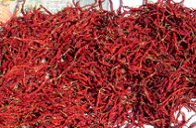 |
| Sundried red chili peppers. |
Chili peppers can be available year-round in the markets either in the fresh, dried, or powdered form. In the stores, buy fresh chili peppers instead of powder since oftentimes it may contain adulterated spicy mixtures.
Look for raw, fresh chilies featuring brilliant colors (green, yellow, orange, red depending on the variety), with stalk, wholesome and compact. Avoid those with spots or spoiled tips inflicted by molds.
Once at home, they should be stored in the refrigerator inside a plastic bag where they will stay fresh for about a week. Completely dried red chilies are also available in the markets. Dry chilies can be stored at room temperature in a cool, dark place, inside airtight containers for many months; and can be milled to a powder using a mixer/grinder as and when required.
If you want to buy dry chili powder instead, go for authentic and branded products. Powdered chili pepper should be stored in a cool place inside an airtight container.
Medicinal uses
Chili peppers contain the chemical compound, capsaicin. Capsaicin and its co-compounds are employed in the preparation of ointments, rubs, and tinctures for their astringent, counter-irritant, and analgesic properties.
These formulations have been in use in the treatment of arthritic pain, post-herpetic neuropathic pain, and sore muscles.
Scientific studies on experimental mammals suggest that capsaicin has anti-bacterial, anti-carcinogenic, analgesic, and anti-diabetic properties. It has also been found to reduce LDL-cholesterol levels in obese persons. (Medical-disclaimer).
Culinary uses
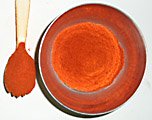 |
| Red chili powder. |
Raw, fresh chilies should be washed in clean water before being used in cooking to remove any residual fungicides and sand. Chilies, either fresh or ground, can cause severe burning sensation to hands and severe irritation to nasal passages, eyes, and throat. Therefore, it may be advised for some sensitive individuals to use thin hand gloves and face masks while handling chilies.
Here are some serving tips:
|
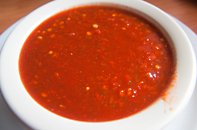
| Red chili sauce. Photo courtesy: stevendepolo. |
Fresh raw bell peppers and other sweet, mild variety peppers are being used as vegetables in cuisines in many parts of the world.
Chopped peppers are being employed in the preparation of chili sauce, pizzas, rolls, and in a variety of dishes using fish, meat, and chicken in many Central American and European regions.
Dried chili powder is an essential ingredient in the spice mix known as curry powder in many Asian countries.
Hot chilies used as a condiment in the preparation of soups, chili sauce, chili oil, spicy water, vinegar-spice mix, etc.
Chilies, soaked in yogurt and then dried under sunlight, eaten as condiment side-dish served during the dinner time in South-Indian states.
Safety profile
Chili peppers contain capsaicin, which gives a strong spicy, pungent character. Capsaicin, when eaten, causes severe irritation and fiery sensation to the mouth, tongue, and throat.
Capsaicin in chilies initially elicits local inflammation when it comes in contact with the mucosa of the oral cavity, throat, and stomach, and soon causes a severe burning sensation that is perceived as ‘hot’ through free nerve endings in the mucosa. Eating cold yogurt helps reduce the burning pain by diluting capsaicin concentration and preventing its contact with mucosal walls.
Avoid touching eyes with chili-contaminated fingers. Rinse eyes thoroughly with cold water to reduce irritation.
Chilies may aggravate existing gastroesophageal reflux (GER) condition.
Certain chemical compounds like aflatoxin (fungal mold), found in spoiled chilies have been known to cause stomach, liver, and colon cancers. (Medical-disclaimer).
≻≻-Back to Spices from Chili peppers. Visit here for an impressive list of healthy spices with complete illustrations of their nutrition facts and health benefits.
≻≻-Back to Home page.
Further reading:
USDA National Nutrient Database. (opens in a new window)
Gernot-Katzer's spice pages. (Opens in new window)