Allspice Nutrition facts
Allspice, also known popularly as Jamaican pepper or pimento, is one of the widely used spices in the Mexican and other Central American cuisines. This spice corn is a dried "unripe" fruit obtained from an evergreen tropical shrub belonging to the Myrtle (Myrtaceae) family, of the genus: pimento.
Scientific name: Pimenta dioica.
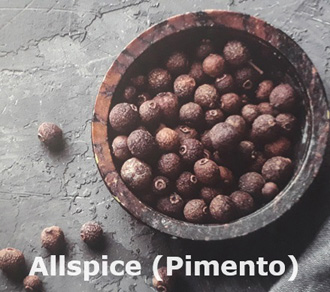 |
The pimento tree is native to the tropical evergreen rainforest of the Central American region and Caribbean islands. It typically bears fruit after approximately five years of growth. The unripe green berries are harvested once they reach full size and then dried thoroughly under sunlight. As a result, the shriveled berries resemble brown peppercorns, measuring approximately 6 mm in diameter. In contrast to peppercorns, which contain only one centrally placed seed, allspice berries contain two seeds.
Powdered allspice exhibits a sharp, spicy bite and aroma reminiscent of a blend of black-pepper, nutmeg, cloves, and cinnamon.
Health Benefits of Allspice
Allspice contains active principles with diverse properties, including anti-inflammatory, rubefacient (warming and soothing), carminative, and anti-flatulent effects.
Pimento harbors health-promoting essential oils such as eugenol, a type of phenylpropanoid compound that imparts a delightful, sweet aroma to this spice.
It also encompasses caryophyllene, methyl eugenol, glycosides, tannins, quercetin, resin, and sesquiterpenes. These volatile essential oils are extracted via distillation from the spice's kernels, with the outer coat of allspice berries reputedly containing the highest concentration of these medically significant compounds.
Similar to black peppercorns, the active principles in allspice may enhance gastrointestinal motility and aid digestion by promoting enzyme secretion in the stomach and intestines.
Eugenol exhibits local anesthetic and antiseptic properties, proving beneficial in dental and gum treatments. Recent research indicates that a traditional concoction comprising allspice oil, garlic extract, and oregano can combat infections caused by E.coli, Salmonella, and L.monocytogenes.
Allspice boasts a notable mineral content including potassium, manganese, iron, copper, selenium, and magnesium. Iron serves as a crucial co-factor for the cytochrome oxidase enzyme in cellular metabolism.
Additionally, iron is essential for red blood cell production in the bone marrow, while potassium aids in regulating heart rate and blood pressure as a vital cellular and fluid constituent. Manganese acts as a co-factor for the antioxidant enzyme superoxide dismutase.
Furthermore, this spice is rich in vitamin A, vitamin B-6 (pyridoxine), riboflavin, niacin, and vitamin C.
Vitamin C, a potent natural antioxidant, supports the body in developing resistance against infectious agents and scavenging harmful, pro-inflammatory free radicals when consumed regularly through foods.
| Principle | Nutrient value | Percent of RDA |
|---|---|---|
| Energy | 263 cal | 13% |
| Carbohydrates | 72.12 g | 55% |
| Protein | 6.09 g | 11% |
| Total Fat | 8.69 g | 29% |
| Cholesterol | 0 mg | 0% |
| Dietary Fiber | 21.6 g | 54% |
| Vitamins | ||
| Folates | 36 μg | 9% |
| Niacin | 2.860 mg | 18% |
| Pantothenic acid | 0.210 mg | 16% |
| Pyridoxine | 0.210 mg | 16% |
| Riboflavin | 0.063 mg | 8.5% |
| Thiamin | 0.101 mg | 2.5% |
| Vitamin A | 540 IU | 18% |
| Vitamin C | 39.2 mg | 65% |
| Electrolytes | ||
| Sodium | 77 mg | 5% |
| Potassium | 1044 mg | 22% |
| Minerals | ||
| Calcium | 661 mg | 66% |
| Copper | 0.553 mg | 61% |
| Iron | 7.06 mg | 88% |
| Magnesium | 135 mg | 34% |
| Manganese | 2.943 mg | 128% |
| Phosphorus | 113 mg | 16% |
| Zinc | 1.01 mg | 9% |
Selection and storage
Allspice berries are readily available year-round. When purchasing, look for whole allspice berries instead of powdered versions, as the latter may sometimes be mixed with adulterated spices. Choose pimentos that are robust, dense, spherical, and well-formed.
Storing whole allspice berries at room temperature is suitable for several months, and they can be ground as needed. Once ground, it is best to refrigerate the powder in a tightly sealed container and utilize it promptly to retain its flavor, as prolonged storage may lead to the evaporation of essential oils.
Culinary uses
To keep fragrance and flavor, allspice should be ground just before preparing dishes, adding it during the final stages of cooking.
Here are some serving methods:
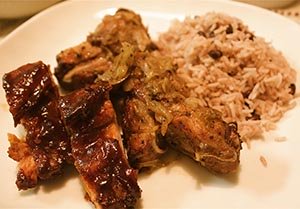 |
| Jamaican jerk spice-rub chicken with sauce. Courtesy: Naotake murayama |
Pimento berries are a staple in Caribbean cuisine, particularly in Jamaica, where they, alongside scotch bonnet peppers, form the core of the popular Jamaican jerk spice. This flavorful blend, often in paste form, is used to season and marinate chicken, fish, and meat.
Indian vegetarian and chicken curries frequently incorporate this spice, while in the Middle East, it enhances the flavors of meat and rice dishes.
Allspice is a versatile ingredient, adding depth to soups, barbecue sauces, pickles, and various curry powders.
Additionally, it serves as a key component in the production of liquors across many Caribbean nations, contributing to local beverages such as Jamaican dram.
Medicinal uses
The eugenol essential oil extracted from the allspice berry has found therapeutic applications in dentistry, serving as a local anesthetic and antiseptic for teeth and gums.
Additionally, a decoction derived from this spice is occasionally utilized in traditional medicine to address flatulence and indigestion, albeit lacking substantial scientific backing for its efficacy.
The volatile essential oils present in pimento spice act as a rubefacient, causing irritation to the local skin area and dilating blood vessels, thereby enhancing blood flow and imparting a sensation of warmth to the skin.
This oil is commonly employed as a home remedy for arthritis and sore muscles, either through topical application as a poultice or inclusion in hot baths.
Safety Profile
Individuals with hypersensitivity to allspice should exercise caution as it may trigger severe allergic reactions. Consumption of dishes with excessive amounts of this spice can lead to gastrointestinal irritation, central nervous system depression, and seizures in toxic doses.
Moreover, individuals with stomach ulcers, ulcerative colitis, or diverticulitis should refrain from consuming recipes containing allspice. Please refer to the medical disclaimer for further information.
≺≺ -Back to Spices from Allspice (Pimento). Visit here for an impressive list of healthy spices with complete illustrations of their nutrition facts and health benefits.
≺≺ -Back to Home page.
Further reading:
USDA National Nutrient Database. (opens new window).