Turnips Nutrition facts
Turnips are popular, nutritious root vegetables. They are round, tuberous roots grown in many parts of Europe, and Asia as one of the cool-season vegetables.
Botanically, they belong to the Brassicaceae family, a broad group of greens and vegetables that also includes cabbage, kale, brussel sprouts, etc.
Scientific name: Brassica rapa (Rapifera Group).
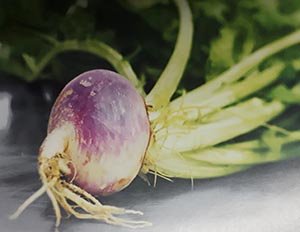 |
| Turnips. |
Tiny, young turnips or “baby turnips” are harvested quite early at their growing stage. Baby turnips feature a delicate, sweeter taste and can be eaten raw in salads. However, as they advance in size and maturity, their flavor becomes more pronounced, loses texture, and becomes hard and woody.
Rutabaga is another root vegetable that is closely related to turnips. Rutabagas are larger, rounder, and sweeter in flavor than turnips. Inside, they feature yellow flesh in contrast to the pearly-white flesh of turnips. Both these roots have been cultivated as a staple food since the ancient Greek and Roman periods.
Although this bulbous root is widely recognized as a popular tuber vegetable, its fresh green tops indeed are more nutritious, several times richer in vitamins, minerals, and antioxidants.
Health benefits of Turnips
Turnips are very low-calorie root vegetables; carry just 28 calories per 100 g. Nonetheless, they are an excellent source of antioxidants, minerals, vitamins, and dietary fiber.
Fresh roots are indeed one of those vegetables that are rich in vitamin C . 100 grams of fresh root provides about 21 mg, or 35% of DRA of vitamin C. Vitamin C is a powerful water-soluble antioxidant required by the human body for the synthesis of collagen. It also helps the body scavenge harmful free radicals, prevent cancers, and inflammation, and helps boost immunity.
Turnip greens indeed are the storehouse of many vital nutrients. The green tops are composed of many minerals and vitamins several times more than that in the roots. The greens are an excellent source of antioxidants such as vitamin A, vitamin C, carotenoid, xanthin, and lutein. Further, the leafy tops are an excellent source of vitamin K.
Also, its top greens are also a fine source of the B-complex group of vitamins such as folates, riboflavin, pyridoxine, pantothenic acid, and thiamin and also an excellent source of essential minerals like calcium, copper, iron, potassium, and manganese.
See the comparison table below:
| Turnips/100 g | Turnip greens/100 g | |
| Calories | 28 | 32 |
| Vitamin-C | 21 mg | 60 mg |
| Vitamin-A | 0 mg | 11587 IU |
| Vitamin-K | 0.1µg | 251µg |
| Calcium | 30 mg | 190 mg |
| Iron | 0.3 mg | 1.10 mg |
| Manganese | 0.134 mg | 0.466 mg |
| Carotene-ß | 0 µg | 6952 µg |
| Principle | Nutrient Value | Percent of RDA |
|---|---|---|
| Energy | 28 Kcal | 1.5% |
| Carbohydrates | 6.43 g | 5% |
| Protein | 0.90 g | 1.5% |
| Total Fat | 0.10 g | <1% |
| Cholesterol | 0 mg | 0% |
| Dietary Fiber | 1.8 g | 5% |
| Vitamins | ||
| Folates | 15 μg | 4% |
| Niacin | 0.400 mg | 2.5% |
| Pantothenic acid | 0.200 mg | 4% |
| Pyridoxine | 0.090 mg | 7% |
| Riboflavin | 0.030 mg | 2.5% |
| Thiamin | 0.040 mg | 4% |
| Vitamin A | 0 IU | 0% |
| Vitamin C | 21 mg | 35% |
| Vitamin E | 0.03 mg | <1% |
| Vitamin K | 0.1 µg | <1% |
| Electrolytes | ||
| Sodium | 39 mg | 2.5% |
| Potassium | 233 mg | 5% |
| Minerals | ||
| Calcium | 30 mg | 3% |
| Copper | 0.085 mg | 9% |
| Iron | 0.30 mg | 4% |
| Magnesium | 11 mg | 2.5% |
| Manganese | 0.134 mg | 6% |
| Zinc | 0.27 mg | 2% |
| Phyto-nutrients | ||
| Carotene-β | 0 µg | -- |
| Carotene-α | 0 µg | -- |
| Lutein-zeaxanthin | 0 µg | -- |
Selection and storage
Fresh turnips can be available year-round. However, fresher and sweeter roots flood the stores in abundance from October through March. Fully grown tubers measure about two to three inches in diameter and weigh between 60 to 250 g.
Fresh tubers are usually sold either in a bunch with top greens or topped. In the markets, look for medium-sized, firm, round tubers that impart delicate sweet flavor.
Avoid larger as well as overmatured roots as they are hard, woody, and fibrous, and therefore, unappetizing.
Once at home, separate the top greens from their root as the greens rob nutrients off the tubers.
The roots can be stored for a few weeks in cold storage (32°-35° F) and high relative humidity (95 percent or above). Use top greens as early as possible since they lose nutrients rather quickly.
Preparation and serving methods
Both root and its top greens can be used in cooking. Wash roots in cold running water to remove sand, soil, and any fungicide residues from the surface. Trim the top and bottom ends. Peeling may not be necessary if roots are young; however, large turnips feature tough skin and require peeling.
Here are some serving tips:
Young turnips are one of the favored items in raw salads for their sweet taste, complementing with cabbage, parsnips, carrots, and beets.
Its cubes can mix well with other vegetables like kohlrabi, potato, carrots in the preparation of a variety of stews.
Diced turnips can be added to poultry, lamb, and pork.
Add raw baby turnip slices with olives and cherry tomatoes to prepare a delicious appetizer.
- Turnip cubes can be pickled in a way similar to other vegetables like radish, chili-peppers, carrot in many parts of Northern India, Iran, and Pakistan.
Top greens are used with other greens and vegetables in soups, curries, and stews.
Safety profile
Turnips and top greens are very safe to eat, including in pregnant women.
However, the root and its top greens contain a small amount of oxalic acid (0.21 g per 100 g), a naturally occurring substance found in some vegetables belonging to the Brassica family, which may crystallize as oxalate stones in the kidneys and urinary tract in some people. It is, therefore, those with known oxalate urinary tract stones may want to avoid them in the food.
To minimize the stone formation risk, people are advised to drink sufficient water to maintain normal urine output. (Medical disclaimer).
≺≺ Back to Vegetables from Turnips. Visit here for an impressive list of vegetables with complete illustrations of their nutrition facts and health benefits.
≺≺ Read Rutabaga nutrition facts.
≺≺ Back to Home page.
Further reading:
Stanford School of Medicine Cancer information Page- Nutrition to Reduce Cancer Risk.
Watch your garden grow- University of Agriculture Extension.