Turmeric Nutrition facts
Never mind if you have your clothes stained turmeric, but make sure you add this exotic root herb in the food you eat!
The herb indeed is an underground rhizome (root). It composes unique phytochemical pigment compounds that impart intense flavor, color, and distinctive fragrance to the recipes.
Binomially, root-turmeric belongs to the ginger or Zingiberaceae family of root herbs, in the genus; Curcuma. Scientific name: Curcuma longa. Its rhizomes, as well as leaves, have long been used in traditional Indian and Chinese medicines for their demonstrated anti-inflammatory (painkiller), antioxidant, and anti-cancer properties.
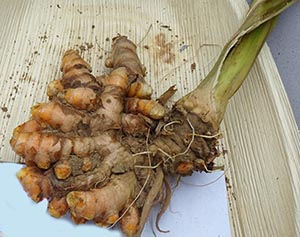 |
| Turmeric root. |
Turmeric root features dark brown skin on the exterior and deep orange-yellow flesh internally. Its leaves, as well as the rhizome, feature unique flavors and fragrances. Its taste is described as mild peppery to warm and bitter while its fragrance is sweet and pleasant, slightly reminiscent of a mix of orange zest, and ginger to which it is related. Once harvested, the root is boiled, dried, and ground to prepare distinctive bright-yellow turmeric spice powder.
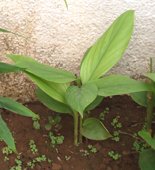 |
| Turmeric plant. |
Black turmeric (Curcuma caesia) is a blue-black rhizome found in Bangladesh and the North-Eastern states of India. It is often used in place of yellow turmeric in the cooking in these regions.
Turmeric plant does not produce seeds and only propagates through its underground spreading rhizomes.
Health Benefits of Turmeric
Turmeric has been in use since antiquity for its anti-inflammatory (painkiller), carminative, anti-flatulent, and anti-microbial properties.
The herb contains health benefiting essential oils such as turmerone, zingiberene, cineole, and p-cymene.
Curcumin, a polyphenolic compound in the root, is the primary pigment that imparts deep orange color to the turmeric. Many laboratory animal studies have suggested that curcumin may have anti-tumor, antioxidant, anti-arthritic, anti-amyloid, anti-ischemic, and anti-inflammatory properties.
This traditional herb does not contain any cholesterol; however, it is rich in antioxidants and dietary fiber, which helps to control blood LDL or "bad cholesterol" levels.
It is a very rich source of many essential vitamins such as pyridoxine (vitamin B6), choline, niacin, riboflavin, etc. 100 g herb provides 1.80 mg or 138% of the daily recommended levels of pyridoxine. Pyridoxine is employed in the treatment of homocystinuria, sideroblastic anemia, and radiation sickness. Niacin helps prevent "pellagra" or dermatitis.
The fresh root contains good levels of vitamin C. 100 g is composed of 23.9 mg of this vitamin. Vitamin C is a water-soluble vitamin and a powerful natural antioxidant, which helps the body develop immunity against infectious agents, and remove harmful free oxygen radicals.
Turmeric contains good amounts of minerals like calcium, iron, potassium, manganese, copper, zinc, and magnesium. Potassium is an important component of cells and body fluids that helps in controlling heart rate and blood pressure. The human body utilizes manganese as a co-factor for the antioxidant enzyme, superoxide dismutase. Iron is an essential co-factor for cytochrome oxidase enzymes at cellular level metabolisms and is required for red blood cell (RBC's) productions.
Turmeric is one of the readily available, cheap herbs that contain notable phytonutrients profile. At 1,59,277 µmol TE/100 g, its total-ORAC value or antioxidant strength is one of the highest among known herb and spice species.
100 g of turmeric provides 53% of dietary fiber, (% of Recommended Daily Allowance, RDA per 100 g)
138 % of vitamin B-6 (pyridoxine),
32% of niacin,
43 % of vitamin C,
21 % of vitamin E,
54 % of potassium,
517 % of iron,
340 %of manganese and
40 % of zinc.
but 0% cholesterol.
Just a few grams of turmeric per day either in the form of powder, crushed root, or fresh root can provide enough nutrients to help you keep away from anemia, neuritis, and memory disorders and offer protection against cancers, infectious diseases, high blood pressure, and strokes.
Medicinal uses
Research studies have suggested that Curcumin, a polyphenolic compound, found in this herb may inhibit the multiplication of tumor cells, including multiple myelomas, pancreatic cancer, and colon cancer.
Research studies have suggested that Curcumin, a polyphenolic compound, found in this herb may inhibit the multiplication of tumor cells, including multiple myelomas, pancreatic cancer, and colon cancer.
It contains health benefiting essential oils such as turmerone, curcumene, cineole, and p-cymene. These compounds have applications in the cosmetic industry.
Curcumin, along with other antioxidants, has been found to have anti-amyloid and anti-inflammatory properties. Thus, it is useful in preventing or at least delaying the onset of Alzheimer’s disease.
The root herb contains no cholesterol; however, it is rich in antioxidants and dietary fiber. Together, they help control blood cholesterol levels, and offer protection from coronary artery disease and stroke risk.
Early laboratory studies have been suggestive that turmeric is liver protective, anti-depressant, and anti-retroviral effects.
It has been in use since very long ago as an essential ingredient in traditional Chinese and Ayurvedic medicines for its anti-microbial, anti-inflammatory, carminative, and anti-flatulent properties. (Medical disclaimer).
| Principle | Nutrient Value | Percent of RDA |
|---|---|---|
| Energy | 354 Kcal | 17% |
| Carbohydrates | 64.9 g | 50% |
| Protein | 7.83 g | 14% |
| Total Fat | 9.88 g | 33% |
| Cholesterol | 0 mg | 0% |
| Dietary Fiber | 21 g | 52.5% |
| Vitamins | ||
| Folates | 39 µg | 10% |
| Niacin | 5.140 mg | 32% |
| Pyridoxine | 1.80 mg | 138% |
| Riboflavin | 0.233 mg | 18% |
| Vitamin A | 0 IU | 0% |
| Vitamin C | 25.9 mg | 43% |
| Vitamin E | 3.10 mg | 21% |
| Vitamin K | 13.4 µg | 11% |
| Electrolytes | ||
| Sodium | 38 mg | 2.5% |
| Potassium | 2525 mg | 54% |
| Minerals | ||
| Calcium | 183 mg | 18% |
| Copper | 603 µg | 67% |
| Iron | 41.42 mg | 517% |
| Magnesium | 193 mg | 48% |
| Manganese | 7.83 mg | 340% |
| Phosphorus | 268 mg | 38% |
| Zinc | 4.35 mg | 39.5% |
Selection and storage
|
|
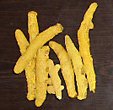
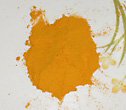
| Turmeric roots-dried. | Turmeric-powder. |
Turmeric plant can be easily grown in your home garden or as a potherb so that its fresh root and leaves can be readily available for use as and when required.
In the herb store and local markets, fresh as well as dry turmeric horns can be readily found. Otherwise, one may choose packed turmeric powder from authentic manufacturers (since adulteration is not uncommon). Whenever possible, try to buy a branded organic product that will give you some sort of assurance that it has not been irradiated and is free from pesticide residues.
Fresh roots can be kept in the refrigerator for up to a month or so. Its powder, however, should be stored in the fridge in airtight containers.
Culinary uses
Turmeric powder has been in use as a food colorant, natural food preservative, and flavor base since ancient times. It is traditionally recognized as "Indian saffron" since its deep yellow-orange color is quite similar to that of the prized saffron.
Wash fresh roots in cold running water or rinse for a few minutes to remove any sand, grit, soil, or pesticide residues. The fresh powder can be prepared at home with the following simple steps: first, the root is boiled in the water, dried under the sun, and then ground to get flavorful yellow-colored powder.
In order to keep the fragrance and flavor intact, it is generally added at the last moment in the cooking recipes since prolonged cooking would result in the evaporation of its essential oils.
It is essential to be watchful while handling turmeric since its pigments can easily stain clothes and kitchen walls. To avoid a lasting stain, immediately wash any area with soap and water.
Here are some culinary uses:
It is a natural food preservative. The paste is used to marinate fish, chicken, and meat to enhance shelf-life; and particularly to offset the stingy smell of fish.
In India, the sun-dried roots are mixed with other spices, curry leaves, peppers, etc., and then gently roasted and ground to prepare a masala curry powder.
Turmeric powder complements well with any vegetable or meat preparations and mixes nicely with other spicy powders and herbs, enhancing the overall flavor and fragrance of the dishes.
It has been used in the preparations of soups, and salad dressings and has been found application in the food industry like canned beverages, baked products, dairy products, ice cream, yogurt, yellow cakes, orange juice, biscuits, popcorn color, sweets, cake icings, cereals, sauces, etc.
Turmeric-tea is a popular drink in Okinawan population and many Asian countries.
- Turmeric leaves are added to flavor sweet dishes (rice-milk payasam) and ghee (melted butter) in some parts of South India, Thailand, and other South Asian regions.
≺≺ Read :- How does curcumin in turmeric compare to other antioxidants?.
≺≺ Back to Herbs from Turmeric nutrition. Visit here for an impressive list of all variety of herbs with complete illustrations of their nutrition facts and health benefits.
≺≺ Back to Home page.
Further Resources:
Curcumin: FAO-Pdf.
Curcumin: An Anti-Inflammatory Molecule from a Curry Spice on the Path to Cancer Treatment-Pdf.