Pears Nutrition facts
Sweet, delicious, and richly flavored pears offer the crunchiness of apples yet juicy as peach and nectarine. They are widely popular, particularly in the whole of the northern hemisphere, for their unique nutrient qualities.
Botanically, it is a "pome fruit” produced in the Rosaceae family of trees, in the Pyrus genus. Pome fruit plants are average-sized trees found in semi-tropical regions around the northern hemisphere. They bear medium-sized fruits that characteristically have several small seeds at their center encased in a tough capsule. The members of pome family fruits include apple, loquat, quince, medlar, etc.
Scientific name: Pyrus communis.
 |
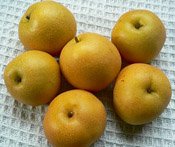 |
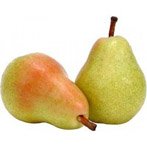
| Pear fruit-Pyrus communis. | Asian Pears- Nashi-Pyrus pyrifolia (Photo courtesy: Sandy Austin) |
Pears are broadly classified based on their place of origin as Asian-pears and European-pears.
Asian varieties feature crispy texture and firm consistency that does not change even after harvesting or storage, permitting them to fit for ready-to-eat. In contrast, European types generally become soft and juicy when allowed to ripen.
In structure, pear fruit is a bell or “pyriform” fruit; 5-6 inches long, and weighs about 200 gm. Fresh fruit is firm in texture with mild ‘apple’ flavor. Externally, its peel is thin and firmly adherent to the flesh; and depending upon the cultivar type, it can be green, red-orange, or yellow-orange in color. Inside, its off-white color flesh is soft and juicy. However, in the case of completely ripe fruits, its flesh may turn a grainy textured with a gritty sensation while cutting with the knife. The center of the fruit is more or less similar to the apple in appearance with centrally located tiny, inedible seeds.
Some of the popular Asian varieties are Ichiban Nashi, Shinsui, Shinseki, and Nijisseki.
Popular European types are Bartlett and Comice.
9 Amazing Health Benefits of Pears
Pears fruit is packed with health-benefiting nutrients such as dietary fiber, antioxidants, minerals, and vitamins, which are necessary for optimum health. The total measured antioxidant strength (ORAC value) in pears is 2941 µmol TE/100 g.
Pears are a good source of dietary fiber. 100 g fruit provides 3.1 g or 8% of fiber per 100 g. Regular eating of this fruit may offer protection against colon cancer. Most of the fiber in them is a non-soluble polysaccharide (NSP), which functions as a good bulk laxative in the gut.
Additionally, its gritty fiber content binds to cancer-causing toxins and chemicals in the colon, protecting its mucosa from contact with these compounds.
Also, pear fruit is one of the very low-calorie fruits; provides just 58 calories per 100g. A low-calorie but high-fiber diet may help bring a significant reduction in body weight and blood LDL cholesterol levels.
They contain good quantities of vitamin-C. Fresh fruits provide about 7% of RDA per 100 g of this vitamin.
They are a modest source of antioxidant flavonoid phytonutrients such as β-carotene, lutein, and zeaxanthin. These compounds, along with vitamins C and A, help the body protected from harmful free radicals.
The fruit is a good source of minerals such as copper, iron, potassium, manganese, and magnesium as well as B-complex vitamins such as folates, riboflavin, and pyridoxine (vitamin B-6).
Although not well documented, pears are among the least allergenic of all the fruits. For the same reason, they are often recommended by health practitioners as a safe alternative in the preparation of food products for allergic persons.
Pears have been suggested in various traditional medicines for the treatment of colitis, chronic gallbladder disorders, arthritis, and gout.
| Principle | Nutrient Value | Percent of RDA |
|---|---|---|
| Energy | 58 Kcal | 3% |
| Carbohydrates | 13.81 g | 11% |
| Protein | 0.38 g | <1% |
| Total Fat | 0.12 g | 0.5% |
| Cholesterol | 0 mg | 0% |
| Dietary Fiber | 3.10 g | 8% |
| Vitamins | ||
| Folates | 7 µg | 2% |
| Niacin | 0.157 mg | 1% |
| Pantothenic acid | 0.048 mg | 1% |
| Pyridoxine | 0.028 mg | 2% |
| Riboflavin | 0.025 mg | 2% |
| Thiamin | 0.012 mg | 1% |
| Vitamin A | 23 IU | 1% |
| Vitamin C | 4.2 mg | 7% |
| Vitamin E | 0.12 mg | 1% |
| Vitamin K | 4.5 µg | 4% |
| Electrolytes | ||
| Sodium | 1 mg | 0% |
| Potassium | 119 mg | 2.5% |
| Minerals | ||
| Calcium | 9 mg | 1% |
| Copper | 0.082 mg | 9% |
| Iron | 0.17 mg | 2% |
| Magnesium | 7 mg | 2% |
| Manganese | 2% | |
| Phosphorus | 11 mg | 2% |
| Zinc | 0.10 mg | 1% |
| Phyto-nutrients | ||
| Carotene-ß | 12 µg | -- |
| Crypto-xanthin-ß | 2 µg | -- |
| Lutein-zeaxanthin | 45 µg | -- |
Selection and Storage
Fresh pears can be readily available in the stores. While Bartlett variety is a predominant variety during summer, Comice, Seckel, etc., are chief fall-season pears. Asian pears are generally ready to harvest by August and made available in the stores by September.
Choose fresh, bright, firm-textured fruits with rich flavor. Avoid those with pressure marks on the skin, which indicates an underlying mottled pulp. Some fruits, especially the Asian varieties, may feature rusted speckles over their skin, which otherwise is an acceptable characteristic.
Keep unripe pears in a basket with separate chambers at room temperature or wrap in paper to ripen as you do in papaya. The fruit is ripe once it yields to gentle pressure and is ready to be eaten.
Eat them while they are fresh to get maximum nutrient benefits. Otherwise, keep them in the refrigerator, where they stay fresh for a few days.
Preparation and Serving tips
Wash them in clean, running water before use to remove any surface dirt and pesticide/fungicide residues.
Trim both ends using a paring knife and cut into halves. Take out centrally located small seeds. Slice the fruit into desirable cubes or chunks.
As in apple, sliced fruit pieces turn brown on exposure to air due to the conversion of iron from ferrous oxide to ferric oxide. If you have to serve them sliced, rinse slices in acid water added with a few drops of fresh lemon.
Since several of the vitamins and minerals are concentrated in significant quantities just underneath the skin, pears should be eaten as a whole along with their skin to get maximum benefits.
Here are some serving tips:
Eat them as they are without any additions to get maximum health benefits.
Pear is also used in the preparation of fruit juice, jam, pie, and fruit salad.
Add them in a juice mix with other fruits like pineapple, peaches, grapes, etc.
Dried pear slices can be added to baby food.
Safety profile
Pears are among the least allergenic of all fruits. For the same reason, they are often recommended by health practitioners as a safe alternative in the preparation of food products for allergic persons.(Medical Disclaimer).
≻≻-Back to Fruits from Pears. Visit here for an impressive list of all varieties of fruits with complete illustrations of their nutrition facts and health benefits.
≻≻-Back to Home page.
Further reading and Resources:
Stanford School of Medicine Cancer information Page- Nutrition to Reduce Cancer Risk.