Peanuts Nutrition Facts
Delicious, crunchy, and nutty peanuts have been a beloved oilseed among humanity for centuries. The kernels are enriched with many noteworthy health-benefiting nutrients essential for optimum health and wellness. They are actually legumes, but carry almost all the qualities of other popular edible nuts such as pistachios, almonds, etc.
Botanically, peanuts are tiny, underground fruit pods of a plant belonging to the Fabaceae family, in the genus Arachis. Some of the common names are groundnut and earthnuts.
Scientific name: Arachis hypogaea.
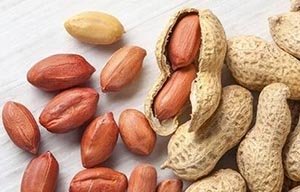
|
| Peanuts |
Peanut is a small, annual dicotyledon herb growing up to a foot tall above the ground. It is thought to have originated in Central America, from where it spread to the rest of the world through Spanish explorers. Today, it is one of the most widely cultivated oilseeds and established commercial crops in China, India, African nations, and the United States of America.
It typically takes 120 to 150 days for a peanut crop to mature after being planted. The process of peanut development is quite interesting! Its yellow flowers, after self-pollination, develop into "ovaries" called pedicels and elongate rapidly to turn downward to bury several inches deep in the soil from where the fruits develop into peanut pods we know.
To harvest, the entire plant, including roots, is dug out of the soil. Each plant may hold 10-150 fruit pods. The pods have a thick, wrinkled outer shell with 2-3 constrictions as in bean pods. Each peanut kernel is covered with a papery thin, brown layer and can be split into halves as in any other legumes.
Bambara groundnuts (Vigna subterranea L. Verdc) are different from American peanuts (Arachis hypogaea) in that they appear somewhat like round cowpeas. Bambara groundnuts are indeed one of the popular legume crops in many African regions, providing much-needed protein, fat, and other essential nutrients of vegetable origin.
Health Benefits of Peanuts
Peanuts are rich in energy (567 calories per 100 g) and contain health-benefiting nutrients, minerals, antioxidants, and vitamins that are essential for optimum health.
They contain sufficient levels of monounsaturated fatty acids (MUFA), especially oleic acid. MUFA helps lower LDL or "bad cholesterol" and increases HDL or "good cholesterol" levels in the blood. Research studies suggest that the Mediterranean diet, which is rich in monounsaturated fatty acids, helps prevent coronary artery disease and stroke risk by favoring a healthy serum lipid profile.
Peanut kernels are a good source of dietary protein, composed of fine quality amino acids that are essential for growth and development.
Research studies have shown that peanuts contain high concentrations of polyphenolic antioxidants, primarily p-coumaric acid. This compound is thought to reduce the risk of stomach cancer by limiting the formation of carcinogenic nitrosamines in the stomach.
Peanuts are an excellent source of resveratrol, another polyphenolic antioxidant. Resveratrol has been found to have a protective function against cancers, heart disease, degenerative nerve disease, Alzheimer's disease, and viral/fungal infections.
Furthermore, studies suggest that resveratrol may reduce stroke risk by altering molecular mechanisms in the blood vessels (reducing susceptibility to vascular damage through decreased activity of angiotensin, a systemic hormone responsible for blood vessel constriction that would elevate blood pressure), and by increasing production of the vasodilator hormone, nitric oxide.
Recent research studies suggest that roasting/boiling enhances antioxidant bioavailability in peanuts. It has been found that boiled peanuts have two- and four-fold increases in isoflavone antioxidants, biochanin-A and genistein content, respectively. (Journal of Agricultural and Food Chemistry)
The kernels are an excellent source of vitamin E (α-tocopherol), containing about 8 g per 100 g. Vitamin E is a powerful lipid-soluble antioxidant that helps maintain the integrity of mucosa and skin by protecting from harmful oxygen free radicals.
The nuts are packed with many important B-complex groups of vitamins such as riboflavin, niacin, thiamin, pantothenic acid, vitamin B-6, and folates. 100 g of peanuts provide about 85% of the Recommended Daily Intake (RDI) of niacin, which contributes to health and blood flow to the brain.
The nuts are a rich source of minerals like copper, manganese, potassium, calcium, iron, magnesium, zinc, and selenium.
Just a handful of peanuts a day provides enough recommended levels of phenolic antioxidants, minerals, vitamins, and protein.
| Principle | Nutrient Value | Percent of RDA |
|---|---|---|
| Energy | 567 Kcal | 29% |
| Carbohydrates | 16.13 g | 12% |
| Protein | 25.80 g | 46% |
| Total Fat | 49.24 g | 165% |
| Cholesterol | 0 mg | 0% |
| Dietary Fiber | 8.5 g | 22% |
| Vitamins | ||
| Folates | 240 µg | 60% |
| Niacin | 12.066 mg | 75% |
| Pantothenic acid | 1.767 mg | 35% |
| Pyridoxine | 0.348 mg | 27% |
| Riboflavin | 0.135 mg | 10% |
| Thiamin | 0.640 mg | 53% |
| Vitamin A | 0 IU | 0% |
| Vitamin C | 0 | 0% |
| Vitamin E | 8.33 mg | 55.5% |
| Electrolytes | ||
| Sodium | 18 mg | 1% |
| Potassium | 705 mg | 15% |
| Minerals | ||
| Calcium | 92 mg | 9% |
| Copper | 1.144 mg | 127% |
| Iron | 4.58 mg | 57% |
| Magnesium | 168 mg | 42% |
| Manganese | 1.934 mg | 84% |
| Phosphorus | 76 mg | 54% |
| Selenium | 7.2 µg | 13% |
| Zinc | 3.27 mg | 30% |
| Phyto-nutrients | ||
| Carotene-alpha | 0 µg | -- |
| Crypto-xanthin-beta | 0 µg | -- |
| Lutein-zeaxanthin | 0 µg | -- |
Selection and storage
|
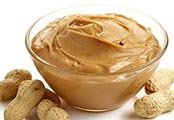 |
| Peanut kernels in a bowl. | Peanut butter. |
Peanuts are typically available year-round in markets. Various types, including shelled, unshelled, salted, and sweetened, are commonly found in stores for purchase. Opt for unshelled nuts (with intact outer shells) instead of processed ones, typically sold in airtight packs or bulk bins. Look for pods with compact, off-white, healthy-looking shells that are uniform in size and feel heavy in hand. Ensure they are free from cracks, mold, spots, and any rancid smell.
Unshelled groundnuts can be stored in a cool, dry place for several months, while shelled nuts should be kept in an airtight container in the refrigerator to prevent them from becoming rancid.
Preparation and Serving Methods
Peanut kernels can be enjoyed as-is, either by cracking them with firm pressure between fingers or using clippers or a nutcracker machine. Alternatively, they can also be consumed roasted, boiled, salted, or sweetened.
They possess a nutty yet pleasantly sweet taste. Roasting enhances their flavor, increases antioxidant levels such as p-coumaric acid, and helps eliminate toxic aflatoxin.
Roasted and crushed kernels are often sprinkled over salads and desserts, particularly sundaes and other dairy-based preparations.
Boiled peanuts offer a unique flavor and taste. Boiling enriches their nutritional and antioxidant profile.
Bumbu kacang (peanut sauce) is a well-known preparation that incorporates fried peanuts, palm sugar, shallots, galangal, garlic, tamarind, lemon juice, lemongrass, salt, chili, pepper, and sweet soy sauce, ground together and mixed with water to achieve a semi-solid texture.
Peanut butter is a food paste made from roasted nuts, with or without the addition of oil. It is popular as a dip or spread. Peanut milk is also a favored lactose-free healthy drink.
Peanut “chutney” or paste, made from these nuts, chili peppers, salt, coriander leaves, garlic, and mustard seeds, is a popular dip in South Indian and Sri Lankan regions.
Peanut oil is another healthy source of edible cooking oil, akin to soy or olive oils. Widely used in cooking for its aromatic flavor, it is especially popular in South Indian States and Sri Lanka.
Safety Profile
Peanut allergy is a form of hypersensitivity response exhibited by certain individuals to food substances containing these nuts. This heightened immune reaction can lead to severe physical symptoms such as vomiting, stomach pain, and swelling of the lips and throat, potentially resulting in breathing difficulties, chest congestion, and, in extreme cases, death. Consequently, it is strongly advised for these individuals to avoid any food preparations containing peanut products.
Peanuts are particularly prone to fungal (mold) infections, notably by Aspergillus flavus, which produces aflatoxin. Aflatoxin is a potent and hazardous carcinogen capable of causing liver cirrhosis and cancer. Roasting can help diminish toxin levels in peanuts, providing some measure of protection against aflatoxin. (Medical disclaimer)
Also read ≻≻-
≻≻-Hazelnuts Nutrition facts and health benefits.
≻≻-Peanut Oil-Nutrition facts and health benefits.
≻≻-Back to Nuts and seeds from Peanuts. Visit here for an impressive list of nuts and seeds with complete illustrations of their nutrition facts and health benefits.
≻≻-Back to Home page.
Further Reading:
Refer Stanford Medicine cancer center information page-Nutrition to reduce cancer risk.