Mustard seeds Nutrition facts
Mustard seeds have been highly prized culinary oil seeds been in use since earlier times. The seeds are fruit pods obtained from the mustard plant, in the Brassica family. Some of the close members of mustards in this family include cabbage, broccoli, brussels-sprouts, etc.
Scientific name: Brassica juncea.
Mustards are native to Asia Minor, but these days cultivated as one of the main commercial crops in Canada, India, China, and temperate regions of Europe.
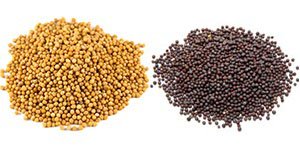 |
| Mustard seeds. Note for tiny round, white and brown seeds. (Photo : by wordridden) |
Mustards are winter crops. The plant reaches about 4-5 feet in height and bears golden-yellow flowers. They are tiny, round seeds measuring about one mm in diameter found encased inside a fruit pod.
In general, three main varieties of mustard are grown worldwide for use.
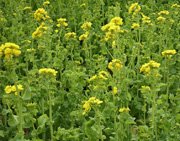
|
| Mustard plant in a farm field. Note for bright yellow flowers. (Photo by: itchys). |
White mustard seeds (Sinapis alba or Brassica alba): The seeds are light straw-yellow and slightly larger than the other two varieties. White seeds exhibit mild pungency.
Black mustard (Brassica nigra): The seeds commonly grow in South Asia. They are sharp and more pungent than the other two varieties.
Brown mustard (Brassica juncea): The seeds are native to the sub-Himalayan plains of Northern India.
Health benefits of Mustard seeds
Generally perceived as a health-benefiting spice, mustard seeds are indeed very rich in phytonutrients, minerals, vitamins, and antioxidants.
Being one of the chief oil seeds, mustards are indeed very high in calories; 100 g of seeds provide 508 calories. Nonetheless, the seeds are made of quality proteins, essential oils, vitamins, minerals, and dietary fiber.
The seeds are high in essential oils as well as plant sterols. Some of the important sterols include such as brassicasterol, campesterol, sitosterol, avenasterol, and stigmasterol. Some of the glucosinolate and fatty acids in the seeds are sinigrin, myrosin, erucic, eicosanoic, oleic, and palmitic acids.
Mustard seeds are an excellent source of essential B-complex vitamins such as folates, niacin, thiamin, riboflavin, pyridoxine (vitaminB-6), pantothenic acid. These vitamins are essential in the sense that the body requires them from external sources to replenish. These B-complex groups of vitamins help in enzyme synthesis, nervous system function, and regulating body metabolism.
100 g of mustards provide 4.733 mg of niacin (vitamin B-3). Niacin is a part of nicotinamide coenzymes that help lower blood cholesterol and triglyceride levels.
Mustard seeds contain flavonoid and carotenoid antioxidants such as carotenes, zeaxanthin, and lutein. In addition, the seeds compose a small amount of vitamin antioxidants such as vitamin-A, C, and vitamin-K.
The seeds are an excellent source of vitamin-E, gamma tocopherol; contain about 19.82 mg per 100 g (about 132% of RDA). Vitamin E is a powerful lipid-soluble antioxidant, required for maintaining the integrity of the cell membrane of mucosa and skin by protecting it from harmful oxygen-free radicals.
Mustards are rich source of health benefiting minerals. Calcium, manganese, copper, iron, selenium, and zinc are some of the minerals especially concentrated in these seeds. Calcium helps build bone and teeth. Manganese is used by the body as a cofactor for the antioxidant enzyme superoxide dismutase. Copper is required in the production of red blood cells. Iron is essential for the red blood cell formation and cellular metabolism.
| Principle | Nutrient Value | Percent of RDA |
|---|---|---|
| Energy | 508 Kcal | 25% |
| Carbohydrates | 28.09 g | 21% |
| Protein | 26.08 g | 46% |
| Total Fat | 36.24 g | 121% |
| Cholesterol | 0 mg | 0% |
| Dietary Fiber | 12.2 g | 32% |
| Vitamins | ||
| Folates | 162 µg | 40% |
| Niacin | 4.733 mg | 30% |
| Pantothenic acid | 0.810 mg | 16% |
| Pyridoxine | 0.397 mg | 31% |
| Riboflavin | 0.261 mg | 20% |
| Thiamin | 0.805 mg | 67% |
| Vitamin A | 31 IU | 1% |
| Vitamin C | 7.1 mg | 12% |
| Vitamin E | 19.82 mg | 132% |
| Vitamin K | 5.4 µg | 4% |
| Electrolytes | ||
| Sodium | 13 mg | 1% |
| Potassium | 738 mg | 16% |
| Minerals | ||
| Calcium | 266 mg | 27% |
| Copper | 0.645 mg | 71% |
| Iron | 9.21 mg | 115% |
| Magnesium | 370 mg | 92% |
| Manganese | 2.448 mg | 106% |
| Selenium | 208.1 µg | 378% |
| Zinc | 6.08 mg | 55% |
| Phyto-nutrients | ||
| Carotene-ß | 18 µg | -- |
| Crypto-xanthin-ß | 0 µg | -- |
| Lutein-zeaxanthin | 508 µg | -- |
Medicinal uses
Mustard seeds and their oil have traditionally been used to relieve muscle pain, rheumatism, and arthritic pain.
In India, mustard oil is applied to the scalp and is believed to stimulate hair growth.
Its ground seeds act as a laxative, and stimulant to the gastric mucosa and increase intestinal secretion. (Disclaimer).
Selection and storage
Whole mustard seeds have no flavor and smell of their own at all. The hot, pungent taste of mustard is because of the release of irritant gasses when seeds are crushed and mixed with water to activate the enzyme, myrosinase.
In the spice stores, one may find all varieties of whole seeds, ground powder, pastes, and different mustard sauces. White mustard seeds feature less pungency than brown or black mustard seeds
Whole, dry mustards keep well for months at room temperature when stored in cool, dry, and humid-free conditions. However, ground seeds and other preparations of mustard should be kept in tight, air-sealed containers and placed inside the refrigerator for extended shelf life.
Culinary uses
Mustards are used extensively in Indian, Pakistani, Bangladesh, Mediterranean, and German cooking. Whole seeds, ground or powdered form, prepared pastes, sauces, and oil are all used in the kitchen.
The aroma and pungent flavor of mustards come from the essential oil, sinalbin. This compound releases isothiocyanate chemicals upon enzymatic reaction mediated by the myrosinase enzyme.
Here are some serving tips:
Mustards exude pungent, nutty flavor when gently roasted under low flame.
Brown as well white mustards are used in pickling with raw mango, bitter gourd, etc., in India.
- Mustard fish curry, prepared with thin mustard paste, coriander powder, chilies and nigella is popular in Bangladesh and West Bengal in the Indian subcontinent.
Different kinds of mustards employ mustard seeds mixed with herbs, spices, honey, tomato, etc., in many parts of the world.
Mustard paste (hot pepper mustard) is used in salad dressings, sandwiches, and hot-dogs, and mayonnaise.
American yellow mustard is prepared with white seeds, vinegar, spices, turmeric, and sugar.
Mustard oil is one of the popular cooking oils used in many North Indian and Pakistani recipes.
Safety profile
In general, mustard seeds and oil are considered safe for human consumption when used in small amounts. A large quantity of mustard may cause gastric irritation, bleeding from the stomach, and intestinal mucosa. It may cause skin burns when applied over the skin for a longer time. The Erucic acid in mustard has been found to have possible genotoxic and carcinogenic effects in laboratory animal studies.
(Medical Disclaimer: The information and reference guides in this website are intended solely for the general information of the reader. It is not to be used to diagnose health problems or for treatment purposes. It is not a substitute for medical care provided by a licensed and qualified health professional. Please consult your health care provider for any advice on medications.)
≻≻-Back to Spices from Mustard seeds. Visit here for an impressive list of healthy spices with complete illustrations of their nutrition facts and health benefits.
≻≻-Back to Home page.
Further reading:
Gernot Katzar's Spice pages (opens in new window).