Green beans Nutrition facts
Green beans, also known as French beans or snap beans, are tender, elongated, firm yet flexible edible pods of the bean plant. The beans are one of the delights of vegetarian lovers for their wholesome nutritional properties. They are the unripe or immature pods belonging to the common Fabaceae family, of the genus, Vicia. Scientific name: Phaseolus vulgaris.
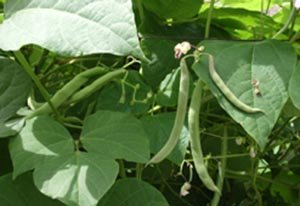 |
| Phaseolus vulgaris vine with bean pods. |
French beans require well-drained, sandy soil for optimal growth. In about 80 days from seedling, the pods are harvested while they are still immature and tender stage. The green bean pods are long, cylindrical, enclose tiny seeds inside and snap easily.
Broadly, tender green beans (French beans) are classified as one of the cultivars of common beans (Phaseolus vulgaris). Depending on their growth habits, the beans are further differentiated as "bush beans" which stand erect without the need of support, and "Pole Beans" which need climb supports (trellis). The other varieties of unripe fruit pods of the bean family include shell beans, Pinto or mottled beans, White beans, red or kidney beans, Black beans, Pink beans, and yellow-wax beans. Almost all the varieties of beans can be available year-round.
Fava or broad beans (Vicia faba) are large, flat light green pods usually eaten shelled for their delicious beans. Lima beans (Phaseolus lunatus) are large, plump, pale-green pods with kidney-shaped seeds.
Health benefits of Green beans
Fresh green beans are very low in calories (31 calories per 100 g of raw bean pods) and contain no saturated fat. Nevertheless, these lean pod vegetables are an excellent source of vitamins, minerals, and plant-derived micronutrients.
The beans are a very rich source of dietary fiber (9% per 100g RDA) which acts as a bulk laxative. Fiber helps to protect the colon mucosa by decreasing its exposure time to toxic substances as well as by binding to cancer-causing chemicals in the gut.
An adequate amount of fiber in the diet has also been shown to reduce blood cholesterol levels by decreasing the reabsorption of cholesterol-binding bile acids in the colon.
Green beans contain excellent levels of vitamin-A, and health-promoting flavonoid polyphenolic antioxidants such as lutein, zeaxanthin, and β -carotene in the right amounts. These compounds help act as protective scavengers against oxygen-derived free radicals and reactive oxygen species (ROS) that play a role in aging and various disease processes.
Zea-xanthin, an important dietary carotenoid in the beans, is selectively absorbed into the retinal macula lutea in the eyes, where it is thought to provide antioxidant and protective UV-light filtering functions. Therefore, xanthin chemicals in green beans offer some protection in the prevention of age-related macular disease (ARMD) in older adults.
Snap beans are an excellent source of folates. 100 g fresh beans provide 37 µg or 9% of folates. Alongside vitamin B-12, folic acid is one of the essential components of DNA synthesis and cell division. A good folate diet, when given during preconception periods and pregnancy, may help prevent neural tube defects in newborn babies.
They also carry good amounts of vitamin-B6 (pyridoxine), thiamin (vitamin B-1), and vitamin-C. Consumption of foods rich in vitamin C helps the body develop resistance against infectious agents and scavenge harmful oxygen-free radicals.
Moreover, they contain healthy amounts of minerals like iron, calcium, magnesium, manganese, and potassium, which are essential parts of carbohydrate, protein, and fat metabolism. Manganese is a co-factor for the antioxidant enzyme superoxide dismutase, which is a very potent free radical scavenger. Potassium is an important component of cells and body fluids that helps control heart rate and blood pressure.
| Principle | Nutrient Value | Percent of RDA |
|---|---|---|
| Energy | 31 Kcal | 1.5% |
| Carbohydrates | 7.13 g | 5.5% |
| Protein | 1.82 g | 3% |
| Total Fat | 0.34 g | 1% |
| Cholesterol | 0 mg | 0% |
| Dietary Fiber | 3.4 g | 9% |
| Vitamins | ||
| Folates | 37 µg | 9% |
| Niacin | 0.752 mg | 5% |
| Pantothenic acid | 0.094 mg | 2% |
| Pyridoxine | 0.074 mg | 5.5% |
| Riboflavin | 0.105 mg | 8% |
| Thiamin | 0.084 mg | 7% |
| Vitamin A | 690 IU | 23% |
| Vitamin C | 16.3 mg | 27% |
| Vitamin K | 14.4 µg | 12% |
| Electrolytes | ||
| Sodium | 6 mg | 0.4% |
| Potassium | 209 mg | 5.5% |
| Minerals | ||
| Calcium | 37 mg | 3.7% |
| Iron | 1.04 mg | 13% |
| Magnesium | 25 mg | 6% |
| Manganese | 0.214 mg | 9% |
| Phosphorus | 38 mg | 6% |
| Zinc | 0.24 mg | 2% |
| Phyto-nutrients | ||
| Carotene-β | 379 µg | -- |
| Carotene-α | 69 µg | -- |
| Lutein-zeaxanthin | 640 µg | -- |
Selection and storage
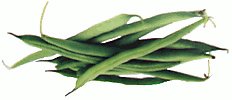
Raw fresh green beans, also called snap beans or French beans, should be tender, long, stiff, but flexible and give a snap sound when broken. Buy them from organic stores for their delicious beany flavor.
Avoid limp or over-matured beans with tough skin.
To store, place them in a perforated plastic bag and keep them in the refrigerator set at high relative humidity. They keep well for up to a week.
Preparation and serving methods
Wash raw beans in cold water. Just before using, remove the strings and trim the ends.
Here are some serving tips:
Green beans are among the most sought after vegetables in stir-fry, stews, grilled-salads, steamed along with carrots, cauliflower, peas, tomato, etc.
They mix well with cheese, nuts, mushroom, seafood, meat, etc.
In Asian regions, they are used in curries, soups, stir-fry with rice (rice pilaf), etc.
Safety profile
Green beans contain oxalic acid, a naturally-occurring substance found in some vegetables which, may crystallize as oxalate stones in the urinary tract in some people. Individuals with a known history of oxalate urinary tract stones are advised against eating vegetables belonging to Brassica and Fabaceae family. Adequate intake of water is, therefore encouraged to maintain normal urine output to minimize the stone risk. (Medical disclaimer).
Also read ≻≻-
≻≻-Lima beans nutrition facts and health benefits.
≻≻-Fava beans nutrition facts and health benefits.
≻≻-Yard-long beans nutrition facts and health benefits.
≻≻-Snap peas nutrition facts and health benefits.
≻≻-Back to Vegetables from Green beans nutrition. Visit here for an impressive list of vegetables with complete illustrations of their nutrition facts and health benefits.
≻≻-Back to Home page.
Further reading:
Refer Stanford School of Medicine Cancer information Page- Nutrition to Reduce Cancer Risk (Link opens in new window).
The journal of nutrition by JN- The Journal of Nutrition. (Link opens in new window).