Fenugreek seeds Nutrition facts
Fenugreek seeds are tiny, bitter, dicotyledonous seeds of the fenugreek herb. They exhibit a strongly aromatic and pungent flavor when toasted gently.
Traditionally, fenugreeks have been used to cure digestive problems and to improve breast milk secretion in nursing mothers.
In the botany, fenugreek is a small annual leguminous herb belong to the Fabaceae family, and genus: Trigonella. Scientific name: Trigonella foenum-graecum. Some of the common names of herb fenugreek include greek-hay, methi seeds, bird's foot, greek-clover, etc.
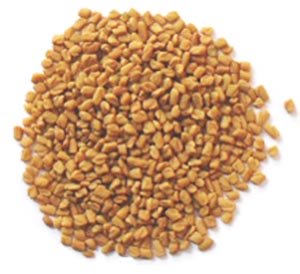 |
| Fenugreek seeds (Trigonella foenum-graecum). Note for yellow-brown seeds. |
Fenugreek is native to the sub-Himalayan plains of the Indian subcontinent, and today, it is widely grown all over Southern and Mediterranean Europe, Middle-East Asia, and northern African regions.
Fenugreek grows up to about 1-2 feet in height with light green color trifoliate leaves and white flowers. It bears long, slender, yellow-brown pods containing about 10-20 golden-yellow color seeds. Its seeds are small, hard, and resemble tiny, multi-faceted stone-pieces. Raw seeds have maple flavor and bitter taste; however, their taste becomes more acceptable once they are gently roasted under a low flame.
Health benefits of Fenugreek seeds
Fenugreek seeds are a rich source of minerals, vitamins, and phytonutrients. 100 g seeds carry 323 calories.
The seeds compose ample amounts of soluble dietary fiber. Soaking them in water softens their outer coat and turns it slimy (mucilaginous). 100 g of seeds provide am 24.6 g or over 65% of dietary fiber.
Non-starch polysaccharides (NSP) constitute a significant portion of this fiber content in the fenugreek seeds. Some of the major NSPs include saponins, hemicellulose, mucilage, tannin, and pectin. These compounds help lower blood LDL-cholesterol levels by inhibiting bile salts re-absorption in the colon. They also bind to toxins in the food and contribute to protecting the colon mucosa from cancers.
NSPs (non-starch polysaccharides) increase the bulk of the food and speed up bowel movements. Altogether, NSPs assist in smooth digestion and help relieve constipation ailments.
It has been established that amino acid 4-hydroxy isoleucine in the fenugreek seeds has facilitator action on insulin secretion. Besides, fiber in them slows down the rate of glucose absorption in the intestines and thus helps better regulate blood sugar levels. Fenugreek seeds are therefore one of the recommended food ingredients in the diabetic diet.
The seeds contain many phytochemical compounds such as choline, trigonelline diosgenin, yamogenin, gitogenin, tigogenin, and neotigogens. Together, these compounds contribute to the medicinal properties of fenugreek.
This prized spice is an excellent source of minerals like copper, potassium, calcium, iron, selenium, zinc, manganese, and magnesium. Potassium is an important component of cells and body fluids that helps control heart rate and blood pressure by countering the action of sodium. Iron is essential for red blood cell production and as a co-factor for cytochrome-oxidase enzymes.
It is also rich in many vital vitamins that are essential nutrients for optimum health, including thiamin, pyridoxine (vitamin B6), folic acid, riboflavin, niacin, vitamin-A, and vitamin-C.
| Principle | Nutrient Value | Percent of RDA |
|---|---|---|
| Energy | 323 Kcal | 16% |
| Carbohydrates | 58.35 g | 45% |
| Protein | 23 g | 41% |
| Total Fat | 6.41 g | 21% |
| Cholesterol | 0 mg | 0% |
| Dietary Fiber | 24.6 g | 65% |
| Vitamins | ||
| Folates | 57 µg | 14% |
| Niacin | 1.640 mg | 7% |
| Pyridoxine | 0.600 mg | 46% |
| Riboflavin | 0.366 mg | 28% |
| Thiamin | 0.322 mg | 27% |
| Vitamin A | 60 IU | 2% |
| Vitamin C | 3 mg | 5% |
| Electrolytes | ||
| Sodium | 67 mg | 4.5% |
| Potassium | 770 mg | 16% |
| Minerals | ||
| Calcium | 176 mg | 18% |
| Copper | 1.110 mg | 123% |
| Iron | 33.53 mg | 419% |
| Magnesium | 191 mg | 48% |
| Manganese | 1.228 mg | 53% |
| Phosphorus | 296 mg | 42% |
| Selenium | 6.3 µg | 11% |
| Zinc | 2.50 mg | 23% |
Medicinal uses of Fenugreek seed
Its seeds have been in use in many traditional medicines as a laxative, digestive, and as a remedy for a cough and bronchitis.
If used regularly; fenugreeks may help control cholesterol, triglyceride as well as high blood sugar (glycemic) levels in people with diabetes.
Fenugreek seeds added to cereals and wheat flour (bread) or made into gruel, given to nursing mothers may increase breast milk production.
Selection and storage
Fenugreek seeds are readily available in spice stores all around the year. One may find different forms of seeds such as whole seeds, powdered or vacuum-packed paste in these stores.
Choose whole seeds from authentic brands. The seeds should feature a bright golden-yellow color, hard, and exude delicate maple flavor. Avoid old stocks as they may be infected by fungal mold and out of flavor.
Store whole seeds in an airtight glass container and place them in a cool, dark place where they can stay fresh for several months. Powdered or pasted form of fenugreek, however, should be kept in the air-sealed packets and placed inside the refrigerator.
Culinary uses
Traditionally, fenugreek seeds are being used in a wide range of culinary recipes, especially in the spice mix. The seeds, either whole, sprouted, ground, sauce, or as paste used in a variety of savory dishes in many parts of the Middle East, India, Mediterranean, and Central Asian regions.
Since fenugreek seeds possess a strong aroma and bitter taste, they should be added in small quantities to food to enjoy! Just toast under a low flame to mellow their flavor.
Here are some serving tips:
Fenugreek is one of the chief ingredients in Indian curry and masala powders.
Small quantity of sprouted seeds added to vegetables and lentil dishes.
Fenugreek leaves, known as kasoori methi, either fresh or dried, is one of the prominent leafy-greens featuring in India, Pakistan, and Persian cooking with spinach, potato (aloo-methi), carrots, etc.
Sprouted fenugreek seeds used in salads, paste, dips, fillings, etc.
Safety profile
Excess intake of fenugreek seeds by pregnant mothers would pose a premature childbirth risk to them.
(Medical Disclaimer: The information and reference guides on this website are intended solely for the general information of the reader. It is not to be used to diagnose health problems or for treatment purposes. It is not a substitute for medical care provided by a licensed and qualified health professional. Please consult your health care provider for any advice on medications.)
≻≻-Back to Spices from Fenugreek Seeds. Visit here for an impressive list of healthy spices with complete illustrations of their nutrition facts and health benefits.
≻≻-Back to Home page.
Further reading:
Gernot Katzer's Spice pages.