Apple Fruit Nutrition Facts
Sweet, crisp, and refreshing, apple fruit is among the most popular choices for health-conscious individuals who truly live by the saying, “health is wealth.” Packed with an abundance of phytonutrients and essential antioxidants, apples play a vital role in promoting overall health and well-being.
Rich in health-boosting antioxidants, apples are known for their disease-preventing and immune-supportive properties—rightly supporting the timeless saying, “An apple a day keeps the doctor away.”
Scientific name: Malus domestica.
 |
Apples come from a medium-sized tree belonging to the Rosaceae family. The wild ancestor of modern apples is believed to have originated in the mountainous regions of Kazakhstan, known for their mineral-rich soil. Today, apples are widely cultivated across the globe, especially in the United States, as a major commercial fruit crop.
The apple fruit is typically oval or pear-shaped, with a colorful outer peel that varies in hue depending on the cultivar. Inside, the flesh is crisp, juicy, and off-white to cream in color, offering a pleasant balance of sweet and tart flavors. Its seeds are distinctly bitter and considered inedible.
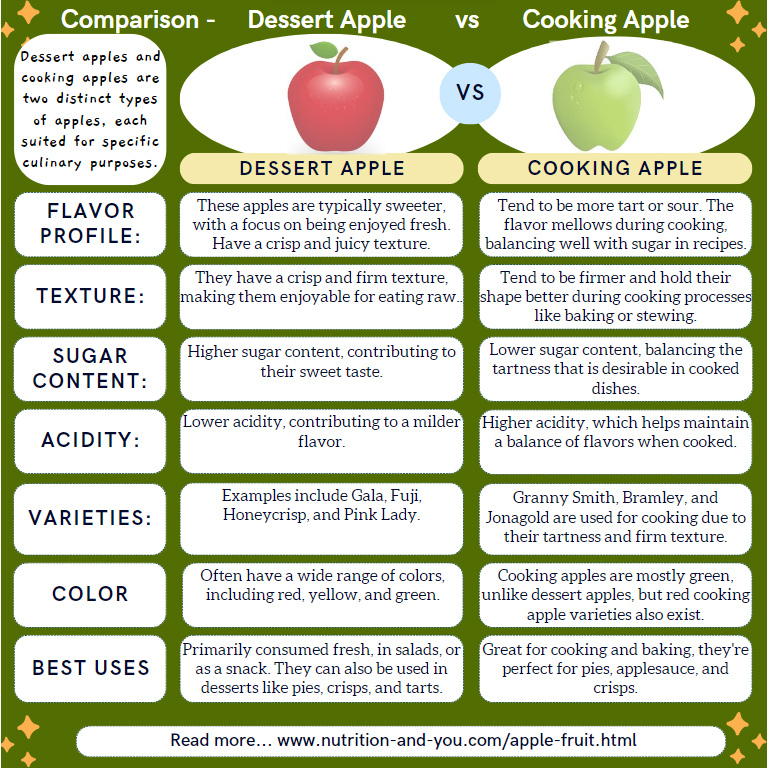
There are hundreds of apple varieties grown worldwide for different purposes—ranging from table and dessert apples to cooking apples. Generally, cooking varieties are larger, firmer, and more tart compared to the sweeter dessert types.
Check out the infographic below to see the key differences between dessert and cooking apple varieties:
 |
Health Benefits of Apple Fruit
Delicious and crisp apples are packed with a powerful blend of phytonutrients and antioxidants. Research shows that these natural compounds support growth, development, and overall well-being, making apples a true superfruit for health-conscious individuals.
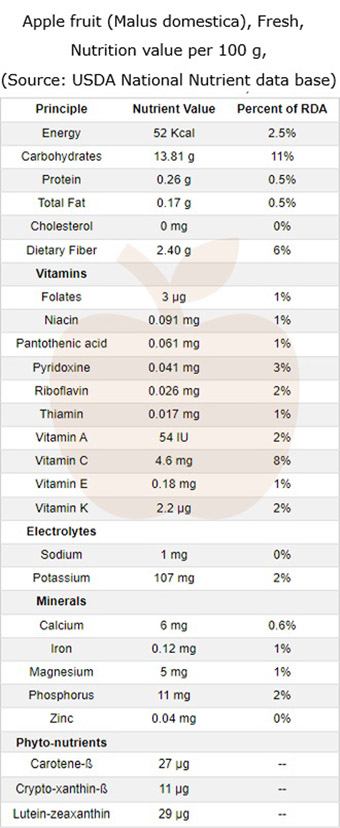
Low in calories yet nutritionally dense, 100 g of fresh apple slices provide only 50 calories. Apples contain no saturated fat or cholesterol and are rich in dietary fiber, which helps reduce LDL (bad) cholesterol absorption in the gut. The fiber also protects the colon’s mucous membrane by binding to and eliminating cancer-causing toxins.
Apples are rich in antioxidant phytonutrients like flavonoids and polyphenols. The total antioxidant strength or ORAC value of 100 g of apple fruit is an impressive 5900 TE. Key flavonoids found in apples include quercetin, epicatechin, and procyanidin B2, all of which contribute to cellular protection.
They also contain significant amounts of tartaric acid, which gives apples their distinct tart flavor. Combined with other antioxidant compounds, tartaric acid helps neutralize the harmful effects of free radicals and supports cellular health.
Apple fruit provides a healthy dose of vitamin C and ß-carotene. Vitamin C acts as a powerful natural antioxidant, enhancing the body’s immunity, protecting against infections, and combating inflammatory free radicals.
Apples are also an excellent source of B-complex vitamins such as riboflavin, thiamin, and pyridoxine (vitamin B6). These vitamins function as vital coenzymes in energy metabolism and support various synthetic processes within the human body.
Additionally, apples contain small but important amounts of minerals including potassium, phosphorus, and calcium. Potassium plays a crucial role in maintaining heart rate and blood pressure, helping to balance the negative effects of excess sodium in the diet.
 |
Fresh apples are easily available in markets throughout the year. When selecting, choose fruits that are bright-colored, firm in texture, and have a naturally pleasant aroma. Avoid apples with dents or surface indentations, as these may indicate bruised or mottled pulp underneath.
Store fresh apples at room temperature for a few days or refrigerate them to keep fresh for two to three weeks. Always wash apples thoroughly under clean, running cold water before consumption to remove any surface residues or impurities.
Preparation and Serving Tips
Wash apples thoroughly under clean, running water to remove any surface dust and traces of insecticide or fungicide sprays. Trim the stem end with a paring knife, cut the fruit into halves, and remove the small, bitter seeds from the center. Then, slice or cube the fruit as desired.
 |
| Apple pie. Photo by: kanko |
Here are some serving tips:
Enjoy apple fruit “as is,” including the peel, to gain the maximum health benefits.
Sliced apples may turn brown due to enzymatic oxidation—a reaction where ferrous oxide converts to ferric oxide. To prevent browning, rinse the slices in water mixed with a few drops of fresh lemon juice.
Both cloudy and clear apple juice make a refreshing and healthy beverage with meals.
Apple fruit is widely used in jams, pies, desserts, and fruit salads for its sweet-tart flavor and nutritional value.
Safety Profile
High-quality apple cultivation requires close supervision and proper crop management. According to the Environmental Working Group (EWG), apples rank among the most pesticide-contaminated fruits.
Common pesticide residues include organo-phosphorous and organochlorine compounds like Permethrin and DDT. Hence, it is advisable to wash apples thoroughly before eating and, whenever possible, choose organic-certified apples for safer consumption. Medical Disclaimer.
Read further on:
≻≻- Custard Apple nutrition facts.
≺≺- Back to Fruits from Apple fruit. Visit here for an impressive list of all variety of fruits with complete illustrations of their nutrition facts and health benefits.
≺≺- Back to Home page.
Further Resources:
Stanford School of Medicine Cancer information Page- Nutrition to Reduce Cancer Risk.
About the Apple-Malus domestica.