Zucchini Nutrition facts
Zucchini squash (courgette) is one of the most popular summer squashes in the Americas and Europe. Like other gourd vegetables, it also belongs to the Cucurbitaceae (Cucurbita-pepo) family of vegetables.
Summer squashes are believed to be originating in Central America and Mexico. Several different cultivars of summer squash are grown throughout the United States during warmer, frost-free seasons. Almost all members of the squash family vegetables feature smooth skin, tender, crunchy flesh with small edible seeds, and high moisture content.
 |
 |
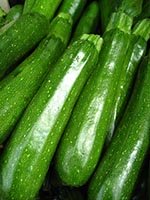
| Courgette. Note for dark green tender fruits. Photo: adactio |
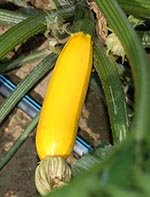
Golden yellow zucchini. Photo courtesy: iLoveButter |
Summer squash crops, including zucchini, exhibit bush habit spread in contrast to vine-type (creep) cover in case of winter squashes. Its fruits shall be ready for harvesting about 40-50 days after seed implantation.
Some popular varieties are:
Golden zucchini features bright golden-yellow skin that retains its color even after cooking.
Round types are dense, heavy, and nearly seedless with a smooth surface.
Tatume, which is common in Mexico, has similar features of round variety but has a large oval shape.
Costata Romanesco also known as Cocozelle is a long, narrow type with a slight bulge at the bottom end. It features pale, raised ribs with mottled green skin. When robust and young, this squash is juicy and sweet.
Middle-Eastern types are stocky, light green, tapering ends with a thick dark-green stem. They have smooth, shiny skin and firm, crispy, and flavorful flesh.
Yellow Crooknecks have thick warty skin with a markedly curved neck. They are crunchy in texture with a sweet, delicate flavor.
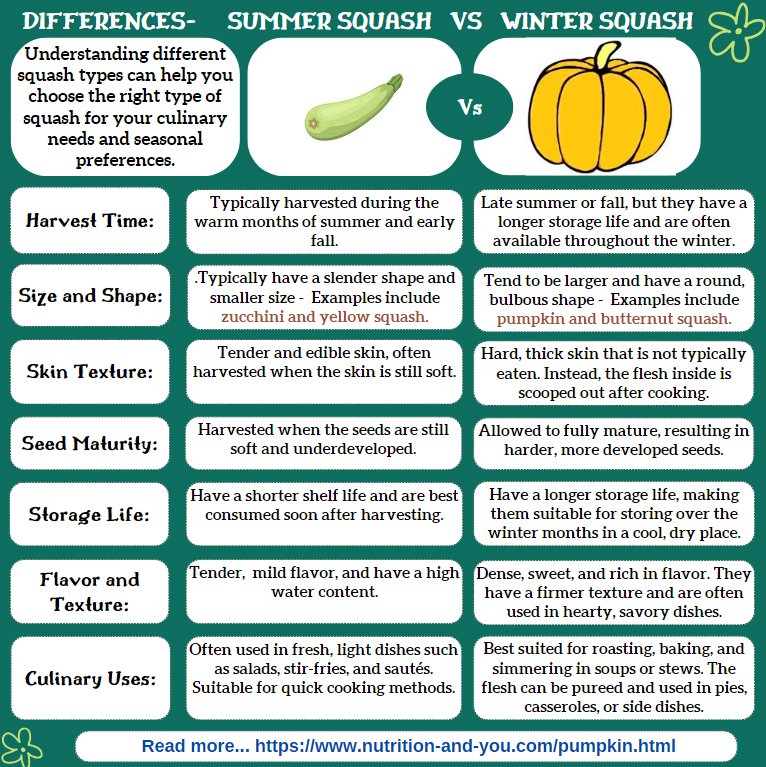
See the differences between Summer and Winter variety squashes in an infographic:
 |
Health benefits of zucchini (courgette)
Zucchini is one of the very low-calorie vegetables; provides only 17 calories per 100 g. It contains no saturated fats or cholesterol. Its peel is an excellent source of dietary fiber that helps ease constipation and offers some protection against colon cancers.
Zucchinis have antioxidant value (Oxygen radical absorbance capacity- ORAC) of 180 Trolox Equivalents (TE) per 100g, the value which is far below some of the berries, and vegetables. Nonetheless, the pods are one of the common food ingredients included in weight reduction and cholesterol control programs by dieticians.
Furthermore, zucchini nutrition, especially golden skin varieties, is rich in flavonoid polyphenolic antioxidants such as carotenes, lutein, and zeaxanthin. These compounds help scavenge harmful oxygen-derived free radicals and reactive oxygen species (ROS) from the body that play a role in aging and various disease processes.
Courgette holds relatively moderate amounts of folates; provides 24 µg or 6% of RDA per 100 g. Folates are important in cell division and DNA synthesis. When taken adequately during early pregnancy it can help prevent neural tube defects in the fetus.
It is an excellent source of potassium, an important intra-cellular electrolyte. Potassium is a heart-friendly electrolyte and helps bring the reduction in blood pressure and heart rates by countering the pressure effects of sodium.
Fresh fruits are rich in vitamin-A; provide about 200 IU per 100 g.
Fresh pods, indeed, are an excellent source of antioxidant vitamin-C. Provide about 17.9 µg or 30% of daily required levels per 100 g.
Also, they compose moderate levels of the B-complex group of vitamins like thiamin, pyridoxine, riboflavin, and minerals such as iron, manganese, phosphorus, and zinc.
| Principle | Nutrient Value | Percent of RDA |
|---|---|---|
| Energy | 17 Kcal | <1% |
| Carbohydrates | 3.11 g | 2.5% |
| Protein | 1.21 g | 2% |
| Total Fat | 0.32 g | 1% |
| Cholesterol | 0 mg | 0% |
| Dietary Fiber | 1 g | 3% |
| Vitamins | ||
| Folates | 24 µg | 6% |
| Niacin | 0.451 mg | 3% |
| Pantothenic acid | 0.204 mg | 5% |
| Pyridoxine | 0.163 mg | 13% |
| Riboflavin | 0.094 mg | 7% |
| Thiamin | 0.045 mg | 4% |
| Vitamin A | 200 IU | 7% |
| Vitamin C | 17.9 mg | 30% |
| Vitamin E | 0.12 mg | <1% |
| Vitamin K | 4.3 µg | 4% |
| Electrolytes | ||
| Sodium | 8 mg | 0.5% |
| Potassium | 261 mg | 5.5% |
| Minerals | ||
| Calcium | 16 mg | 1.6% |
| Iron | 0.37 mg | 5% |
| Magnesium | 18 mg | 4% |
| Manganese | 0.177 mg | 8% |
| Phosphorus | 38 mg | 5% |
| Selenium | 0.2 µg | <1% |
| Zinc | 0.32 mg | 3% |
| Phyto-nutrients | ||
| Carotene-ß | 120 µg | -- |
| Crypto-xanthin-ß | 0 µg | -- |
| Lutein-zeaxanthin | 2125 µg | -- |
Selection and storage
Zucchinis can be available all around the year, however, they are at their best during the late spring and summer.
In the markets, choose small-to-medium zucchinis featuring shiny, bright green skin, and firm, and heavy in hand. Simply choose zucchinis 6 to 8 inches in length and 2 inches or less in diameter. Some of the big varieties with wide cavities are specially grown for stuffing. Minor superficial scratches and mild bruises on their surface are common pictures but perfectly fine.
Avoid overly mature, large courgettes with pitted skin, and those with flabby or spongy textured. Furthermore, avoid those with soft and wrinkled ends as they indicate old stock and moistureless. Go for organically grown produce to enjoy rich flavor and nutrient advantages.
At home, place them in a plastic bag and store them inside the vegetable compartment of the refrigerator set at adequate relative humidity. They can be stored for up to 2-3 days.
Preparation and serving methods
|
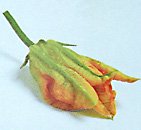
| Zucchini blossom. |
Wash them thoroughly in cold, running water just before cooking. Sometimes the fruits may require light scrub at places where prickles or dirt are attached firmly. Trim the neck and bases. Peeling of skin is not advised.
Zucchini blossoms are also an edible delicacy. In general, flowers are picked up during the morning hours when they are fresh and soft. To prepare, open up blossoms and carefully inspect for insects. Pull off any calyces attached firmly at the base.
Here are some serving tips:

|
| Courgette omelet. |
Fresh, tender zucchini can be eaten raw in salads.
The pods can be used fried, baked, steamed, boiled, or employed in a stuffing.
It mixes well with potatoes, carrots, asparagus, green beans, etc., in stews, sabzi, and curries.
Fine-sections, chopped or grated, can be shredded into bread, pizza, etc.
Young, tender, finger-size zucchini known as "baby marrows" enjoyed in stir-fries.
Safety profile
Allergic reactions to zucchini squash are rare. Pregnant women and infants can safely enjoy it. (Medical disclaimer).
Also read ≻≻-
≺≺ Crookneck squash nutrition facts.
≺≺ Pattypan squash nutrition facts.
≺≺ Back to Vegetables from Zucchini. Visit here for an impressive list of vegetables with complete illustrations of their nutrition facts and health benefits.
≺≺ Back to Home page.
Further reading:
Nutrition to Reduce Cancer Risk. University of Alaska Fairbanks, Zuchini from A-Z (PDF).