Tamarind Nutrition facts
Sweet and tangy, tamarind is one of the widely used spice-condiments found in every South-Asian kitchen!
Botanically, the tree is among the large tropical trees belonging to the family of Fabaceae, in the genus: Tamarindus. Scientific name: Tamarindus indica.
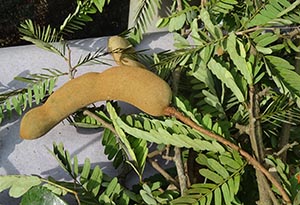 |
| Tamarind pods. Note brown color fruit-pods. |
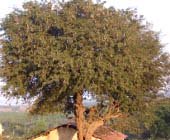 |
| Tamarind tree (Tamarindus indica). |
Tamarinds are evergreen tropical trees native to Africa. They grow throughout tropical and subtropical regions of Africa, South Asia, South America, and Caribbean islands for their fruits.
It is a huge tree with long, heavy, drooping branches and dense foliage. A mature tree is so expansive that it might reach up to 80 feet in height.
In a season, a tamarind tree produces thousands of bean-shaped, curvy fruit pods that cover its branches in abundance. Each pod has a hard, outer coat (shell) encasing a beaded, soft, deep-brown pulp. The fruit flesh in turn envelopes around 2-10 hard, dark-brown seeds. This edible fruit pulp is held together by an extensive network of fibrils that run its entire length from the pedicle to the tip.
Health Benefits of Tamarind
Tamarind fruit contains certain health-benefiting essential volatile chemical compounds, minerals, vitamins, and dietary fiber.
Its sticky pulp is a rich source of non-starch polysaccharides (NSP) or dietary fiber such as gums, hemicelluloses, mucilage, pectin, and tannins. 100 g of fruit pulp provides 5.1 or over 13% of dietary fiber. NSP or dietary fiber in the food increases it's bulk and augments bowel movements thereby helping prevent constipation. The fiber also binds to toxins in the food thereby helping protect the colon mucosa from cancer-causing chemicals.
Also, dietary fibers in the pulp bind to bile salts (produced from cholesterol) and decrease their reabsorption in the colon; thereby helping in the expulsion of “bad” or LDL cholesterol levels from the body.
While lemon composes citric acid, tamarind is rich in tartaric acid. Tartaric acid gives a sour taste to food besides its intrinsic activity as a potent antioxidant. (Antioxidant E-number is E334). It, thus, helps the human body protect from harmful free radicals.
Tamarind fruit contains many volatile phytochemicals such as limonene, geraniol, safrole, cinnamic acid, methyl salicylate, pyrazine, and alkylthiazoles. Together, these compounds account for the medicinal properties of tamarind.
This prized condiment spice is a good source of minerals like copper, potassium, calcium, iron, selenium, zinc, and magnesium. Potassium is an important component of cells and body fluids that helps control heart rate and blood pressure. Iron is essential for red blood cell production and as a co-factor for cytochrome oxidases enzymes.
Further, it is also rich in many vital vitamins, including thiamin (36% of daily required levels), vitamin A, folic acid, riboflavin, niacin, and vitamin C. Many of these vitamins play antioxidant as well as co-factor functions for enzyme metabolism in the human body.
Medicinal uses of Tamarind
Its pulp has been used in many traditional medicines as a laxative, digestive, and as a remedy for biliousness and bile disorders.
This spice condiment is also used as an emulsifying agent in syrups, decoctions, etc., in different pharmaceutical products.
| Principle | Nutrient Value | Percent of RDA |
|---|---|---|
| Energy | 239 Kcal | 12% |
| Carbohydrates | 62.50 g | 40% |
| Protein | 2.80 g | 5% |
| Total Fat | 0.60 g | 3% |
| Cholesterol | 0 mg | 0% |
| Dietary Fiber | 5.1 g | 13% |
| Vitamins | ||
| Folates | 14 µg | 3.5% |
| Niacin | 1.938 mg | 12% |
| Pantothenic acid | 0.143 mg | 3% |
| Pyridoxine | 0.066 mg | 5% |
| Thiamin | 0.428 mg | 36% |
| Vitamin A | 30 IU | 1% |
| Vitamin C | 3.5 mg | 6% |
| Vitamin E | 0.10 mg | <1% |
| Vitamin K | 2.8 µg | 2% |
| Electrolytes | ||
| Sodium | 28 mg | 2% |
| Potassium | 628 mg | 13% |
| Minerals | ||
| Calcium | 74 mg | 7% |
| Copper | 0.86 mg | 9.5% |
| Iron | 2.80 mg | 35% |
| Magnesium | 92 mg | 23% |
| Phosphorus | 113 mg | 16% |
| Selenium | 1.3 µg | 2% |
| Zinc | 0.10 mg | 1% |
| Phyto-nutrients | ||
| Carotene-ß | 18 µg | -- |
| Crypto-xanthin-ß | 0 µg | -- |
| Lutein-zeaxanthin | 0 µg | -- |
Selection and storage
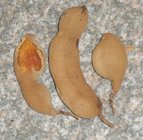
|
| Tamarind pods. Note brown, tart yet sweet-flavored pulp enclosed inside hard shell. |
Fresh tamarind is readily available in the markets by late spring and early summer. However, processed tamarinds such as compressed tamarind blocks, ready-to-use slices, paste, concentrates, balls, etc., can be more readily available around the year in condiment stores and spice markets.
Choose fresh unbroken pods packed in boxes. If you are purchasing a processed form, buy the product from a well-reputed authentic brand. Avoid old, desiccated pulp, or off-smelling products.
Once at home store the pods or pulp inside the refrigerator where it will stay fresh for several months.
Culinary uses
 |
| Tamarind and chili pavlova. Courtesy: Rc |
Delicately sweet and sour, tamarind is one of the most sought-after ingredients in Indian, Middle Eastern, and Southeast Asian cooking. In some Indian households, its pods are cut open, and fresh pulp is used as and when required. Tamarind beans are struck with a “wooden stick” (kept at home, especially for the same purpose), and seeds are then manually removed. One may also use a paring knife to separate seeds from pulp.
To use as a condiment, a small portion of the pulp is soaked in half a cup of warm water for about 10 minutes. Swirl the pulp with your fingers so that it is dissolved evenly in water to prepare a thin sauce. Strain the juice through a filter or thin cloth sieve before using it in cooking.
Here are some serving tips:
Tamarind is a common ingredient all over India and South-East Asia in curries, “rasam,” chutneys, as well as in vegetable and lentil recipes.
The pulp is also favored in “hot and sour” soups as well in marinades.
The juice made of tamarind pulp with the addition of dates, sugar, honey, cardamom, cloves, and coriander seeds are a refreshing drink marketed in different parts of the world.
Its pulp is also employed in confectionaries as a solidifying agent.
Safety profile
Tamarind has no known reported cases of allergy or toxicity and may be safely used in pregnancy and nursing mothers.
(Medical Disclaimer: The information and reference guides on this website are intended solely for the general information of the reader. It is not to be used to diagnose health problems or for treatment purposes. It is not a substitute for medical care provided by a licensed and qualified health professional. Please consult your health care provider for any advice on medications.)
≺≺ Back to Spices from Tamarind. Visit here for an impressive list of healthy spices with complete illustrations of their nutrition facts and health benefits.
≺≺ Back to Home page.
Further reading:
USDA National Nutrient Database. (opens in new window)
Gernot-Katzer's spice pages. (Opens in new window).