Mango fruit Nutrition facts
“The king of the fruits," mango fruit is one of the most popular, nutritionally rich fruits with unique flavor, fragrance, taste, and heath-promoting qualities, making it numero-uno among new functional foods, often labeled as “super fruits."
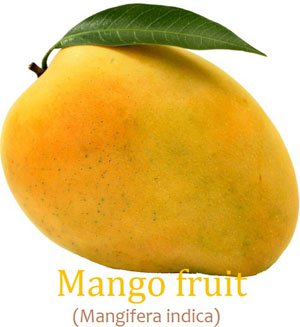
Mango is one of the delicious seasonal fruits grown in the tropics. The tree is believed to have originated in the sub-Himalayan plains of the Indian subcontinent. Botanically, this exotic fruit belongs to the family of Anacardiaceae, a family that also includes numerous species of tropical fruiting trees in the flowering plants such as cashew, pistachio.
Scientific name: Mangifera Indica.
 |
Mango is a tropical tree cultivated in many regions of India, and now its farming has been extended wide across the world on many continents. After flowering, its fruits grow at the end of a long, string-like peduncle, with sometimes more than one fruit to a peduncle.
Each fruit measures 5 to 15 cm in length and about 4 to 10 cm in width and has a typical “mango” shape, or sometimes oval or round. Its weight ranges from 150 g to around 750 g. Outer skin (pericarp) is smooth and green in unripe mangoes but turns in ripe fruits into golden yellow, crimson red, yellow, or orange-red depending upon the cultivar type. The fresh mango season lasts from April until August.
Mango comes in different shapes and sizes depending upon cultivar types. Internally, its flesh (mesocarp) is juicy, orange-yellow in color with numerous soft fibrils radiating from its centrally placed flat, oval-shaped stone (enveloping a single large kidney-shaped seed).
The fruit has a pleasant flavor and rich sweet taste with a mild tartness. High-quality ripened mango fruit should feature nil or too little fibrils and minimal tartness. Mango seed (stone) may either have a single embryo or sometimes polyembryonic.
Health benefits of Mango fruit
Mango fruit is rich in pre-biotic dietary fiber, vitamins, minerals, and poly-phenolic flavonoid antioxidant compounds.
According to a new research study, mango fruit has been found to protect from colon, breast, leukemia, and prostate cancers. Several trial studies suggest that polyphenolic antioxidant compounds in mango are known to offer protection against breast and colon cancers.
Mango fruit is an excellent source of Vitamin-A and flavonoids like β-carotene, α-carotene, and β-cryptoxanthin. 100 g of fresh fruit provides 1080 IU or 36% of recommended daily levels of vitamin A. Together; these compounds have been known to have antioxidant properties and are essential for vision.
Vitamin A also required for maintaining healthy mucosa and skin. Consumption of natural fruits rich in carotenes is known to protect from lung and oral cavity cancers.
Fresh mango is a good source of potassium. 100 g of fruit provides 168 mg of potassium while just 1 mg of sodium. Potassium is an important component of cells and body fluids that helps control heart rate and blood pressure.
It is also an excellent source of vitamin-B6 (pyridoxine), vitamin-C and vitamin-E. Consumption of foods rich in vitamin C helps the body develop resistance against infectious agents as well as scavenge harmful oxygen-free radicals. Vitamin B-6 or pyridoxine is required for GABA hormone production within the brain.
It also controls homocysteine levels within the blood, which may otherwise be harmful to blood vessels resulting in coronary artery disease (CAD), and stroke.
Further, it composes moderate amounts of copper. Copper is a co-factor for many vital enzymes, including cytochrome c-oxidase and superoxide dismutase (other minerals function as co-factors for this enzyme are manganese and zinc). Copper is also required for the production of red blood cells.
Additionally, mango peel is also rich in phytonutrients, such as the pigment antioxidants like carotenoids and polyphenols.
Please visit this page to view the infographic featuring mangoes nutrition facts in 100g: Mango nutrition infographic....
| Principle | Nutrient Value | Percent of RDA |
|---|---|---|
| Energy | 60 Kcal | 3% |
| Carbohydrates | 15 g | 12% |
| Protein | 0.82 g | 1.5% |
| Total Fat | 0.38 g | 2% |
| Cholesterol | 0 mg | 0% |
| Dietary Fiber | 1.60 g | 4.1% |
| Vitamins | ||
| Folates | 43 µg | 11% |
| Niacin | 0.669 mg | 4.2% |
| Pantothenic acid | 0.197 mg | 4% |
| Pyridoxine (vit B-6) | 0.119 mg | 9% |
| Riboflavin | 0.038 mg | 3% |
| Thiamin | 0.028 mg | 2.3% |
| Vitamin C | 36.4 mg | 60% |
| Vitamin A | 1080 IU | 36% |
| Vitamin E | 0.9 mg | 6% |
| Vitamin K | 4.2 µg | 3.5% |
| Electrolytes | ||
| Sodium | 1 mg | 0% |
| Potassium | 168 mg | 3.7% |
| Minerals | ||
| Calcium | 11 mg | 1% |
| Copper | 0.111 mg | 12% |
| Iron | 0.16 mg | 2% |
| Magnesium | 9 mg | 2% |
| Manganese | 0.063 mg | 16% |
| Zinc | 0.09 mg | 0.8% |
| Phyto-nutrients | ||
| Carotene-ß | 640 µg | -- |
| Carotene-α | 9 µg | -- |
| Crypto-xanthin-ß | 10 µg | -- |
| Lutein-zeaxanthin | 23 µg | -- |
| Lycopene | 3 µg | -- |
Selection and storage
Mangos are seasonal produce; fresh mango fruit season begins by March-end when its rich fragrance heralds its arrival in the markets.
Mangoes are normally harvested while they are green but perfectly matured on the tree. Unripe fruits are extremely sour. Organic mangoes are left to ripen on the tree; however, fully ripe fruits fall off the tree and tend to get spoiled.
 |
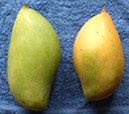 |
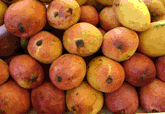
| Sindhuri (kesar) mangos | "Totapuri" variety mangos. |
In the store, mangoes come in various sizes, shapes, and colors. Select the one based on the serving size and variety of fruit you love to devour.
“Alphonso” variety from India (Maharashtra state), and “sindhuri" (kesar) varieties from Pakistan are known for their uniqueness. Totapuri mangoes feature parrot-beak like tips, and smooth shiny skin and come in attractive green-yellow or orange colors.
Choose ones with intact skin without any bruises or cuts. Unripe mangoes can be kept at room temperature for a few days, and to ripen, keep them in paper covers. Ripe fruits should be stored in the refrigerator but never below 10° F (50°C). Bring back to normal temperature when the fruit is to be eaten to get the natural taste and flavor.
Preparation and serving method
Wash mangoes in cold running water in order to remove dust/dirt and any surface chemical residue. Mop dry its outer skin using a soft cloth. Mango fruit should be eaten all alone without any seasonings/additions to experience its rich flavor.
Cut the fruit lengthwise into three pieces in such a way that the middle portion consists of a husky seed. Then, slice through the skin to separate the skin from the pulp. Chop pulp into desired sections.
Alternatively, using a sharp knife, cut through the flesh on either side of the central seed (stone). This way, you get two big halves of mango fruit and a central stone portion. Then, take one-half and score the flesh in a horizontal and vertical pattern taking care not to cut deep through the skin. Invert the whole half to push out the cubes as shown in the picture below:

|
Here are some serving tips:
 |
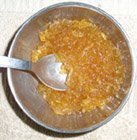 |
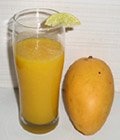
| Delicious mango juice! | Green mango marmalade. |
- Mango fruit can be enjoyed all alone without any seasonings/additions.
Fresh mango cubes are a great addition to fruit salsa and salads.
Mango juice with ice cubes is a popular, delicious drink.
Mango fruit juice blended with milk as a "mango milkshake." Mango fruit is also used to prepare jam, jelly, ice cream, and in sweet-candy industries.
Unripe, raw, green mango has been in use in the preparation of pickles, jam (marmalade), and chutney in the Asian countries.
Safety profile
Mango fruit should be avoided in the diet of individuals on warfarin therapy. Mangoes, being high in vitamin A, could result in potentiation of warfarin activity that may cause increased bleeding risk. (Reference link-Food and lifestyle interactions with Warfarin).
Mango latex allergy, especially with raw, unripe mangoes is common in some sensitized individuals. Immediate reactions may include itchiness at the angle of the mouth, lips, and tip of the tongue. In some people, the reactions can be severe, with manifestations like swelling of the lips, ulceration at the mouth angles, respiratory difficulty, vomiting, and diarrhea.
This reaction develops because of the anacardic acid present in raw, unripe mangoes. Cross-allergic reactions with other Anacardiaceae
family fruits like "cashew apples" are quite common. Such events may be a rarity with completely ripe fruits; however, people with known cases of mango fruit allergy may want to avoid eating them.
(Medical disclaimer).
Facts qoute
Mango fruit is an excellent source of vitamin A, carotene pigments, vitamins, and potassium.
Mango fruit should be avoided in the diet of individuals on warfarin therapy. Allergic manifestations after eating raw unripe mango is common.
Read further on:
≺≺ Fruit Allergies: Why They Happen and How to Stay Safe
≻≻-Back to Fruits from Mango fruit. Visit here for an impressive list of all varieties of fruits with complete illustrations of their nutrition facts and health benefits.
≻≻-Back to Home page.
Further Resources:
Mangifera indica-Agroforestry Net.
USDA - Nutrient Database for Standard Reference.
All about mangoes-National Mango Board.