Macadamia nut Nutrition facts
Sweet, delicious, and flavorful macadamia nut is one of the lovely edible nuts packed with important health-benefiting nutrients. Botanically, macadamia belongs to the family of Proteaceae, in the genus: Macadamia. Some of the common names include Australia nut, Queensland nut, bush nut, etc.
Scientific name: Macadamia integrifolia.
|
|
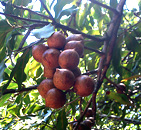
| Macadamia foliage with nuts. (Photo courtesy: tomeppy) |
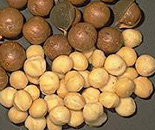
Raw shelled and unshelled nuts. |
Macadamia is native to the East Coast rainforests of the North-Eastern parts of Australia. Several regions of mineral-rich, tropical, and subtropical areas of Australia, the Hawaiian Islands, the Middle Americas, Brazil, and South Africa grow these sweet and crunchy nuts in abundance.
Macadamia tree reaches about 15 meters in height. In general, it achieves maturity and begins to produce fruit at around the seventh year of plantation.
There are at least about seven species of macadamia grown in their wild natural habitat. However, only two of them are edible and cultivated in horticulture farms around the world. Macadamia integrifolia produces smooth-shelled nuts, whereas Macadamia tetraphylla has nuts with a rough shell.
During each summer, the macadamia tree bears elongated chains of beautiful creamy-white flowers in racemes, which subsequently develop into tough-shelled, round fruits with a conical tip. Depending upon the cultivar type, its shell possesses a smooth or rough outer surface. Each 0.5 to 1-inch nut consists of a husk enveloping around a single, edible kernel. Macadamia kernel features a smooth buttery surface and sweet, nutty taste .
Health benefits of Macadamia nuts
Macadamia nuts are a rich source of energy. 100 g of nuts provides about 718 calories/100 g, which is one of the highest calorific values for the seeds and kernels.
They are packed with many health-benefiting nutrients, minerals, antioxidants, and vitamins that are essential for optimum health and wellness.
100 g of macadamia provides 8.6 g or 23% of daily recommended levels of dietary fiber. Additionally, they are an excellent source of phytosterols such as ß-sitosterol. Besides, they carry no cholesterol.
Since macadamia nuts nutrition is free from gluten protein; it is one of the popular ingredients preferred in gluten-free food formula preparations. Such formula preparations are a healthy alternative in patients with wheat gluten allergy and celiac disease..
The nuts are rich sources of monounsaturated fatty (MUFA) like oleic acid (18:1) and palmitoleic acids (16:1). Studies suggest that MUF fats in the diet help lower total as well as LDL (bad) cholesterol and increase HDL (good) cholesterol levels in the blood.
The Mediterranean diet, which is rich in fiber, MUF fats and antioxidants works favorably in maintaining a healthy blood lipid profile and thus offers protection from coronary artery disease and strokes.
Macadamias are an excellent source of minerals such as calcium, iron, magnesium, manganese and zinc. 100 g nuts provide 3.6 µg of selenium. Selenium is a cardio-protective trace element and an essential antioxidant cofactor for the glutathione peroxidase enzyme.
Furthermore, the nuts are also rich in many important B-complex vitamins that are vital for metabolic functions. 100 g of nuts provide 15% of niacin, 21% of pyridoxine (vitamin B-6), 100% of thiamin, and 12% of riboflavin.
They contain small amounts of vitamin E. These fat-soluble vitamins are potent antioxidants and help protect cell membranes and DNA damage from harmful oxygen-free radicals.
In short, sweet, refreshing macadamias provide essential minerals, vitamins, and heart-friendly monounsaturated fatty acids.
| Principle | Nutrient Value | Percent of RDA |
|---|---|---|
| Energy | 718 Kcal | 36% |
| Carbohydrates | 13.82 g | 10.5% |
| Protein | 7.91 g | 14% |
| Total Fat | 75.77 g | 253% |
| Cholesterol | 0 mg | 0% |
| Dietary Fiber | 8.6 g | 23% |
| Vitamins | ||
| Folates | 11 μg | 3% |
| Niacin | 2.473 mg | 15% |
| Pantothenic acid | 0.758 mg | 15% |
| Pyridoxine | 0.275 mg | 21% |
| Riboflavin | 0.162 mg | 12% |
| Thiamin | 1.195 mg | 100% |
| Vitamin A | 0 IU | 0% |
| Vitamin C | 1.2 mg | 2% |
| Vitamin E | 0.24 mg | 1.5% |
| Electrolytes | ||
| Sodium | 5 mg | 0% |
| Potassium | 368 mg | 8% |
| Minerals | ||
| Calcium | 85 mg | 8.5% |
| Copper | 0.756 mg | 84% |
| Iron | 3.69 mg | 46% |
| Magnesium | 130 mg | 32.5% |
| Manganese | 4.131 mg | 180% |
| Phosphorus | 188 mg | 27% |
| Selenium | 3.6 mcg | 6.5% |
| Zinc | 1.30 mg | 11% |
| Phyto-nutrients | ||
| Phyto-sterols | 116 mcg | -- |
| ß-sitosterol | 108 mcg | -- |
Selection and storage
Macadamias can be available in the market year-round. In the stores, different kinds of macadamia nuts are displayed such as shelled, unshelled, salted, roasted, sweetened, etc.
Buy whole “unshelled” or “with-shell” nuts instead of processed ones. They are available in vacuum-sealed packs as well as in bulk bins. Look for kernels that feature healthy, compact, and uniform in size, and feel heavy in hand. They should be devoid of cracks (other than natural split), cuts, mold, and spots and free of rancidity.
Store unshelled macadamia nuts in a cool, dry place where they stay fresh for several months. Shelled kernels, however, should be put inside an airtight container and kept in the refrigerator to avoid them turning rancid.
Preparation and serving methods
Raw whole macadamia nuts are cut open from processing units using large Sheller machines. For domestic purposes, use a small nut shell machine or handheld pliers.
Here are some cooking tips:

|
| Macadamia cookies. (Courtesy: Andie712b) |
Eat macadamia on their own by snapping them up using a nutcracker machine. They can also be enjoyed roasted, salted, or sweetened.
Macadamia nuts are crunchy, yet pleasantly sweet in taste and feature a nutty aroma.
Macadamia easily blends with sweet delicacies. Roasted, crushed macadamia often sprinkled over salads, desserts, sweets, etc.
Sprinkle chips and halves over desserts, particularly sundaes and other ice cream-based recipes.
They are widely used in confectionery, as an addition to biscuits, sweets, and cakes.
Macadamia butter is gluten-free and rich in protein. It is recommended for gluten-sensitive individuals to prepare sandwiches, salad dressings, sauces, etc.
Macadamia oil has close similarities to that of olive oil. When added to dishes, it imparts a sweet, delicious flavor to a wide variety of foods. It is widely applied as cooking and dressing oil in the preparations of vegetables, seafood, and meat dishes in many cuisines.
Safety profile
Macadamia nut allergy is quite a rare occurrence and not as common as other tree nut allergies like cashew, and pistachios. However, sometimes it might cause hypersensitivity reactions in sensitive people to food substances prepared with them. The type and severity of symptoms may range from gastrointestinal symptoms like vomiting, diarrhea, and pain abdomen; and respiratory tract symptoms like swelling of lips, throat pain, breathing difficulty, and chest congestion.
Therefore, caution should be exercised in people with a known history of nut allergic syndrome while using food preparations that contain macadamia nut products. (Disclaimer).
≻≻-Back to Nuts and seeds from Macadamia nut nutrition. Visit here for an impressive list of nuts with complete illustrations of their nutrition facts and health benefits.
≻≻-Back to Home page.
Further Resources:
Stanford School of Medicine Cancer information Page- Nutrition to Reduce Cancer Risk.