Fruit peel nutrition facts
Fruit peel or fruit skin is the outer protective covering of fruits. In general, the skin in some tough-layered fruits such as pomegranate, passion fruit, mangosteen, etc., is known as the rind while in citrus fruits such as in oranges, it is better termed as peel (zest). Apart from protecting the underlying edible portion of fruit from harsh environmental factors as well as micro and macro organisms, it indeed holds some of the vital health-benefiting constituents such as dietary fiber and phytonutrients that help fulfill overall wellness.
|

|
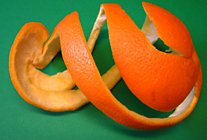
| Orange peel. Photo courtesy: fdecomite |
Mango peel with a fruit peeler. Photo courtesy: ms.Tea |
Fruit peel characteristics:
Fruit peel is either firmly adherent to its underlying flesh as in berries, and apples, or rather loosely as in oranges, bananas, etc. Its thickness varies widely, even in the same family of fruits, ranging from paper-thin to very thick shell-like cover as in the mangosteen.
In some raw fruits, the peel has a neutral taste as in grapes and apples. However, papaya and unripe sapodilla can be bitter and inedible because of the high tannin content. As the fruit ripens, the peel becomes easily separable from the pulp (bananas). In addition, its components turn sweeter and become pleasant-tasting as in sapodilla, guava, kiwifruit, and kumquat.
Fruit ripening is purely an enzymatic process, which brings certain characteristic changes to the fruit color, aroma, taste, maturity (hardening) of seeds, etc.
The peel in some fruits like guava is firmly cohesive to its pulp, and indeed, in some fruits, it turns tastier and more nutritious than the flesh itself as the fruit ripens.
Fruit peel is very rich in essential oils that give a characteristic aroma to the fruit. The oil glands are spread all over the peel but denser near its pits. These oil glands have prominently developed in citrus fruits like lemons and oranges.
Nutrition facts and Health benefits of Fruit peel
Most often, the fruit peel is discarded even when it is found safe for human consumption. Research studies suggest that the fruit peel holds many vital nutrients and non-starch compounds that play a vital role in health and wellness. Here are some salient points to highlight why fruit skin is recognized as one of the essential components of our diet.
fruit peel of some of the common fruits like blueberries, grapes, guava, and kumquat carry higher concentration of anti-oxidants such as anthocyanin pigments, tannins, catechins…etc than in their flesh (pulp). Blue or purple color fruit peels are rich in anthocyanidin glycosides while yellow color fruits have xanthin, carotenes and lutein pigments. Major components of these pigments are present just underneath the outer layer of skin.
Peel is a rich source of rough dietary fibers, also known as NSP (non-starch polysaccharides), such as hemi-cellulose, pectin, tannins, gum…etc. These compounds increase the bulk of the food and help prevent constipation by reducing gastrointestinal transit time. They further bind to the toxin chemicals in the food and protect their exposure to gut mucus membrane thereby offering protection from colon cancer risk. Furthermore, dietary fibers bind firmly to bile salts (produced from cholesterol) and eliminate them from the gut, thus in turn helping lower serum LDL cholesterol levels.
Peel is low in calories, sugar, and fats; and is free from cholesterol. It adds bulk to the food and helps cut down overall calorie intake.
The fruit peel of some fruits, indeed, contains considerable amounts of minerals and vitamins, especially in guava and citrus category fruits.
For example, in the orange, the peel holds rather higher levels of vitamin C (ascorbic acid) than its juice. 100 g of fresh orange peel provides 136 mg per 100 g of vitamin C while its flesh contains just about 71 mg/100 g. Please refer to the nutrition database chart below.
Likewise, fruit peel is a rich source of vitamin A, B-complex vitamins, minerals such as calcium, selenium, manganese, zinc...etc., several folds more than its pulp. Please read the orange peel USDA nutrition data table below, for example, and then compare it with the nutrition facts table in orange fruit.
Recent scientific trial studies suggest that certain compounds in passion fruit peel have a bronchodilator effect and can help relieve bronchospasm in asthma patients. A trial study conducted by Watson RR and his colleagues at Tuscon University AZ, suggests that oral administration of the purple passion fruit peel extract reduces wheeze and cough and improves shortness of breath in adults with asthma. (Related link-Pubmed.gov)
| Principle | Nutrient Value | Percent of RDA |
|---|---|---|
| Energy | 97 Kcal | 5% |
| Carbohydrates | 25.0 g | 19% |
| Protein | 1.50 g | 3% |
| Total Fat | 0.20 g | 1% |
| Cholesterol | 0 mg | 0% |
| Dietary Fiber | 10.60 g | 28% |
| Vitamins | ||
| Folates | 30 µg | 7.5% |
| Niacin | 0.900 mg | 6% |
| Pantothenic acid | 0.490 mg | 10% |
| Pyridoxine | 0.176 mg | 13% |
| Riboflavin | 0.090 mg | 7% |
| Thiamin | 0.120 mg | 10% |
| Vitamin C | 136 mg | 226% |
| Vitamin A | 420 IU | 14% |
| Vitamin E | 0.25 mg | 2% |
| Electrolytes | ||
| Sodium | 3 mg | 0% |
| Potassium | 212 mg | 4% |
| Minerals | ||
| Calcium | 161 mg | 16% |
| Copper | 92 µg | 10% |
| Iron | 0.80 mg | 10% |
| Magnesium | 22 mg | 5.5% |
| Selenium | 1 µg | 2% |
| Zinc | 0.25 mg | 2% |
How to use fruit peel
While it is advised to eat fruits along with their peel in some allowed fruits, however, some caution should be kept in mind while eating whole fruits.
1. Multiple insecticide sprays are commonly employed on fruit orchards. Certain amounts of this may enter and embed deep in their skin cells. So, wash fruits thoroughly before use. Organic-farmed fruits are, therefore, recommended for the safe use of their peel.
2. Oftentimes, insects lay their eggs/cysts on the fruit skin. Eating raw, unwashed fruits may pose health-risk because these egg/cysts may enter the brain, and cause a condition known as neuro-cysticercosis.
3. Too much fiber content in the peel may cause indigestion in some people, especially in children. (Medical disclaimer).
Fruit peel preparation
Before you decide to use fruits for peel preparation, it is advised to select fruits that are fresh, and organic without surface cuts, blemishes, and bruises. Wash the fruit thoroughly in running water to remove surface dust, soil…etc. Place the fruit in a bowl of salt water for about half an hour. Then wash them again in cold water. This way, you would be made sure any surface insect eggs/larvae are removed. Gently pat dry using a soft cloth.
To prepare: use the fruit peeler machine. In the case of citrus fruits, one may peel them very easily out of hand. Store dried zest/peel powder in a cool, dry place in an air-tight glass container away from moisture.
Here are some recipes of fruit peel you can enjoy while getting most of their health benefits.
|
 |
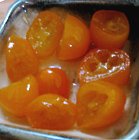
| Candied kumquats! Photo courtesy:mariko |
Orange peel candy with chocolate. Phot courtesy: grongar |
Fruit peel, especially citrus fruits, can be candied.
Citrus fruit zest is added to flavor confectionary.
Lemon peel is used to pickling.
Citrus fruit peel like lemon and tangerines can be dried, powdered, and stored for future usage.
In India, unripe, green mango along with their peels are sun-dried and ground to powder (Aamchoor). It is basically used as a condiment. Aamchoor is generally mixed with a pinch of turmeric and black pepper powder and added to curries, sauces, and chutneys.
Safety profile
In some fruits, the peel is bitter in taste and may contain toxic compounds which when eaten may cause some serious adverse reactions. These fruits can only be eaten after their peel is removed. For example, raw, unripe mango peel latex contains urushiol, a compound that may cause mango-latex allergy syndrome in some sensitized persons. (Medical disclaimer).
≻≻-Also Read on High cholesterol and Health.
≻≻-Back to Nutrition articles from Fruit peel
≻≻-Back to Home page.
Further Resources:
USDA National Nutrient Database. (opens new window)
Stanford School of Medicine Cancer information Page- Nutrition to Reduce Cancer Risk (Link opens in new window).