Eggplant (Brinjal) Nutrition facts
Eggplant, also known as Brinjal, is a highly nutritious vegetable with very few calories, making it excellent for those watching their weight. It is commonly referred to as "aubergine" in the Western world.
Botanically, aubergine belongs to the Solanaceae family of vegetables. It is a perennial plant native to the Indian subcontinent and is cultivated in numerous tropical and semitropical regions, where it serves as a popular vegetable year-round.
Scientific name: Solanum melongena.
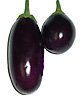
|
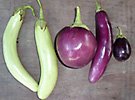
|
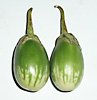
|
| Eggplant-deep blue variety. | Aubergine-different varieties. | Greenish hue. |
Several varieties of aubergines are cultivated worldwide, exhibiting significant diversity in size, shape, and color depending on the cultivar. Aubergines can be categorized broadly into two types: oval-shaped or thin and elongated.
These plants typically reach a height of 3-4 feet relatively quickly and produce numerous vibrant fruits. Each fruit is characterized by smooth, glossy skin and contains off-white pulp with numerous small, soft seeds arranged centrally. Harvesting is typically done when the fruits are mature but just before reaching full ripeness.
Health Benefits of Eggplant (Aubergine)
Eggplant is very low in calories and fats but rich in soluble fiber content. Just 100 grams provide merely 24 calories but contribute about 9% of the recommended daily allowance (RDA) of fiber.
Research conducted at the Institute of Biology of São Paulo State University, Brazil, has suggested that chemical substances in eggplant are effective in controlling high blood cholesterol levels.
The peel or skin (deep blue/purple varieties) of eggplant has significant amounts of phenolic flavonoid phytochemicals called anthocyanins. Scientific studies have shown that these antioxidants have potential health effects against cancer, aging, inflammation, and neurological diseases.
The total antioxidant strength, measured in terms of oxygen radical absorbance capacity (ORAC) of eggplants, is 993 µmol TE/100 g. With a value of 15, they are considered one of the vegetables with a low glycemic index (GI).
Eggplant contains good amounts of many essential B-complex vitamins such as pantothenic acid (vitamin B5), pyridoxine (vitamin B6), thiamin (vitamin B1), and niacin (B3). These vitamins are essential as the body requires them from external sources to replenish and are necessary for fat, protein, and carbohydrate metabolism.
Furthermore, this vegetable is an excellent source of minerals like manganese, copper, iron, and potassium. The antioxidant enzyme superoxide dismutase utilizes manganese as a co-factor, while potassium is an important intracellular electrolyte that helps counter the hypertensive effects of sodium.
| Principle | Nutrient Value | Percent of RDA |
|---|---|---|
| Energy | 24 Kcal | 1% |
| Carbohydrates | 5.7 g | 4% |
| Protein | 1 g | 2% |
| Total Fat | 0.19 g | 1% |
| Cholesterol | 0 mg | 0% |
| Dietary Fiber | 3.40 g | 9% |
| Vitamins | ||
| Folates | 22 µg | 5.5% |
| Niacin | 0.649 mg | 4% |
| Pantothenic acid | 0.281 mg | 6% |
| Pyridoxine | 0.084 mg | 6.5% |
| Riboflavin | 0.037 mg | 3% |
| Thiamin | 0.039 mg | 3% |
| Vitamin A | 27 IU | 1% |
| Vitamin C | 2.2 mg | 3.5% |
| Vitamin E | 0.30 mg | 2% |
| Vitamin K | 3.5 µg | 3% |
| Electrolytes | ||
| Sodium | 2 mg | 0% |
| Potassium | 230 mg | 5% |
| Minerals | ||
| Calcium | 9 mg | 1% |
| Copper | 0.082 mg | 9% |
| Iron | 0.24 mg | 3% |
| Magnesium | 14 mg | 3.5% |
| Manganese | 0.250 mg | 11% |
| Zinc | 0.16 mg | 1% |
Selection and storage
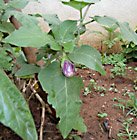
|
|
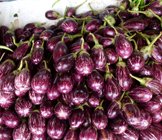
| Solanum melongena plant. | Fresh aubergines in a farmers market. |
Eggplants are available fresh throughout the season in markets, where various varieties varying in size, shape, and color are offered for sale.
When purchasing, opt for fresh, healthy-looking aubergines that are shiny and bright, feeling heavy and firm in hand. Examine the stalk closely; a stout, firm, green stalk indicates freshness.
Avoid eggplants that are shriveled, soft, or have wrinkles, surface cuts, or bruises. Additionally, steer clear of over-mature, old-stock, or sunken eggplants, as they tend to taste bitter and are therefore unappetizing.
Once at home, store eggplants in a cool place for immediate use within a day or two. Alternatively, they should ideally be stored in the refrigerator with high relative humidity, where they can remain fresh for a few days.
Preparation and serving methods
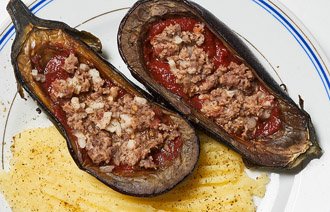 |
| Eggplant-stuffed. Photo courtesy: Marco Verch. |
Before use, thoroughly wash the eggplant in cold water. Trim the stalk end using a sharp knife. Sprinkle a pinch of salt, or soak slices in salt water to draw out any bitter compounds. The whole fruit, including its skin and fine tiny seeds, is edible.
Whether whole, cubed, or sliced, aubergine can be used in a variety of recipes.
Here are some serving tips:
Spicy fried aubergine slices are generally used as a favorite side dish in salads and appetizers.
Brinjals, as they are popularly known in the South-Asian region, feature prominently in many kinds of Indian cuisines. They can be stewed, fried, roasted, baked, or ground (baingan ka bartha (बैंगन का भर्ता)), baingan chutney) in the preparation of a variety of recipes.
In Southern India, aubergines are chopped into cubes and used in curry, chutney, and with rice (brinjal pulao-vaangi-bath).
In Southern Europe, Turkey, and the Middle East, where aubergines are common ingredients, they are employed in a variety of delicious recipes like moussaka (eggplant casserole), imam bayildi (stuffed-aubergine), etc.
Baba ghanoush is a Levantine appetizer consisting of finely chopped roasted eggplant, olive oil, lemon juice, various seasonings, and tahini.
Stewed asparagus spears sandwiched with an aubergine slice are a popular recipe in the Mediterranean region.
Aubergine is also widely used in pickling.
Safety Profile
Eggplant (aubergine) contains only a trace amount of nicotine, the lowest among all edible plants, at a concentration of 0.01mg/100g. However, this minute quantity of nicotine in eggplants is inconsequential and poses no harm, making any concern over its consumption unnecessary. So, feel free to enjoy!. (Medical disclaimer).
≻≻-Back to Vegetables from Eggplant (Aubergine) nutrition. Visit here for an impressive list of vegetables with complete illustrations of their nutrition facts and health benefits.
≻≻-Back to Home page.
USDA National Nutrient Database. Ecocrop-Aubergines