Capers Nutrition facts
Unique, piquant-flavored capers are flowering buds of a low-growing caper shrub. The buds, indeed, are one of the most desired ingredients in kitchens all around the Mediterranean basin. The buds botanically belong to the family of Capparaceae, in the genus: Capparis. Scientific name: Capparis spinosa.
|
|
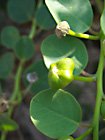
| Capparis spinosa.
Note for small immature flower buds. Photo courtesy: cruccone |
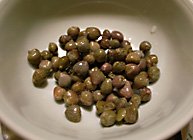
Pickled capers in the bowl. Photo courtesy: naotakem |
The plant is a spiny, trailing, deciduous shrub native to the Mediterranean. It prefers a warm, humid climate and grows in abundance all over Cyprus, Italy, Greece, North Africa, and some Asia Minor regions. The shrub begins producing flower (caper) buds from the third year of plantation.
Normally, tiny, cream-white flower buds are gathered by handpicking in the early morning hours of the day. Otherwise, the buds unfold into a beautiful whitish-pink four sepal-flowers with long tassels of purple stamens. Soon after harvesting, the buds are washed and allowed to wilt under the sun for a few hours. The buds are then placed in jars, covered with salt, vinegar, brine, or olive oil.
In the commercial practice, capers are categorized by their size in the markets. Small buds fetch more value than large ones. Non-pareil, and surfines are some of the small bud types, while capucines, capotes, and grusas fall into big-size category capers.
Health benefits of Capers
Being a flower bud, the caper is very low in calories; provides just 23 calories per 100g. Nonetheless, this spice contains many phytonutrients, antioxidants, and vitamins essential for optimum health.
Capers are one of the highest plant sources of flavonoid compounds rutin (or rutoside), and quercetin. In fact, they are the largest sources of rutin; 100 grams contain 332 mg of this compound. Also, Caper is also very rich in quercetin (180 mg/100 g), second only to tea leaf. Both of these compounds work as powerful antioxidants. Scientific studies suggest that quercetin has anti-bacterial, anti-carcinogenic, analgesic, and anti-inflammatory properties.
Furthermore, rutin inhibits platelet clump formation in the blood vessels and strengthens the integrity of capillaries. Thus, these actions of rutin help in the smooth circulation of blood in the capillaries. It has found application in some in-trial treatments for hemorrhoids, and varicose veins. It has also been found to reduce LDL-cholesterol levels in obese individuals.
The spicy buds contain healthy levels of vitamins such as vitamin A, vitamin K, niacin, and riboflavin. Niacin helps lower LDL cholesterol.
Furthermore, minerals like calcium, iron, and copper are present in sufficient amounts. High sodium level, however, is mainly due to the addition of sea salt (sodium chloride) in the brine.
Medicinal uses
Caper parts have been used to relieve rheumatic pain in traditional medicines.
Caper pickles are traditionally added to recipes as an appetite stimulant. Also, they help reduce stomachache and flatulence conditions.
| Principle | Nutrient Value | Percent of RDA |
|---|---|---|
| Energy | 23 Kcal | 1% |
| Carbohydrates | 4.89 g | 4% |
| Protein | 2.36 g | 4% |
| Total Fat | 0.86 g | 3% |
| Cholesterol | 0 mg | 0% |
| Dietary Fiber | 3.2 g | 8% |
| Vitamins | ||
| Folates | 23 μg | 6% |
| Niacin | 0.652 mg | 4.5% |
| Pantothenic acid | 0.027 mg | 0.5% |
| Pyridoxine | 0.023 mg | 2% |
| Riboflavin | 0.139 mg | 11% |
| Thiamin | 0.018 mg | 1.5% |
| Vitamin A | 138 IU | 4% |
| Vitamin C | 4.3 mg | 7% |
| Vitamin E | 0.88 mg | 6% |
| Vitamin K | 24.6 mcg | 20.5% |
| Electrolytes | ||
| Sodium | 2954 mg | 197% |
| Potassium | 40 mg | 1% |
| Minerals | ||
| Calcium | 40 mg | 4% |
| Copper | 0.374 mg | 42% |
| Iron | 1.67 mg | 21% |
| Magnesium | 33 mg | 8% |
| Manganese | 0.078 mg | 3% |
| Phosphorus | 10 mg | 1% |
| Selenium | 1.2 mcg | 2% |
| Zinc | 0.32 mg | 3% |
| Phyto-nutrients | ||
| Carotene-ß | 83 mcg | -- |
| Carotene-a | 0 mcg | -- |
| Cryptoxanthin-ß | 0 mcg | -- |
| Lutein-zeaxanthin | 0 mcg | -- |
Selection and storage
If you are not from the countryside, then you most likely can find these beautiful tiny olive-green buds filled in a small, tall glass jar submerged in their pickling medium in the spice stores and groceries. Pickled capers can be readily available around the year in the markets.
Traditionally, buds are washed in cold water soon after their harvest and allowed to dry in the sun for a few hours before being put into tall jars containing vinegar, brine, or olive oil. Alternatively, they can also be preserved in sea salt alone.
In general, small-sized buds (less than 1 cm diameter) are considered more flavorful, and therefore, preferred over the larger ones (more than 1 cm diameter). Capers should be preserved by immersing them in the pickling medium, otherwise, they soon turn flavorless. Once you open the jar, make sure it is refrigerated for future use. Use a stainless steel spoon or fork to fish them out of the container.
Culinary uses
Capers, their tender shoots, as well as immature berries can be used in cooking. Raw buds have a neutral flavor and need to be processed in a pickling medium to develop a unique piquant, tangy flavor.
They featured in a variety of cuisines worldwide, especially in Mediterranean cooking.
|
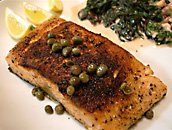
| Tuna with caper sauce and lemon. Photo courtesy: naotakem |
Here are some serving tips:
Capers are added to prepare tartare (tuna, venison, salmon, etc.) and tomato sauce.
The pickled buds are used as a flavoring in antipasto salads and as a topping in pizzas.
Capers render distinctive taste to vegetable, meat, veal, and fish (especially along with anchovy sauce) recipes.
Remoulade a favorite aioli or mayonnaise-based sauce in northern Europe, uses capers brine as one of the main ingredients.
Safety profile
Capers are safe to use in cooking. Their use may be limited in pregnancy. Patients undergoing any surgical intervention may have to avoid them as they act as a blood thinner and may result in excessive bleeding. (Medical Disclaimer).
≻≻-Back to Spices from Capers. Visit here for an impressive list of healthy spices with complete illustrations of their nutrition facts and health benefits.
≻≻-Back to Home page.
Further reading:
Journal of Agricultural and Food chemistry- Bioactive components of Capparis spinosa. L