Black pepper Nutrition facts
Regarded as the “king of spices,” black pepper has an incredibly popular among spices since ancient times. Peppercorn is native to the tropical evergreen rain forest of South Indian Kerala state, from where it spread to the rest of the world through Indian and Arab traders.
Pepper fruit, also known as the peppercorn, is actually a berry obtained from the pepper plant.
Botanically peppercorn belongs to the family of Piperaceae, in the genus of Piper and known scientifically as Piper nigrum. It is a perennial vine and climber that requires supporting trellises (tree or pole) to grow resembling growth characteristics as that of beetle leaf plant. The pepper plant begins producing small round berries after about three to four years of plantation. Technically, the pepper berry is a fruit (drupe), measuring about 5-6 mm in diameter, enclosing a single large seed at its center.
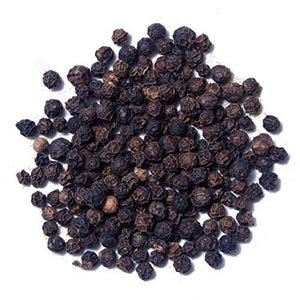 |
| Black peppercorns-(Piper nigrum) |
|
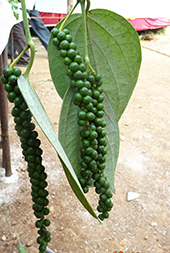
| Green, immature peppercorns on a vine. |
Commercial peppercorns available in the markets may come in different colors. However, they are nothing but the same pepper fruit that is picked up from the same pepper plant at different stages of maturity and subjected to various methods of processing.
Black peppercorns- Here, the pepper berries are harvested while half-mature and just about to turn red. They are then left to dry under the sunlight until dry, shrivel, and turn black peppercorns.
Green peppercorns- The berries are picked while they are still unripe, and green.
li>
White peppercorn- They got this name when an entirely ripe berry soaked in the brine in order to remove its outer dark skin, thus exposing the interior "white pepper'' seed.
Black peppers have a strong pungent flavor that comes from volatile oils, such as piperine. These volatile oils may disappear in the case of milled peppers because of evaporation.
Cubeb or tailed pepper berries are dried, unripe fruits of the Piper cubeba vine that grows mainly in the Indonesian rain forest. They resemble black peppercorns in appearance but have a characteristic stalk which is often interpreted as a "tail." Cubeb berries have a distinctive flavor because of monoterpene essential oil, cubebene.
Health benefits of Black pepper
Peppercorns contain an impressive list of plant-derived chemical compounds that are known to have disease-preventing and health-promoting properties. Black peppers have been in use for centuries for their anti-inflammatory, carminative, and anti-flatulent properties.
Peppercorns are composed of health-benefiting essential oils such as piperine, an amine alkaloid, that gives a strong spicy pungent character. They also carry numerous monoterpenes hydrocarbons such as sabinene, pinene, terpinene, limonene, myrcene,, etc., which altogether give aromatic properties to the pepper.
The above-mentioned active principles in the peppercorns may increase gut motility as well as digestion power through augmenting gastrointestinal enzyme secretions. It has also been found that piperine can increase the absorption of selenium, B-complex vitamins, beta-carotene, as well as other nutrients from the food.
Black peppercorns contain a good amount of minerals like potassium, calcium, zinc, manganese, iron, and magnesium. Potassium is an important component of cells and body fluids that helps control heart rate and blood pressure. Manganese is used by the body as a co-factor for the antioxidant enzyme, superoxide dismutase. Iron is essential for cellular respiration and blood cell production.
They are also an excellent source of many vital B-complex groups of vitamins such as Pyridoxine, riboflavin, thiamin, and niacin.
Peppercorns are a good source of many anti-oxidant vitamins such as vitamin-C and vitamin-A. They are also rich in flavonoid polyphenolic anti-oxidants like carotenes, cryptoxanthin, zeaxanthin, and lycopene. These compounds help the body remove harmful free radicals and help protect from cancers and diseases.
| Principle | Nutrient Value | Percent of RDA |
|---|---|---|
| Energy | 255 Kcal | 13% |
| Carbohydrates | 64.81 g | 49% |
| Protein | 10.95 g | 19.5% |
| Total Fat | 3.26 g | 11% |
| Cholesterol | 0 mg | 0% |
| Dietary Fiber | 26.5 g | 69% |
| Vitamins | ||
| Choline | 11.3 mg | 2% |
| Folic acid | 10 μg | 2.5% |
| Niacin | 1.142 mg | 7% |
| Pyridoxine | 0.340 mg | 26% |
| Riboflavin | 0.240 mg | 18% |
| Thiamin | 0.109 mg | 9% |
| Vitamin A | 299 IU | 10% |
| Vitamin C | 21 mg | 35% |
| Vitamin E | 4.56 mg | 30% |
| Vitamin K | 163.7 mcg | 136% |
| Electrolytes | ||
| Sodium | 44 mg | 3% |
| Potassium | 1259 mg | 27% |
| Minerals | ||
| Calcium | 437 mg | 44% |
| Copper | 1.127 mg | 122% |
| Iron | 28.86 mg | 360% |
| Magnesium | 194 mg | 48.5% |
| Manganese | 5.625 mg | 244.5% |
| Phosphorus | 173 mg | 25% |
| Zinc | 1.42 mg | 13% |
| Phyto-nutrients | ||
| Carotene-ß | 156 μg | -- |
| Carotene-α | 0 μg | -- |
| Crypto-xanthin-ß | 48 mcg | -- |
| Lutein-zeaxanthin | 205 mcg | -- |
| Lycopene | 6 mcg | -- |
Selection and storage
Black Peppercorns can be available year-round in the markets. In the store, buy whole peppercorns instead of pepper powder since, oftentimes, it may contain adulterated spices. The peppercorns should be wholesome, heavy, round, and compact.
Peppercorns can be stored at room temperature for many years and can be milled using a hand mill as and when required. It can be kept inside the refrigerator for up to a month or so. Powdered pepper should be stored inside the refrigerator in airtight containers.
Medicinal uses
Peppers have been used therapeutically in dentistry as an antiseptic remedy for tooth decay and gum swellings.
Peppercorns are also being employed in traditional medicines in treating flatulence and indigestion, however, there is little or no data to support these claims in modern medicine.
Culinary uses
Black pepper is one of the most versatile spices used in several kinds of savory cooking. In order to keep their fragrance and flavor intact, they are generally milled just before preparing dishes and added at the last minute in the recipes (since prolonged cooking results in the evaporation of essential oils).
Here are some preparation tips:
|
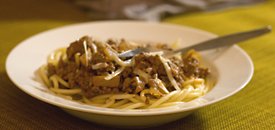
| Spaghetti Bolognese. Minced meat with a dash of ground black peppers in a delicious pasta recipe! Photo courtesy: Lachlan |
Black peppercorns along with other spices and seasonings used to marinate chicken, fish, and meat.
The spice, popular as "kali mirch" in the Indian subcontinent, is used liberally in Indian vegetarian and chicken curries and in the Middle East, in meat and rice dishes.
They can be employed in the preparation of soups, barbecue sauces, pickling, and as a main ingredient in a variety of curry powders (Indian garam masala powder).
Although preferred in savoury foods, this spice can also feature, albeit, in tiny quantities in sweet preparations like fruitcakes, breads, and pies to add a peppery-spice note.
In India and Pakistan, black peppercorn powder is mixed with salt, and the mixture is a common item found on the serving table in restaurants. The mixture is sprinkled over vegetable/fruit salads, chats, lemonades, soups, etc. Lassi (churned yogurt) is often flavored with this spice-salt mixture in the Punjab province.
Cubeb peppers mainly feature in Indonesian curries.
Safety profile
Consumption of dishes prepared with excessive amounts of black pepper can cause gastrointestinal irritation, and bleeding from the ulcer sites. Therefore, recipes prepared with pepper should be avoided in individuals with acid-peptic disease, stomach ulcers, ulcerative colitis, and diverticulitis conditions. (Medical disclaimer).
≻≻-Back to Spices from Black pepper. Visit here for an impressive list of healthy spices with complete illustrations of their nutrition facts and health benefits.
≻≻-Back to Home page.
Further reading: