Vanilla beans Nutrition facts
Vanilla beans are pleasantly fragrant fruit pods obtained from the tropical climbing orchid, V. planifolia. Mayans were the first people to use them in chocolate drinks as a flavoring agent centuries before the Spanish explorers first set their foot in Mexico in 1520. This highly prized aromatic bean pod is native to the tropical rainforests of Central America, and only recently its cultivation has spread to other tropical regions through European explorers.
Botanically, it is a perennial herbaceous climbing vine belonging to the family of Orchidaceae, in the genus, vanilla. Scientific name: Vanilla planifolia (flat-leafed vanilla).
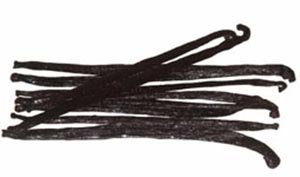 |
| Processed, dried vanilla pods. |
The vanilla is a flowering plant in the orchid family. It has unique growth characteristics and requires a tree or pole support to reach heights. A grown up vine bears many deep, orange-yellow, trumpet-shaped flowers. At its natural habitat, these flowers open up just for a day which sooner should be pollinated either by Melipona bee or long-beaked hummingbirds. However, under supervised cultivation farms, they are manually hand-pollinated. Vanilla beans now are grown at commercially scale in Madagascar, Indonesia, India, Puerto Rica, and West Indies.
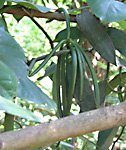
|
| Vanilla beans on a vine- Vanilla planifolia. Note for ready to harvest, deep-green, mature pods. |
There exist three main cultivars of vanilla of commercial importance. Among them, Vanilla planifolia is the most sought-after beans employed in a variety of confectioneries around the world. The other species include Vanilla pompona and Vanilla tahitiensis (grown in Polynesian islands). However, their vanillin composition is inferior to Vanilla planifolia.
Unripe vanilla pods harvested when they reach 5-8 inches in length and begin to turn light-yellow. They are then blanched briefly in boiling water, sweated, and dried under the sun over a period of 2-3 weeks until they become dark-brown shriveled pods. Vanillin, a kind of white crystalline efflorescence, appears inside in some of the superior quality pods.
Health benefits of vanilla
Vanilla beans are one of the expensive non-pungent spices used especially as a flavoring agent in a wide array of sweet drinks and confectionaries.
The vanilla extract is chiefly composed of simple and complex sugars, essential oils, vitamins, and minerals.
The chief chemical component in the beans is vanillin. The pods also comprise of numerous traces of other constituents such as eugenol, caproic acid, phenoles, phenol ether, alcohols, carbonyl compounds, acids, ester, lactones, aliphatic and aromatic carbohydrates and vitispiranes.
Ancient Mayans believed that adding vanilla in drinks would give aphrodisiac effects. No modern research study, however, establishes its role in the treatment of sexual dysfunctions.
Its extract contains small amounts of B-complex groups of vitamins such as niacin, pantothenic acid, thiamin, riboflavin and vitamin B-6. These vitamins help in enzyme synthesis, nervous system function and regulating body metabolism.
This condiment spice also contains small traces of minerals such as calcium, magnesium, potassium, manganese, iron and zinc. Potassium is an important component of cell and body fluids that helps control heart rate and blood pressure.
| Principle | Nutrient Value | Percent of RDA |
|---|---|---|
| Energy | 288 Kcal | 14% |
| Carbohydrates | 12.65 g | 10% |
| Protein | 0.06 g | <1% |
| Total Fat | 0.06 g | <1% |
| Cholesterol | 0 mg | 0% |
| Dietary Fiber | 0.0 g | 0% |
| Vitamins | ||
| Folates | 0 mcg | 0% |
| Niacin | 0.425 mg | 3% |
| Pantothenic caid | 0.035 mg | 0.5% |
| Pyridoxine | 0.026 mg | 2% |
| Riboflavin | 0.095 mg | 7% |
| Vitamin A | 0 IU | 0% |
| Vitamin C | 0 mg | 0% |
| Electrolytes | ||
| Sodium | 9 mg | 0.5% |
| Potassium | 148 mg | 3% |
| Minerals | ||
| Calcium | 11 mg | 1% |
| Copper | 0.072 mg | 8% |
| Iron | 0.12 mg | 1.5% |
| Magnesium | 12 mg | 3% |
| Manganese | 0.230 mg | 10% |
| Phosphorus | 6 mg | 1% |
| Selenium | 0.0 mcg | 0% |
| Zinc | 0.11 mg | 1% |
Selection and storage
Vanilla bean pods can be available in herb and spice stores year around. One may also find the vanilla essence and vanilla sugar in these stores. Vanilla bean pods can be usually available either singly or in small bundles often packed inside long tube or jar.
Buy vanilla products from authentic sources since oftentimes adulteration with artificial flavorings is quite common. A well-processed good-quality pod will remain potent for as long as 3-4 years.
Alternatively, store whole vanilla bean in a jar of caster sugar and allow 3-4 weeks for the flavor to permeate into the sugar completely. This fragrant, rich vanilla sugar can be employed in cakes, puddings, pies, and ice-creams.
Culinary uses
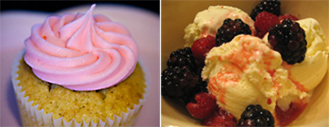 |
| Vanilla ice-creamon top of muffin! Photo: shimelle and Vanilla beans ice cream with blackberries and raspberries. Photo: kimberlykv |
Real vanilla enhances the pleasantly aromatic flavor of the recipes it added to. For the same reason, it fetches a high price, next only to saffron. At home, natural vanilla extract can be prepared by finely chopping the beans and infusing them by dripping alcohol on the pieces.
Alternatively, the beans are bruised and infused in milk or cream for making ice cream and sweet puddings.
Here are some serving tips:
One of the finest flavoring bases employed exclusively in sweet dishes, vanilla is added to cakes, biscuits, desserts, and puddings.
It is also used in other confectionary items to make chocolates, ice-creams, custards, chocolate drinks, etc.
Safety profile
Pure vanilla products are safe to use even in pregnancy and have no reported incidences of adverse reactions or toxicity.
≺≺ Back to Spices from Vanilla beans. Visit here for an impressive list of healthy spices with complete illustrations of their nutrition facts and health benefits.
≺≺ Back to Home page.
Further reading: