Saffron Nutrition facts
Saffron is one of the highly prized spices known since antiquity for its color, flavor, and medicinal properties. It is the dried "stigma" or threads of the flower of the Crocus sativus plant. It is a bulbous perennial plant that belongs to the family of Iridaceae, in the genus, Crocus, and known botanically as Crocus sativus.
This exotic spice is a native of Southern Europe and is today cultivated worldwide in many countries, particularly in Spain, Italy, France, Greece, Turkey, Iran, and in the Indian state of Jammu and Kashmir.
 |
|
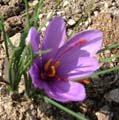
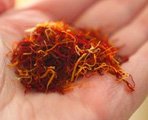
| Saffron plant (Crocus sativus). Note lavender color flower and stigma (threads). | Beautiful saffron threads. |
The Crocus sativus plant grows to about 15-20cm in height and bears lavender-colored flowers that last from October until November. Each flower features a perianth consisting of a stalk, known as “style,” connecting to three “stigmas” or threads to the rest of the plant. These orange-yellow colored stigmas, along with the "style" constitute the "saffron", a prized condiment spice.
The good saffron crop production demands a cold, dry climate with well-drained, rich fertile soil and irrigation facilities or sufficient rainfall. Normally, the flowers are harvested during the early morning hours and soon processed to separate their stigma, allowed to dry under the shade, and graded before being packed for marketing.
Saffron has a distinct flavor that comes from chemical compounds in it such as picrocrocin and safranal. It also contains a natural carotenoid chemical compound, crocin that gives saffron its famous golden-yellow hue. These traits, along with their medicinal properties, make this spice a valuable ingredient in many cuisines worldwide.
Health Benefits of Saffron
Saffron contains several plant-derived chemical compounds that are known to have antioxidant, disease-preventing, and health-promoting properties.
Their flower pistils compose several essential volatile oils, but the most important of them all is safranal which gives saffron its pleasant flavor. Other volatile oils in saffron are cineole, phenethenol, pinene, borneol, geraniol, limonene, p-cymene, linalool, terpinen-4-oil, etc.
This colorful spice has many non-volatile active components; the most important of them is α-crocin, a carotenoid compound, that gives pistils their natural golden-yellow color. It also contains other carotenoids, including zeaxanthin, lycopene, α- and ß-carotenes. These are important antioxidants that help protect the human body from oxidant-induced stress, cancers, and infections and act as immune modulators.
The active components in saffron have many therapeutic applications in many traditional medicines as antiseptic, antidepressant, antioxidant, digestive, and anti-convulsant.
This novel spice is an excellent source of minerals like copper, potassium, calcium, manganese, iron, selenium, zinc, and magnesium. Potassium is an important component of cells and body fluids that helps control heart rate and blood pressure. The human body uses manganese and copper as co-factors for the antioxidant enzyme, superoxide dismutase. Iron is essential for red blood cell production and as a co-factor for cytochrome oxidases enzymes.
Additionally, it is also rich in many vital vitamins, including vitamin A, folic acid, riboflavin, niacin, and vitamin C which is essential for optimum health.
| Principle | Nutrient Value | Percent of RDA |
|---|---|---|
| Energy | 310 Kcal | 15.5% |
| Carbohydrates | 65.37 g | 50% |
| Protein | 11.43 g | 21% |
| Total Fat | 5.85 g | 29% |
| Cholesterol | 0 mg | 0% |
| Dietary Fiber | 3.9 g | 10% |
| Vitamins | ||
| Folates | 93 µg | 23% |
| Niacin | 1.46 mg | 9% |
| Pyridoxine | 1.010 mg | 77% |
| Riboflavin | 0.267 mg | 20% |
| Vitamin A | 530 IU | 18% |
| Vitamin C | 80.8 mg | 135% |
| Electrolytes | ||
| Sodium | 148 mg | 10% |
| Potassium | 1724 mg | 37% |
| Minerals | ||
| Calcium | 111 mg | 11% |
| Copper | 0.328 mg | 37% |
| Iron | 11.10 mg | 139% |
| Magnesium | 264 mg | 66% |
| Manganese | 28.408 mg | 1235% |
| Phosphorus | 252 mg | 36% |
| Selenium | 5.6 µg | 10% |
| Zinc | 1.09 mg | 10% |
Medicinal uses
The active components present in saffron have had many therapeutic applications in many traditional medicines for a long time as anti-spasmodic, carminative, and diaphoretic.
Research studies have shown that safranal, a volatile oil found in the spice, has antioxidant, cytotoxic effects on cancer cells, anticonvulsant and antidepressant properties.
The α-crocin, a carotenoid compound, which gives the spice its characteristic golden-yellow hue, has been found to have antioxidant, antidepressant, and anti-cancer properties. (Medical disclaimer).
Selection and storage
Fresh saffron is available in the specialized spice markets. Try to buy whole dried stigma (pistils) instead of powdered saffron since often it may be adulterated. Choose a well-sealed container from the authentic selling company label displaying the date of the package and expiry.
Fresh spice should feature bright crimson-red color, and when rubbed between fingers, should release a very pleasant aroma and stain golden-yellow. Look for lengthy stamens, each measuring 2 to 4 cm in length. Avoid inferior quality products featuring gray color streaks or light spots on the stigma. This spice has a unique, pungent bitter-honey taste with a pleasant aroma.
Store inside a closed box and keep it in a cool dark place (preferably inside the refrigerator) away from the light since light rays oxidize the pigments in saffron and offset its flavor.
Culinary uses
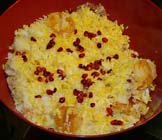 |
| Saffron rice seasoned with barberry seeds. |
Just a pinch of fresh saffron is enough to enhance the flavor and color of the entire recipe.
There are several methods to use it in the kitchen. the whole stigma can be added directly to the preparations, or often, the threads are ground to paste using traditional mortar and pestle and added to the recipes. In the third method, a pinch of saffron is added to a cup of hot water, steep; add this water to the ingredients.
Here are some serving tips:
Saffron is employed as a flavoring base and coloring base in both food and drinks in the Mediterranean, and Asian cuisines.
Popularly known as "Kesar" in the Indian subcontinent, it has been in use in the preparation of rice-pilaf, rice-pudding, "halwa" and other sweet dishes in many Indian, Pakistani, and Central Asian countries. It is also used as a color and flavoring base in the preparation of kulfi, ice creams, cakes, and drinks.
Safety profile
High doses of saffron can act as a uterine stimulant and in severe cases can cause miscarriage. Therefore, pregnant women may be advised to avoid this spice in their diet.
(Medical Disclaimer: The information and reference guides on this website are intended solely for the general information of the reader. It is not to be used to diagnose health problems or for treatment purposes. It is not a substitute for medical care provided by a licensed and qualified health professional. Please consult your health care provider for any advice on medications.)
≺≺ Back to Spices from Saffron. Visit here for an impressive list of healthy spices with complete illustrations of their nutrition facts and health benefits.
≺≺ Back to Home page.
Further reading:
Stanford School of Medicine Cancer information Page- Nutrition to Reduce Cancer Risk.