Mulberries Nutrition facts
Refreshingly succulent, tart, and sweet mulberries are indeed rich sources of numerous health-benefiting flavonoid phytonutrients. Botanically, they are the berries obtained from the silkworm tree belonging to the Moraceae family, within the Genus: Morus.
Scientific name: Morus nigra. L. They are known as moras in Spanish.
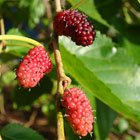
More than a hundred species of Morus exist in nature. In the taxonomy, the species are generally identified by the color of flower buds and leaves but not by the color of their berries. So, a mulberry plant can exhibit different colored berries on the same plant; black, purple, red, white, etc.
|
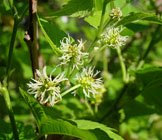 |
| Mulberry-Morus alba. A white mulberry plant can have different color berries. | Moras buds and flowers. Photo courtesy: mauroguanandi. |
Three species have been recognized for their economic importance.
White mulberry (Morus alba) is native to eastern and central China.
Red or American mulberry (Morus rubra) is native to the eastern United States.
Black mulberry (Morus nigra) is native to western Asia.
Mulberries are large, deciduous trees native to the warm, temperate, and subtropical regions of Asia, Africa, and the Americas. Technically, mulberry fruit is an aggregation of small fruits arranged concentrically around the central axis as in blackberries or loganberries.
It measures 2-5 cm in length. In most species, mulberries feature purple-red color while ripening; however, there can be white, red, purple, or multiple variegated colors on the same berry.
Health benefits of Mulberries
Delicious, fleshy, succulent mulberries are very low in calories (just 43 calories per 100 g). Nonetheless, they compose several health-promoting phytonutrient compounds like polyphenol pigment antioxidants, minerals, and vitamins that are essential for optimum health.
Mulberries have significantly high amounts of phenolic flavonoid phytochemicals called anthocyanins. Scientific studies have shown that consumption of berries has potential health effects against cancer, aging and neurological diseases, inflammation, diabetes, and bacterial infections.
The berries contain resveratrol, another polyphenol flavonoid antioxidant. Resveratrol protects against stroke risk by altering molecular mechanisms in the blood vessels. It lowers their susceptibility to damage through reduced activity of angiotensin (a systemic hormone causing blood vessel constriction that would elevate blood pressure) but potentiating production of the vasodilator hormone, nitric oxide.
Also, these berries are excellent sources of vitamin-C (36.4 mg per 100, about 61% of RDI), which is also a powerful natural antioxidant. Consumption of foods rich in vitamin C helps the body develop resistance against infectious agents, counter inflammation, and scavenge harmful free radicals.
Further, the berries also contain small amounts of vitamins A and E in addition to some of the antioxidants mentioned above. Mulberry provides another group of health-promoting flavonoid polyphenolic antioxidants such as lutein, zeaxanthin, ß-carotene, and a-carotene in significant amounts. Altogether, these compounds help protect our health from the harmful effects of oxygen-derived free radicals and reactive oxygen species (ROS) that play a role in aging and various disease processes.
Zeaxanthin, an important dietary carotenoid, is selectively concentrated in the retinal macula lutea in the eyes. It is thought to provide antioxidant functions and protect the retina from harmful ultraviolet rays through light-filtering actions.
Mulberries are an excellent source of iron, which is a rare feature among berries, containing 1.85 mg/100 g of fruits (about 23% of RDI). Iron, being a component of hemoglobin inside the red blood cells, determines the oxygen-carrying capacity of the blood.
They are also a good source of minerals like potassium, manganese, and magnesium. Potassium is an important component of cells and body fluids that helps control heart rate and blood pressure. Manganese works as a co-factor for the antioxidant enzyme superoxide dismutase.
They are rich in the B-complex group of vitamins, and vitamin K. Contain very good amounts of vitamin B-6, niacin, riboflavin, and folic acid. These vitamins function as co-factors in the metabolism of carbohydrates, protein, and fats.
| Principle | Nutrient Value | Percent of RDA |
|---|---|---|
| Energy | 43 Kcal | 2% |
| Carbohydrates | 9.80 g | 7.5% |
| Protein | 1.44 g | 2.5% |
| Total Fat | 0.39 g | 2% |
| Cholesterol | 0 mg | 0% |
| Dietary Fiber | 1.7 g | 4.5% |
| Vitamins | ||
| Folates | 6 µg | 1.5% |
| Niacin | 0.620 mg | 4% |
| Pyridoxine | 0.050 mg | 4% |
| Riboflavin | 0.101 mg | 8% |
| Vitamin A | 25 IU | 1% |
| Vitamin C | 36.4 mg | 61% |
| Vitamin E | 0.87 mg | 6% |
| Vitamin K | 7.8 µg | 6.5% |
| Electrolytes | ||
| Sodium | 10 mg | 0.75% |
| Potassium | 194 mg | 4% |
| Minerals | ||
| Calcium | 39 mg | 4% |
| Copper | 60 µg | 6.5% |
| Iron | 1.85 mg | 23% |
| Magnesium | 18 mg | 4.5% |
| Selenium | 0.6 µg | 1% |
| Zinc | 0.12 mg | 1% |
| Phyto-nutrients | ||
| Carotene-ß | 9 µg | -- |
| Carotene-α | 12 µg | -- |
| Lutein-zeaxanthin | 136 µg | -- |
Selection and storage
|
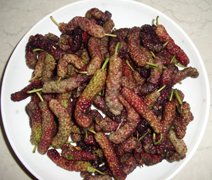
| Mulberries. |
Black mulberries, in particular, are more flavorful and tasty than their fellow white, and red varieties. Their peak season is May through August, while the latter two types can be readily available until late spring.
In the local stores, look for fleshy berries flavorful and heavy in hands. Avoid bruised, bleeding, and sunken berries.
Mulberries spoil rather quickly. Once at home, preserve them in a zip pouch unwashed, and place them inside the refrigerator where they stay fresh for up to 2-3 days. To eat, wash the berries in cold water in a container (bowl) instead of in running water. This way, you avoid injuring them. This method also brings the berries to room temperature and enhances their flavor and taste.
Preparation and serving methods
After cleaning, gently pat them dry using a soft cloth. Take care not to squeeze, or press the berries, else they will deface and stain cloth, hand, etc. Then, trim away its stem end by simply pinching it off with fingers or using small scissors or a paring knife.
The berries have found their unique place in the kitchen, be it a simple mulberry pie or a somewhat more complex mulberry wine. They, either fresh or dry, are also sought after in a variety of dishes.
Here are some serving tips:
-
Fresh mulberries are generally eaten as they are, without any seasonings/additions.
They combine well with other berry salads.
They can be a great snack between meals.
Mulberries are favored in jams, jellies, tart syrups, etc.
Dried mulberries can be used in pie fillings, mulberry muffins, cookies, cakes, etc.
They are used in ice-creams, smoothies and yogurt as in strawberries, raspberries,etc.
≻≻-Back to Fruits from Mulberries nutrition. Visit here for an impressive list of all varieties of fruits with complete illustrations of their nutrition facts and health benefits.
≻≻-Back to Home page.
Further reading and Resources:
USDA National Nutrient Database. (opens in new window)
Stanford School of Medicine Cancer information Page- Nutrition to Reduce Cancer Risk (Link opens in new window).