Lemongrass Nutrition facts
Refreshing, citrus-scented lemongrass imparts a unique flavor to the recipes. Its rough, tufted stems and leaf buds are among the most sought-after herbal parts employed in an array of cuisines all over South and East Asian regions.
Botanically, this herb belongs to the grass family of Poaceae. Citronella is native to the Southern part of India and Sri Lanka. The herb is one of the popular ingredients used in Thailand, Vietnam, Malaysia, Cambodia, and Indonesia, and as far as African and American continents for its culinary and medicinal purposes.
Scientific name: Cymbopogon citratus.
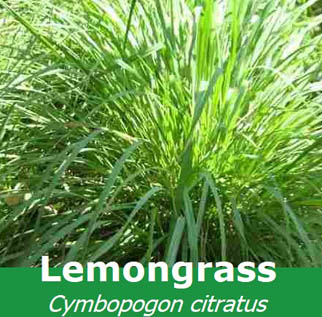 |
Lemongrass (Cymbopogon) grows in dense clumps that emerge from the tough bulbous base with a spread of about one meter in width and about three feet in height. Its bright green leaves with sharp edges feature an appearance similar to that of grass. It flourishes in fertile, well-draining sandy soils under tropical climates receiving torrential rains.
Several cultivars of Cymbopogon based upon their origin, culinary, and oil properties grew around the world at commercial levels. East-Indian lemongrass (C. citratus) is an important culinary herb used extensively in cooking in many East Asian countries. The Indian or Malabar lemongrass (C. flexuosus), on the contrary, is employed predominantly in the perfume industry due to its limited myrcene content.
Health benefits of Lemongrass
Lemongrass herb has numerous health-benefiting essential oils, chemicals, minerals, and vitamins that are known to have anti-oxidant and disease-preventing properties.
The herb carries 99 calories per 100 g but contains no cholesterol.
The chief chemical component in lemongrass herb is citral or lemonal, an aldehyde responsible for its unique lemon odor. Citral also has strong antimicrobial and antifungal properties.
Additionally, its herb parts also carry other essential oils such as myrcene, citronellol, methyl heptanone, di pentene, geraniol, limonene, geranyl acetate, nerol,, etc. These compounds are known to have counter-irritant, rubefacient, insecticidal, antifungal, and antiseptic properties.
Its leaves and stems are very good in folate (100 g leaves and stems provide about 75 µg or 19% of RDA). Folates play a vital role in cell division and DNA synthesis. When given during the peri-conception period, they can help prevent neural tube defects in the baby.
Its herb parts are also rich in many invaluable essential vitamins such as pantothenic acid (vitamin B5), pyridoxine (vitamin B-6), and thiamin (vitamin B-1). These vitamins are essential in the sense that the body requires them from external sources to replenish.
Furthermore, the fresh herb contains small amounts of anti-oxidant vitamins such as vitamin C and vitamin A.
Lemon grass herb, whether fresh or dried, is a rich source of minerals like potassium, zinc, calcium, iron, manganese, copper, and magnesium. Potassium is an important component of cell and body fluids, which helps control heart rate and blood pressure. The human body uses manganese as a co-factor for the antioxidant enzyme superoxide dismutase.
| Principle | Nutrient Value | Percent of RDA |
|---|---|---|
| Energy | 99 Kcal | 5% |
| Carbohydrates | 25.31 g | 19% |
| Protein | 1.82 g | 3% |
| Total Fat | 0.49 g | 2% |
| Cholesterol | 0 mg | 0% |
| Vitamins | ||
| Folates | 75 µg | 19% |
| Niacin | 1.101 mg | 7% |
| Pyridoxine | 0.080 mg | 6% |
| Riboflavin | 0.135 mg | 10.5% |
| Thiamin | 0.065 mg | 5.5% |
| Vitamin A | 6 mg | <1% |
| Vitamin C | 2.6 mg | 4% |
| Electrolytes | ||
| Sodium | 6 mg | <1% |
| Potassium | 723 mg | 15% |
| Minerals | ||
| Calcium | 65 mg | 6.5% |
| Copper | 0.266 mg | 29% |
| Iron | 8.17 mg | 102% |
| Magnesium | 60 mg | 15% |
| Manganese | 5.244 mg | 228% |
| Selenium | 0.7 µg | 1% |
| Zinc | 2.23 mg | 20% |
Selection and storage
Fresh lemongrass stalks and leaf buds can be available all year round in the local markets. Many homemakers in East Asia, however, pick them fresh for use in cooking from the backyard garden. If you have to purchase from the herb stores, choose fresh lemongrass leaves and stems featuring fresh and lemon-like flavor with a hint of rose fragrance. Look carefully, and avoid yellow discolored, and spotted leaves.
Once at home, wash stems in clean cold water. Air dry. Separate its leaves from the stem. Place lemongrass stems in a zip pouch, and keep them separately in the refrigerator since the herb tends to spread its flavor to other foods. This way, it stays fresh for up to 2-3 weeks.
The stems can also be frozen and kept well in this condition for several months.
Dry and ground lemongrass powder (sereh powder in Indonesia) can also be available in the markets. Buy from organically grown and official vending sources. Dried herbs should be kept in an airtight container and placed in a cool, dark, and dry place where they will keep fresh for several months.
Culinary uses
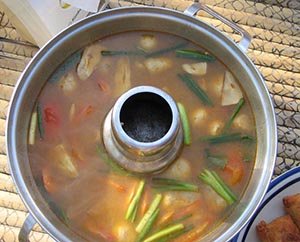 |
| Tom yum soup. Courtesy: casers jean |
Lemongrass is commonly featured in many East-Asian dishes. Fresh chopped stems, leaf buds, as well as dried or ground herb parts, are extensively used in cooking.
The herb imparts a distinctive lemony flavor when cut or crushed because of the release of essential oil citral. Discard tough stems and fibers from the dish before eating as they are unchewable and unappetizing.
Here are some serving tips:
Lemongrass is one of the popular ingredients in many cuisines since its delicate flavor combines well with fish, seafood, meat, and poultry.
It is widely used in soups, stir-fries, marinades, curries, etc., in Thailand, Vietnam, Malaysia, Philippines, and Indonesia.
- Tom yum is a favorite soup name in Thailand. The soup is made of fresh lemongrass, kaffir lime leaves, galangal, lime juice, fish sauce, and crushed chili peppers. Tom yum is usually added with shrimp/prawns, fish, poultry or mushrooms.
Lemon grass tea is a very refreshing beverage.
Its fine buds and stems are used as a garnish in salads.
Ground dried lemongrass powder (sereh powder) is used instead of raw stalks in marinades in the Indonesian islands.
This herb is also as a flavoring base in pickles.
Medicinal uses of Lemongrass
Pharmacologically, citral compound has been used in the commercial production of vitamin A.
Lemongrass is one of the favored herbs used in herbal teas.
It is also helpful in relieving colitis, indigestion, and gastroenteritis ailments.
Lemongrass oil when used in aromatherapies revitalizes the body and helps relieve symptoms of a headache, body ache, nervous exhaustion, and stress-related conditions.
Its infusions are often employed to help relieve infections such as sore throats, laryngitis, bronchitis, etc.
Lemongrass oil is used in massage therapy as a muscle and skin toner. (Medical disclaimer).
Safety profile
Lemongrass oil can cause skin irritation in some individuals when used in perfumes, cosmetics, and as a massage oil. (Medical disclaimer).
≺≺ Back to Herbs from Lemongrass. Visit here for an impressive list of all variety of herbs with complete illustrations of their nutrition facts and health benefits.
≺≺ Back to Home page.
Further Resources:
Gernot Katzar's Spice pages. (opens in new window).