Lemon Nutrition facts
Juicy, acidic, yet flavorful, lemon is one of the most widely used citrus fruits worldwide. Lime, a close relative, is comparatively smaller and possesses thinner skin.
Botanically, this citrus fruit belongs to the family of Rutaceae, in the genus, Citrus (which also includes orange, pomelo, tangerine, and grapefruit).
Scientific name: Citrus limon. Lemon and limes are small-sized citrus fruits. Nevertheless, both hold much more health-benefiting constituents than other larger citrus family fruits such as oranges, yuzu, pomelo (Citrus maxima), etc.
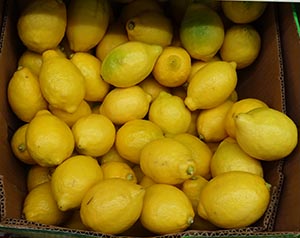 |
| Citrus limon fruits. |
Lemons are thought to have originated in the Himalayan foothills of North-East India, and from where they spread all across the Middle East, Europe, Africa, and as far as the Americas. Limes are smaller in size and less sour in taste than lemons. Put together, both of these tiny fruits are perhaps now the largest consumable among fruits all over the world.
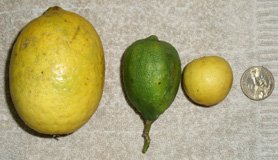
|
| Lemons and limes. |
Likewise in other citrus plants, lemons also are small, spreading, evergreen trees, growing up to 10-12 feet in most cultivated plantations. They flourish well in temperate and tropical environments, whereas, cold and frosty conditions would affect their growth adversely. Stems and branches are often armed with sharp, stout thorns. The fully-grown plant bears fragrant, white flowers in short cymes.
Fruits belonging to the citrus group are described as “hesperidium," (A hesperidium is a scientific term to describe the fruit structure belonging to the citrus group. In fact, the fruit is a modified berry with a tough, leathery rind. Lemon's peel contains many volatile oil glands in pits. The interior flesh is composed of segments, called carpels, made up of numerous juice-filled vesicles that are specialized hair cells). Mature lemons turn yellow from green, measure about 5-8 cm in diameter, and weigh about 50- 80 g in weight.
Health benefits of Lemons
Lemons are packed with numerous health-benefiting nutrients. The fruit is less in calories, carrying just 29 calories per 100 g, the value being one of the lowest for the citrus fruits group.
They contain zero saturated fats or cholesterol. Nonetheless are an excellent source of dietary fiber (7.36% of RDA). Lemon is one of the very low glycemic fruits.
lemon's acidic taste is because of citric acid. Citric acid constitutes up to 8% of its juice. Citric acid is a natural preservative, aids in smooth digestion, and helps dissolve kidney stones.
Lemons, like other fellow citrus fruits, are an excellent source of vitamin-C (ascorbic acid); provide about 88% of daily recommended intake. Ascorbic acid is a potent water-soluble natural anti-oxidant. This vitamin is helpful in preventing scurvy. Besides, the consumption of foods rich in vitamin C helps the human body develop resistance against infectious agents and scavenge harmful, pro-inflammatory free radicals from the blood.
Lemons, like oranges, contain a variety of phytochemicals. Hesperetin, naringin, and naringenin are flavonoid glycosides commonly found in citrus fruits. Naringenin is found to have a bioactive effect on human health as an antioxidant, free radical scavenger, anti-inflammatory, and immune system modulator. This substance has also been shown to reduce oxidant injury to DNA in the cells in vitro studies.
Additionally, they also compose minute levels of vitamin A, and other flavonoid antioxidants such as α, and ß-carotenes, ß-cryptoxanthin, zeaxanthin, and lutein. These compounds are known to have antioxidant properties. Vitamin A also required for maintaining healthy mucosa and skin and is also essential for vision. Consumption of natural fruits rich in flavonoids helps the body to protect from lung and oral cavity cancers.
Total ORAC value, which measures the antioxidant strength of 100 g of fresh lemon juice is 1225 µmol TE (Trolox equivalents).
The fruit is also a good source of B-complex vitamins such as pantothenic acid, pyridoxine, and folates. These are essential in the sense that the body requires them from external sources to replenish.
Further, they carry a healthy amount of minerals like iron, copper, potassium, and calcium. Potassium is an important component of cell and body fluids and helps control heart rate and blood pressure.
Citrus fruits, as such, have long been valued for their wholesome nutritious, and antioxidant properties. It is a scientific fact that citrus fruits, especially lemons, and oranges, by their richness in vitamins and minerals, have many proven health benefits. Moreover, it is now beginning to be appreciated that the other biologically active, non-nutrient compounds found in citrus fruits such as phytochemical antioxidants, and soluble as well as insoluble dietary fiber are helpful in reducing the risk for cancers, many chronic diseases like arthritis, and from obesity and coronary heart diseases.
| Principle | Nutrient Value | Percent of RDA |
|---|---|---|
| Energy | 29 Kcal | 1.5% |
| Carbohydrates | 9.32 g | 7% |
| Protein | 1.10 g | 2% |
| Total Fat | 0.30 g | 1% |
| Cholesterol | 0 mg | 0% |
| Dietary Fiber | 2.80 g | 7% |
| Vitamins | ||
| Folates | 11 µg | 3% |
| Niacin | 0.100 mg | 1% |
| Pantothenic acid | 0.190 mg | 4% |
| Pyridoxine | 0.080 mg | 6% |
| Riboflavin | 0.020 mg | 1.5% |
| Thiamin | 0.040 mg | 3.5% |
| Vitamin C | 53 mg | 88% |
| Vitamin A | 22 IU | 1% |
| Vitamin E | 0.15 mg | 1% |
| Vitamin K | 0 µg | 0% |
| Electrolytes | ||
| Sodium | 2 mg | 0% |
| Potassium | 138 mg | 3% |
| Minerals | ||
| Calcium | 26 mg | 3% |
| Copper | 37 µg | 4% |
| Iron | 0.60 mg | 7.5% |
| Magnesium | 8 mg | 2% |
| Manganese | 0.030 mg | 1% |
| Zinc | 0.06 mg | 0.5% |
| Phyto-nutrients | ||
| Carotene-ß | 3 µg | -- |
| Carotene-α | 1 µg | -- |
| Crypto-xanthin-ß | 20 µg | -- |
| Lutein-zeaxanthin | 11 µg | -- |
| Lycopene | 0 µg | -- |
Selection and storage
The peak season for lemons is April through August, though they can be available in stores all around the year. Choose big, plump, firm fruits that feature heavy for their size. Choose vibrant, bright yellow fruits imparting a fresh citrusy aroma that can be appreciated when you gently roll your finger over them.
Avoid dark-green colors as they are immature and would not be as much juicy. Also, avoid those with dark spots, overtly soft or spongy as they tend to perish early.
At home, store them in a plastic pouch and place them inside the refrigerator where they keep well for up to a week. Store freshly squeezed lemon juice inside the freezer compartment for later use. Store dried zest in a cool, dry place in an air-tight glass container away from moisture.
Preparation and serving methods
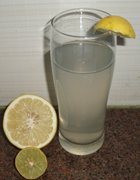
|
| Fresh lemon juice. |
Wash them in cold water just before using. Gently scrub if using the peel to obtain the zest. In general, cut it into halves to squeeze and extract juice. One may also get the help of juice-extracting appliances.
Whole fruit, zest, peel as well as its juice are the most sought-after ingredients in a variety of cuisines worldwide.
Here are some serving tips:

|
| Moroccan style preserved lemons. Photo courtesy: chuck b. |
Lemon slices/wedges served as a garnish in salads and dishes.
Apart from regular usage as a flavoring item in beverages or lemonade, they are also employed in confectionary like pies, cakes, bread, pastry dough, and marinades.
Its juice can be stored frozen for later use.
The outermost part of the rind is grated using a zester to produce lemon zest, which also has many culinary values for its flavor-rich oil glands.
Iced lemon tea is a refreshing drink.
Dried preserved lemons are employed as a condiment in Persian cuisine.
Lemon/lime pickles are a favorite side dish in the Middle East, India, Pakistan, Morocco, etc.
Safety profile
Lemon juice is very low in pH, about 2.0-2.2. In some sensitive people, its sour, acidic juice may sometimes elicit a burning sensation if come in contact with mouth, tongue, and lip ulcers. Also, if taken in large amounts, may exacerbate acid-peptic disease and stomach ulcer conditions. (Medical disclaimer).
≻≻-You may also like to read- Limes nutrition facts.
≻≻-Back to Fruits from Lemon. Visit here for an impressive list of all varieties of fruits with complete illustrations of their nutrition facts and health benefits.
≻≻-Back to Home page.
Further reading and Resources:
Stanford School of Medicine Cancer information Page- Nutrition to Reduce Cancer Risk.
JN-The Journal of nutrition- The Hypoglycemic Effects of Hesperidin and Naringin Are Partly Mediated by Hepatic Glucose-Regulating Enzymes in C57BL/KsJ-db/db Mice.