Food Safety Guidelines
It is very crucial for all of us to understand food safety principles. Clean and safe food is what ultimately determines our health and wellness!
Modern-day chemicals and heavy metals rather pose a more serious threat to our health than insects, and microbes do. Just, for example, certain heavy metals in food can enter and accumulate in our body in such significant quantities that over a period, they might damage our immune system, can be the reason for cancers, impair nervous system function, and can cause genetic abnormalities in newborns.
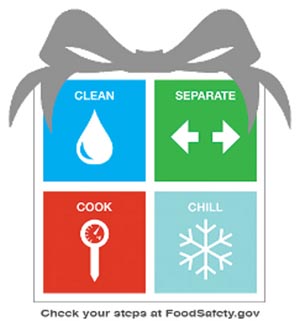 |
| Food safety guidelines logo. Photo courtesy: USDA.gov |
Many types of hazardous chemicals and heavy metals we dispose of finally end up polluting nearby water bodies and contaminate the soil that is meant for crop cultivation. It is a typical scenario in some developing countries where water treatment facilities are in primitive conditions.
Harmful chemicals such as DDT, pesticides/insecticides like Endosulfan, and heavy metals like mercury, lead, cadmium, etc., can simply gain access and embed deep inside the tissues at cellular levels in vegetables, fruits, cereals, and pulses that we consume in everyday foods.
Since human beings are standing mostly at the end of the food chain, much of these toxic compounds may ultimately enter our body, either directly or indirectly, in a gradual and increasing concentration (biomagnification). Larger insects/worms in the vegetable would be easily spotted and removed, while microorganisms like bacteria, viruses, and ova/cysts can be destroyed by cooking at high temperatures. But, how do you rid of chemicals and toxins that reside permanently in the food we consume?
Unfortunately, we have yet to figure out any effective measures, if at all, to keep these harmful and dangerous substances at bay. Scientists are working hard to develop a technology that could efficiently filter out these chemical compounds from the environment. However, for the time being, some of the health risks can at least be minimized by adopting active food-safety principles at every stage, beginning right from the handling of food ingredients, to its selection from an authentic source, proper processing, storage, preparation, and consumption.
Food Selection
Food selection is certainly a challenging job. However, it is the most crucial initial step towards securing safe food for your family. It demands the buyer to plan meticulously for a food item.
As a customer, you need to keep in mind certain information concerning the ingredients you intend to buy. Check whether it is organic produce or chemicals-treated, methods employed while harvesting, mode of transportation and marketing practices, the geography of procurement (locally grown or imported), etc. The purchasing power of the person or family, individual interest, etc., should also be worked out. A reasonable level of knowledge regarding the food item is necessary because tons of food-borne diseases ranging from minor food poisoning to serious cancers have been attributed to the kind of food we consume.
Here are some tips for better food selection:
Always buy fresh, seasonal vegetables, and fruits grown at nearby organic farms.
Avoid food items from crop fields irrigated with sewage water sources or polluted rivers.
Buy cereals and pulses from authentic organic farming sources.
Milk and its products should be obtained from healthy livestock.
Poultry products and meat should be procured from certified healthy animal farms.
Try to buy fresh fish from deep water sources as water ponds and most of the rivers are polluted.
Try to avoid takeaway foods as it is it's hard to validate their authenticity.
Storage of food items
|
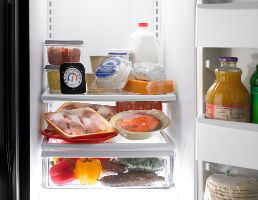
| Food storage. Photo courtesy: USDA.gov |
Next, it is also important to store food items since they should remain fresh and nourishing until we consume them. Improper storage would deprive food of its nutritive value, and taste and may allow it susceptible to microbial and insect attacks.
Here are some strategies for proper food storage:
Always wash vegetables and fruits thoroughly in cold running water and then soak them in salt water for about 30 minutes before sorting and storing them inside the refrigerator.
Use vegetables (especially green-leaf) and fruits (banana, berries, grapes) with a short shelf life as early as possible.
Keep poultry items and meat inside the freezer compartment of the refrigerator.
Do not thaw food items open in the kitchen, and outdoors. Thaw food in the fridge, in cold water, or in the microwave.
Keep cereals and pulses in air-tight boxes or bags since they attract flies and insects if kept open.
Food processing
Food processing should be done meticulously; although, it demands time and patience. Food safety is your priority! Preparation of food should be planned beforehand regarding time, cost, variety, and the number of people to cook.
Food items, especially fruits and vegetables, should be washed in clean running water to remove surface dirt, chemicals, and microbes. Cut items should not be cleaned again as it results in loss of nutrients.
Soaking cereals, pulses, and beans in clean water for at least 30 minutes before cooking helps to initiate enzymatic activity, increases nutritive value, digestibility, and decreases cooking time, and saves energy. Germination (sprouting) of cereals and pulses enhances their nutritive value by enrichment of vitamins and enzymes.
Vegetables should be cut just before cooking, and wherever permitted, should be used without peeling as it results in loss of nutrients and fiber.
Cook food with clean utensils preferably under steam pressure. It saves time, and energy and preserves food items of their nutrients.
Try to avoid frying of foods. Frying requires oil and high heat. Deep frying at higher temperatures generates harmful chemicals like acrylamide, besides converting the oil into unhealthy trans fats.
Use vegetable oils like olive, or soybean which is low in saturated fats. Try to avoid butter, animal fat, and hydrogenated fats.
Use a small amount of oil and do not reuse it for cooking. If frying requires more oil, then add fresh oil in small increments to replace the oil used up while frying.
Set the right temperature before putting food items for frying. Stir frequently while frying.
Sauteing, using tomato or soy sauce as a base significantly reduces the cooking oil requirement.
Here are some tips for safe frying;
≻≻-Back to Nutrition articles from Food safety.
Further reading and References:
U.S. Department of Agriculure-Food Safety guideline.