Dates Nutrition facts
What nutritional benefits do dates offer? Dates are a true nutritional powerhouse! These delectable tropical fruits are packed with essential minerals and energy, making them a perfect choice for maintaining your health and vitality.Botanically they are the "drupe" (single pitted) fruits, that grow on the palm tree belonging to the family of Arecaceae, in the genus: Phoenix, and scientifically named as Phoenix dactylifera. The tree is believed to originate in the lands on the banks of the Nile and Euphrates Rivers of ancient Egypt and Mesopotamia. Date palm is now grown extensively for its edible fruits under warmer climates across all the continents.
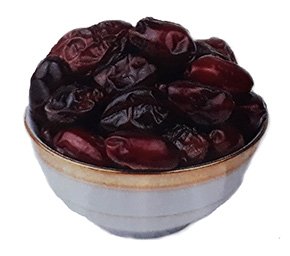 |
| Delicious Arabian dates. |
The date fruit can be categorized as a "drupe," with its outer fleshy layers (exocarp and mesocarp) enveloping a hardened endocarp, commonly referred to as the pit or stone, which contains a seed. The fruit typically has an oval to cylindrical shape, measuring 3–7 cm in length and 2–3 cm in diameter. When ripe, dates exhibit a range of colors, from golden yellow and amber to bright red and deep brown, depending on the specific cultivar.
A wide array of date palm varieties are cultivated, with 'Amir Hajj,' 'Saidy,' 'Khadrawy,' and 'Medjool' being notable examples celebrated for their exquisite taste, flavor, and exceptional quality.
Health benefits of Dates
Wonderfully delicious, dates are one of the most popular fruits packed with an impressive list of phytonutrients, vitamins, and minerals that are essential for normal growth, development, and overall well-being.
Fresh dates are composed of soft, easily digestible flesh and simple sugars like fructose and dextrose. 100 g of Medjool dates hold 277 calories. When eaten, they replenish energy and revitalize the body instantly. For these qualities, they traditionally served to break the fast during Ramadan month since ancient times.
The fruit is rich in dietary fiber, which prevents LDL cholesterol absorption in the gut. Additionally, the fiber diet works as a bulk laxative. It, thus, helps protect the colon mucous membrane from cancer-causing chemicals binding to it in the colon.
They contain health benefiting flavonoid polyphenolic antioxidants known as tannins. Tannins are known to possess anti-infective, anti-inflammatory, and anti-hemorrhagic (prevent easy bleeding tendencies) properties.
Date berries are modest sources of vitamin-A (contains 149 IU or 5% of RDA per 100 g). Vitamin A is known to have antioxidant properties and is essential for vision health. Additionally, it is also required to maintain healthy mucosa and skin. Consumption of natural fruits rich in vitamin A is known to protect against lung and oral cavity cancers.
They compose antioxidant flavonoids such as ß-carotene, lutein, and zeaxanthin. These antioxidants are found to have the ability to protect cells and other structures in humans from the harmful effects of oxygen-free radicals. Thus, eating dates are found to offer some protection from colon, prostate, breast, endometrial, lung, and pancreatic cancers.
Zeaxanthin is an important dietary carotenoid that selectively absorbs into the retinal macula lutea where it is thought to provide antioxidant and protective light-filtering functions. It thus, offers protection against age-related macular degeneration, especially in elderly citizens.
Dates are excellent sources of iron, carrying 0.90 mg/100 g of fruits (about 11% of RDI). Iron, being a component of hemoglobin inside the red blood cells, determines the oxygen-carrying capacity of the blood.
Further, they are aexcellent sources of potassium. 100 g contains 696 mg or 16% of the daily recommended levels of this electrolyte. Potassium is an important component of cells and body fluids that help regulate heart rate and blood pressure. Thus, they offer protection against stroke and coronary heart disease.
Date fruits are also rich in minerals like calcium, manganese, copper, and magnesium. Calcium is an important mineral that is an essential constituent of bone and teeth and is required by the body for muscle contraction, blood clotting, and nerve impulse conduction. The human body uses manganese as a co-factor for the antioxidant enzyme, superoxide dismutase. Copper is required for the production of red blood cells. Magnesium is essential for bone growth.
Further, the fruit has moderate levels of the B-complex group of vitamins as well as vitamin K. It contains healthy amounts of pyridoxine (vitamin B-6), niacin, pantothenic acid, and riboflavin. These vitamins are acting as cofactors to help the body metabolize carbohydrates, protein, and fats. Vitamin K is essential for many coagulant factors in the blood as well as in bone metabolism.
| Principle | Nutrient Value | Percent of RDA |
|---|---|---|
| Energy | 277 Kcal | 14% |
| Carbohydrates | 74.97 g | 58% |
| Protein | 1.81g | 3% |
| Total Fat | 0.15 g | <1% |
| Cholesterol | 0 mg | 0% |
| Dietary Fiber | 6.7 g | 18% |
| Vitamins | ||
| Folates | 15 µg | 4% |
| Niacin | 1.610 mg | 10% |
| Pantothenic acid | 0.805 mg | 16% |
| Pyridoxine | 0.249 mg | 19% |
| Riboflavin | 0.060 mg | 4.5% |
| Thiamin | 0.050 mg | 4% |
| Vitamin A | 149 IU | 5% |
| Vitamin C | 0 mg | 0% |
| Vitamin K | 2.7 µg | 2% |
| Electrolytes | ||
| Sodium | 1 mg | 0% |
| Potassium | 696 mg | 16% |
| Minerals | ||
| Calcium | 64 mg | 6.5% |
| Copper | 0.362 mg | 40% |
| Iron | 0.90 mg | 11% |
| Magnesium | 54 mg | 13% |
| Manganese | 0.296 mg | 13% |
| Phosphorus | 62 mg | 9% |
| Zinc | 0.44 mg | 4% |
| Phyto-nutrients | ||
| Carotene-ß | 89 µg | -- |
| Crypto-xanthin-ß | 0 µg | -- |
| Lutein-zeaxanthin | 23 µg | -- |
Selection and storage
 |
 |
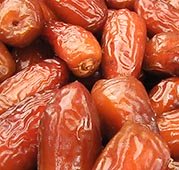
| Delicious dates. (Photo by-flickr.com-Itinerant) |
Date-Palm. |
Dates can be readily available in the groceries year-round. However, some varieties of fresh, soft, good-quality fruits are only available from September through December. In certain dry regions of Africa, dates gathered while just reaching maturity and allowed to ripen inside the jars.
In the stores, one may come across soft, semi-dry, and dried types displayed for sale. At home, store them at room temperature inside an air-seal container in a cool place where they can keep well for several months.
Preparation and serving method
High-quality dates handpicked directly from the fruit bunch and sold as a premium variety in the markets. On a commercial scale, most are harvested by cutting the entire cluster, fumigated, cleaned, graded, packed, stored under refrigeration, and released to markets according to demand.
Here are some serving tips:
Dry and soft dates are usually eaten out of hand without any add-ons.
Pitted dates can be stuffed with fillings such as almonds, walnuts, candied orange and cream cheese.
They can also be chopped and added to fruit salad and in a range of sweet and savory dishes.
Dates are also being used to prepare juice and Jallab (a type of syrup popular in the Middle East and made from dates, grape molasses, and rose water).
Safety profile
Date fruit allergy is a rare occurrence. The fruits are safe to eat in infants and pregnant women. However, in some sensitized individuals to birch family pollen, exposure to date palm pollen may elicit cross-hypersensitivity reactions. For the same reason, avoid any food preparations that contain date palm products in these people.(Medical disclaimer).
≻≻-Back to Fruits from Dates. Visit here for an impressive list of all varieties of fruits with complete illustrations of their nutrition facts and health benefits.
≻≻-Back to Home page.
Further reading and Resources:
United States National Nutrient Database for Standard Reference.
Phoenix dactylifera: An update of its indegenous uses, phytochemistry and pharmacology. http://www.ispub.com/journal/the-internet-journal-of-pharmacology/volume-7-n umber-1/phoenix-dactylifera-an-update-of-its-indegenous-uses-phytochemistry- and-pharmacology.html.