Brussel sprouts Nutrition facts
Brussel sprouts are tiny, leafy green buds resembling miniature cabbages in appearance. They nonetheless are exceptionally rich sources of protein, dietary fiber, vitamins, minerals, and antioxidants. In fact, a renewed interest is emerging among the scientific community about the health benefits brussels sprouts have to offer.
Botanically, the sprouts belong to the same Brassica family of vegetables which also includes cabbage, collard greens, broccoli, and kale. Scientific name: Brassica oleracea (Gemmifera Group).
 |
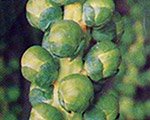 |
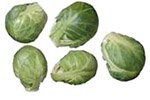
| Brussel sprouts. Close-up view. Note that Brussels heads resemble miniature cabbages. | Sprouts growing all along the stalk. |
Brussels sprouts are winter crops flourishing well under cool weather and light frosting conditions. The well-grown plant reaches about 90 cm in height. The sprouts develop all along the stalk, starting from the base and moving upward. Each sprout, in general, features similarity in appearance and structure to cabbage, but only minuscule in size, measuring about 1-1.5 inches in diameter.
Structurally, each sprout head consists of clusters of thick leaves superimposed in dense layers, giving it a round or globular shape as in cabbages.
Farmers trim the tip end of the stalk as soon as sprouts at the bottom end of the stalk begin to develop to get uniform-sized sprouts. The developing buds are protected from direct sunlight since exposure to hot weather would lead to loose, less-compact buds. Brussels sprouts are one of the most popular vegetables in the United States and Mediterranean Europe.
Health benefits of Brussel sprouts
Brussel sprouts are one of the low-glycemic nutritious vegetables that should be considered in weight reduction programs. 100 grams of sprouts provide just 45 calories. Nonetheless, they carry 3.38 g of protein, 3.80 g of dietary fiber (10% of RDA), and zero cholesterol.
In fact, brussels sprouts are a storehouse of several flavonoid anti-oxidants such as thiocyanates, indoles, lutein, zeaxanthin, sulforaphane, and isothiocyanates. Together, these phytochemicals offer protection from prostate, colon, and endometrial cancers.
Di-indolyl-methane (DIM), a metabolite of indole-3-carbinol, is found to be an effective immune modulator, antibacterial and anti-viral agent through its action of potentiating "Interferon-gamma" receptors.
Additionally, Brussel sprouts contain a glucoside, sinigrin. Early laboratory studies suggest that sinigrin fights against colon cancers by destroying pre-cancerous cells.
Brussel sprouts are excellent sources of vitamin-C; 100 g sprouts provide about 85 mg or 142% of the RDA. Together with other antioxidant vitamins such as vitamin and E, it helps protect the human body from viral illness by trapping harmful free radicals.
Zea-xanthin, an important dietary carotenoid found in sprouts, is selectively absorbed in the 'macula-lutea' of the retina in the eyes where it is thought to provide antioxidant and protective UV light-filtering functions. Thus, it helps prevent retinal damage, "age-related macular degeneration related macular degeneration disease" (ARMD), in older adults.
Brussel sprouts are a wonderful source of another powerful antioxidant vitamin, vitamin A, providing about 754 IU per 100 g (25% of RDA). Vitamin A is required for maintaining healthy mucosa and skin and is essential for eye health. Foods that are rich in this vitamin have been found to offer protection against lung and oral cavity cancers.
It is one of the excellent vegetable sources for vitamin-K; 100 g provides about 177 µg or about 147% of RDA. Vitamin K has a potential role in bone health by promoting osteoblastic (bone formation and strengthening) activity. Adequate vitamin-K levels in the diet help limit the extent of neuronal damage in the brain thereby, preventing or at least delaying the onset of Alzheimer's disease.
Further, the sprouts are notably useful in many B-complex groups of vitamins such as niacin, vitamin B-6 (pyridoxine), thiamin, and pantothenic acid that are essential for substrate metabolism in the human body.
They are also a rich source of minerals like copper, calcium, potassium, iron, manganese, and phosphorus. 100 g fresh sprouts provide 25 mg (1.5% of RDA) sodium and 389 mg (8% of RDA) potassium. Potassium is an important component of cells and body fluids that helps control heart rate and blood pressure by countering the effects of sodium. Manganese is used by the body as a co-factor for the antioxidant enzyme, superoxide dismutase. Iron is essential for cellular oxidation and red blood cell formation.
Brussels sprouts are incredibly nutritious vegetables that offer protection from vitamin-A deficiency, bone loss, and iron-deficiency anemia. The phytochemicals in the sprouts are believed to protect against cardiovascular diseases and colon and prostate cancers.
| Principle | Nutrient Value | Percent of RDA |
|---|---|---|
| Energy | 43 Kcal | 2% |
| Carbohydrates | 8.95 g | 7% |
| Protein | 3.38 g | 6% |
| Total Fat | 0.30 g | 1% |
| Cholesterol | 0 mg | 0% |
| Dietary Fiber | 3.80 g | 10% |
| Vitamins | ||
| Folates | 61 µg | 15% |
| Niacin | 0.745 mg | 4.5% |
| Pantothenic acid | 0.309 mg | 6% |
| Pyridoxine | 0.219 mg | 17% |
| Riboflavin | 0.90 mg | 7% |
| Thiamin | 0.139 mg | 13% |
| Vitamin A | 754 IU | 25% |
| Vitamin C | 85 mg | 142% |
| Vitamin K | 177 µg | 147% |
| Electrolytes | ||
| Sodium | 25 mg | 1.5% |
| Potassium | 389 mg | 8% |
| Minerals | ||
| Calcium | 42 mg | 4% |
| Copper | 0.70 mg | 8% |
| Iron | 1.40 mg | 17.5% |
| Magnesium | 23 mg | 6% |
| Manganese | 0.337 mg | 15% |
| Phosphorus | 69 mg | 10% |
| Selenium | 1.6 µg | 3% |
| Zinc | 0.42 mg | 4% |
| Phyto-nutrients | ||
| Carotene-α | 6 µg | -- |
| Carotene-ß | 450 µg | -- |
| Crypto-xanthin-ß | 0 µg | -- |
| Lutein-zeaxanthin | 1590 µg | -- |
Selection and storage
Brussel sprouts are cool-season vegetables. In general, sprouts are harvested when their lower buds reach maturity and achieve about an inch in diameter. Fresh sprouts should feature firm, compact, and dark green heads. Avoid sprouts that feature loose-leaf, yellowish, and light in hand.
Fresh sprouts keep well inside the refrigerator for up to a day or two. Remove any damaged or discolored outer leaves and store fresh unwashed sprouts in plastic bags/zip pouches in the vegetable container inside the refrigerator.
Preparation and serving methods
Before cooking, remove discolored and loosely attached outer leaves and trim the stem end. Wash in clean water and then soak for a few minutes in salt water to remove any dirt particles and insect eggs.
Fresh sprouts exhibit delicate flavor, however, overcooking results in the release of allyl isothiocyanates imparting sulfurous odor (pungent smell) to cooked recipes. Therefore, blanch sprouts in boiling water for just about 5 minutes, cool, and then add to the recipes.
Here are some serving tips:
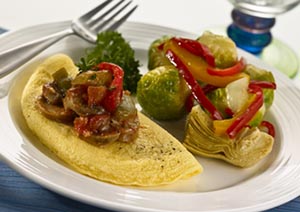 |
| Roasted brussel sprouts with greens and stuffed omelette. Photo courtesy: Justin Smith |
Sprouts can be cooked by boiling, microwaving, or steaming.
Roasted and salted sprouts are one of the favorite snacks across Europe.
Blanched sprouts are braised/ mixed with other vegetables like carrot, green beans, or mushrooms.
The sprouts are used as a favorite add-on in chicken casseroles.
Safety profile
Being a Brassica family vegetable, Brussel sprouts too may contain goitrogens, which may cause swelling of the thyroid gland and should be avoided in individuals with thyroid dysfunction. However, they may be used liberally among healthy persons. (Medical disclaimer).
Also read ≻≻-
≻≻- prostate
≻≻- Broccoli nutrition facts.
≻≻- Broccoli rabe nutrition facts.
≻≻- Cauliflower nutrition facts.
≻≻-Back to Vegetables from Brussel sprouts nutrition. Visit here for an impressive list of vegetables with complete illustrations of their nutrition facts and health benefits.
≻≻-Back to Home page.
Further reading and Resources:
Stanford School of Medicine Cancer information Page- Nutrition to Reduce Cancer Risk.