Basil herb Nutrition facts
The king of herbs basil herb is one of the ancient and popular herbal plants brimming with important health-benefiting phytonutrients. This highly prized plant is revered as a "holy herb" in many cultures all around the world.
Basil belongs to the family of Lamiaceae, in the genus: Ocimum. Its scientific name is "Ocimum basilicum."
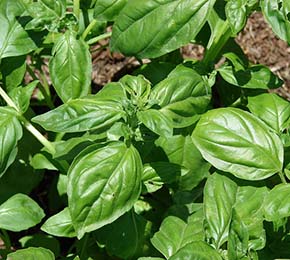 |
| Mediterranean sweet basil. Note for glossy, green leaves. Photo: Forest and Kim Starr |
Basil herb is originally native to Iran, India, and other tropical regions of Asia. This bushy annual herb is especially grown for its medicinally useful leaves and seeds. Basil grows best in warm, tropical climates.
A fully-grown basil reaches about 100 cm in height. Its leaves vary from light green to dark green and purple, smooth and silky, about 1 to 2.5 inches long, and 0.5 to 1 inch broad with an "opposite" arrangement. The flowers are quite large, white or purple, arranged in terminal spikes.
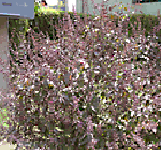 |
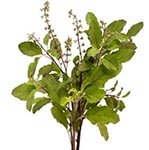 |
| Asian or holy-basil (Ocimum sanctum) | Asian basil. Large, hairy plant with pink flowers and purple leaves |
Many different subspecies of basil herbs exist. The "Mediterranean" cultivar also known as sweet basil features light green leaves. In contrast, "Asian basil" (Ocimum sanctum) features large, hairy stems and stalks with pink flowers and purple to pinkish leaves, in addition to possessing a stronger "clove-like" flavor. There is also "lemon basil," which has a pleasant lemony flavor.
Thai basil (O. basilicum 'Horapha') is similar in characteristics to Asian basil but features narrow, pointed, light green leaves with a sweet licorice-like aroma.
The European "sweet basil" is mild and possesses a sweet anise/clove flavor. For the same reason, it is recognized as culinary basil and used extensively in cuisine all over the world.
Health benefits of Basil herb
Basil leaves hold many important plant-derived chemical compounds that are known to have disease-preventing and health-promoting properties.
Basil herb contains many polyphenolic flavonoids like orientin and vicenin. These compounds were tested in vitro in a laboratory for their possible antioxidant protection against radiation-induced lipid peroxidation in mouse liver.
Basil leaves are composed of many health-benefiting essential oils such as eugenol, citronellol, linalool, citral, limonene, and terpineol. These compounds are known to have anti-inflammatory and antibacterial properties.
The herb is very low in calories and contains no cholesterol. Nonetheless, it is one of the finest sources of many essential nutrients, minerals, and vitamins critical to optimum health.
Basil herb contains exceptionally high levels of beta-carotene, vitamin-A, cryptoxanthin, lutein, and zeaxanthin. These compounds help act as protective scavengers against oxygen-derived free radicals and reactive oxygen species (ROS) that play a role in aging and various disease processes.
Zea-xanthin, a yellow flavonoid carotenoid compound, is selectively absorbed into the retinal macula lutea where it is found to filter harmful UV rays from reaching the retina.
Studies suggest that common herbs, fruits, and vegetables that are rich in zeaxanthin antioxidants offer protection against age-related macular disease (AMRD), especially in older adults.
100 grams of fresh herb basil leaves contain astoundingly 5275 mg or 175% of daily required doses of vitamin A. Vitamin A is known to have antioxidant properties and is essential for vision. It is also required for maintaining healthy mucosa and skin.
Consumption of natural foods rich in vitamin A has been found to help the human body protect from lung and oral cavity cancers.
Vitamin K in basil is essential for the production of clotting factors in the blood and plays a vital role in bone strengthening and mineralization.
Basil herb contains a good amount of minerals like potassium, manganese, copper, and magnesium. Potassium is an important component of cell and body fluids, which helps control heart rate and blood pressure. Manganese is utilized by the human body as a co-factor for the antioxidant enzyme, superoxide dismutase.
Basil leaves are an excellent source of iron. Its fresh leaves carry 3.17 mg/100 g (about 26% of RDA) of iron. Iron, being a component of hemoglobin in the red blood cells, is one of the chief determinants of the oxygen-carrying capacity of the blood.
| Principle | Nutrient Value | Percent of RDA |
|---|---|---|
| Energy | 23 Kcal | 1% |
| Carbohydrates | 2.65 g | 2% |
| Protein | 3.15 g | 6% |
| Total Fat | 0.64 g | 2% |
| Cholesterol | 0 mg | 0% |
| Dietary Fiber | 1.60 g | 4% |
| Vitamins | ||
| Folates | 68 µg | 17% |
| Niacin | 0.902 mg | 6% |
| Pantothenic acid | 0.209 mg | 4% |
| Pyridoxine | 0.155 mg | 12% |
| Riboflavin | 0.076 mg | 6% |
| Thiamin | 0.034 mg | 2.5% |
| Vitamin-A | 5275 IU | 175% |
| Vitamin C | 18 mg | 30% |
| Vitamin E | 0.80 mg | 5% |
| Vitamin K | 414.8 µg | 345% |
| Electrolytes | ||
| Sodium | 4 mg | 0% |
| Potassium | 295 mg | 6% |
| Minerals | ||
| Calcium | 177 mg | 18% |
| Copper | 385 mg | 43% |
| Iron | 3.17 mg | 40% |
| Magnesium | 64 mg | 16% |
| Manganese | 1.15 mg | 57% |
| Zinc | 0.81 mg | 7% |
| Phyto-nutrients | ||
| Carotene-ß | 3142 µg | -- |
| Crypto-xanthin-ß | 46 µg | -- |
| Lutein-zeaxanthin | 5650 µg | -- |
Selection and storage
Sweet basil is employed generously in cooking in Mediterranean countries. Often, it is grown as a potherb in the backyard so that its fresh leaves and flowers can be readily harvested for immediate use.
In the herbal stores, choose fresh organic basil over its dry form since fresh leaves carry essential oils and therefore, superior in quality and flavor. Basil should be free from dark spots and yellowing.
Dry basil leaves and seeds can also be found in specialty herb stores. However, sundried as well as radiation-treated basil leaves may contain significantly decreased concentrations of essential oils, vitamin C, and carotene levels.
Fresh sweet basil does better at room temperatures, unlike other common herbs like parsley which need refrigeration. Dried basil should be kept in a tightly sealed glass container, in a cool, dark, and dry place where it will stay fresh for up to six months.
Preparation and serving methods
Wash fresh Basil in cold running water or rinse for a few minutes to remove any dirt or pesticide residues. Sweet basil is added at the final moments in the recipes to keep its fragrance and flavor intact; since prolonged cooking results in evaporation and loss of its essential oils.
Fresh basil leaves added to flavor any vegetable, poultry, or meat dish. The herb is also used in tomato and egg dishes, stews, soups, and salads.
Here are some serving tips:
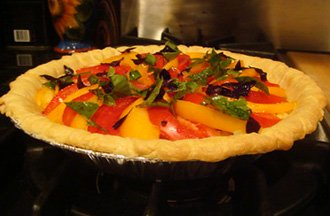 |
| Tomato-onion cheese tart topped with basil. Photo: Jennifer |
Fresh or dried basil leaves are being used in the preparation of soups and dishes.
Chopped fresh sweet basil leaves impart richness to vegetables (Italian Panzanella salad) as well as fruit salads.
Italian large leaf basil is one of the main ingredients in ‘pesto,' a green sauce that is added to soups, vegetables, fish, and pasta dishes in Mediterranean cooking.
A kind of flavor drink made of Basil seeds is popular in some Asian countries.
Medicinal uses of basil herb
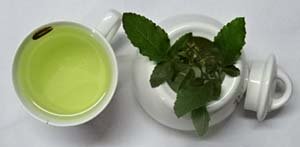 |
| Basil tea |
Basil leaves contain health-benefiting essential oils such as eugenol, citronellol, linalool, citral, limonene, and terpineol. These compounds are known to possess anti-inflammatory, and antibacterial properties.
Eugenol Eugenol is an important essential oil in basil that acts against the enzyme cyclooxygenase (COX). It thus has been found to have an anti-inflammatory function. Cyclooxygenase (COX) enzyme mediates inflammatory reactions inside the human body. It acts against the enzyme cyclooxygenase (COX). This enzyme-inhibiting effect of the eugenol in basil makes it a valuable remedy for symptomatic relief in individuals with inflammatory health problems like rheumatoid arthritis, osteoarthritis, and inflammatory bowel conditions.
Oil of basil herb has also been found to have anti-infective functions by inhibiting many pathogenic bacteria like Staphylococcus, Enterococci, Shigella and Pseudomonas.
Basil tea (brewed basil water) helps relieve nausea and is thought to have mild antiseptic functions. (Medical disclaimer).
≻≻-Back to Herbs from Basil herb. Visit here for an impressive list of all varieties of herbs with complete illustrations of their nutrition facts and health benefits.
≻≻-Back to Home page.
Further Resources:
- USDA National Nutrient Database. (opens in new window)
Stanford School of Medicine Cancer information Page-Nutrition to Reduce Cancer Risk (Link opens in new window)