Flax seed nutrition facts
Flax seed, also known as linseed, is one of the ancient cultivated crops since Mesopotamian times, grown for its oilseeds and fiber. Its crunchy seeds packed full of nutrients, omega-3 fatty acids, antioxidants, minerals, and essential vitamins. Of late, the health benefits of flax have widely drawn the attention of nutrition researchers as well as health enthusiasts alike across the world.
Flax belongs to the family of Linaceae, of the genus of Linum, and botanically named as Linum usitatissimum.
|
 |
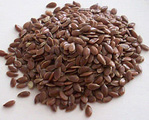
| Flax seeds (L.usitatissimum). (Courtesy: AlishaV) |
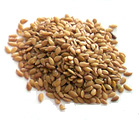
Golden yellow flax. (Courtesy: AlishaV) |
Flax is an erect annual plant growing about 1 to 1.5 meters tall and bears light-blue color attractive flowers. It is one of the easily cultivated crops that flourish well both in tropical as well as subtropical climates, with higher acreage production as a field crop noted in some fertile river valleys.
Flax fruit pod is a round, dry capsule of 6–9 mm diameter, containing several brown or golden-yellow seeds (depending on the cultivar type). Its seeds feature a flat, smooth, glossy surface that somewhat appears like sesame seeds, but quite larger, measuring about 4–6 mm in length.
In general, there exist two common cultivars of flax; one predominantly grown for its oilseeds and the other commercial variety for obtaining fiber. Seed-flax normally features brown, yellow, or golden-yellow color seeds, with most types having similar nutritional values and the same amounts of short-chain omega-3 fatty acids.
Health benefits of Flax seed
As in other oilseeds, flax is also a calorie-dense food. 100 g of seeds carry 534 calories or 27% of the daily required levels. Flax is an excellent source of many health-benefiting nutrients, dietary fiber (mucilage), minerals, antioxidants, and vitamins that are essential for optimum health.
Flax seed is rich in monounsaturated fatty acids like oleic acid. It is also one of the top plant-sources of omega-3 essential fatty acids such as α -linolenic acid (ALA).
Regular intake of small portions of flax in the diet helps in decreasing total as well as LDL or “bad cholesterol” and increases HDL or “good cholesterol” levels in the blood. Research studies suggest that the Mediterranean diet, rich in fiber, monounsaturated fatty acids, and omega-3 fatty acids is known to help prevent risks of coronary artery disease and stroke by favoring a healthy blood lipid profile.
Flax seeds are perhaps the most widely available vegetarian-sources of n-3 or omega-3 fatty acids. Flaxseed oil consists of approximately 55% ALA (a-linolenic acid). One spoonful of flaxseed oil provides about 8 g of omega-3 fatty acids.
Research studies suggest that n-3 fatty acids by virtue of their anti-inflammatory actions may help lower the risk of blood pressure, coronary artery disease, strokes, and breast, colon, and prostate cancers. Adequate omega-3 levels are essential for the overall development and maturation of the nervous system in infants.
The seeds contain lignans, a class of phytoestrogens considered to have antioxidant and cancer-preventing properties.
Flax are an excellent source of vitamin-E, especially rich in gamma-tocopherol; containing about 20 g (133% of daily recommended values) per 100 g. Vitamin E is a powerful lipid-soluble antioxidant, required for maintaining the integrity of mucosa and skin by protecting it from harmful oxygen-free radicals.
The seeds are packed with many important B-complex groups of vitamins such as riboflavin, niacin, thiamin, pantothenic acid, vitamin B-6, and folates. Thiamin is an essential co-factor for carbohydrate metabolism and helps prevent Beriberi disease. Folates contribute to avoiding neural tube defects in the fetus when consumed during the pre-conception period and pregnancy.
Furthermore, flaxseed is a rich source of minerals such as manganese, potassium, calcium, iron, magnesium, zinc, and selenium.
Flax or linseed oil has a deliciously nutty flavor. It is being employed in cooking and as a “carrier" or "base oil” in traditional medicines and the pharmaceutical industry.
| Principle | Nutrient Value | Percent of RDA |
|---|---|---|
| Energy | 534 Kcal | 27% |
| Carbohydrates | 28.8 g | 22% |
| Protein | 18.3 g | 32.5% |
| Total Fat | 42.16 g | 170% |
| Cholesterol | 0 mg | 0% |
| Dietary Fiber | 27.3 g | 68% |
| Vitamins | ||
| Folates | 87 µg | 22% |
| Niacin | 3.08 mg | 19% |
| Pantothenic acid | 0.985 mg | 20% |
| Pyridoxine | 0.473 mg | 36% |
| Riboflavin | 0.161 mg | 12% |
| Thiamin | 1.64 mg | 137% |
| Vitamin A | 0 IU | 0% |
| Vitamin C | 0.6 mg | 1% |
| Vitamin E | 19.95 mg | 133% |
| Vitamin K | 4.3 µg | 3.5% |
| Electrolytes | ||
| Sodium | 30 mg | 2% |
| Potassium | 813 mg | 17% |
| Minerals | ||
| Calcium | 255 mg | 22.5% |
| Copper | 1.12 mg | 124% |
| Iron | 5.73 mg | 72% |
| Magnesium | 392 mg | 98% |
| Manganese | 2.48 mg | 108% |
| Zinc | 4.34 mg | 39% |
| Phytonutrients | ||
| Carotene-ß | 0 µg | -- |
| Lutein-zeaxanthin | 651 µg | -- |
Selection and storage
Flax seeds can be available in the market year-round. In the stores, one may come across different forms of flax such as whole dry seeds, roasted, ground, etc. Try to buy whole, golden-yellow flax seeds instead of ground (powder) as it ensures that the seeds are intact in nutrients, unadulterated, and have a longer shelf life.
There are two varieties of flax seeds; brown and yellow or golden, with most types having similar nutritional values and almost the same amounts of short-chain omega-3 fatty acids. The seeds should feature bright, brown, or golden-yellow (depending on the variety) color, be smooth, compact, and uniform in size, and feel heavy in hand. They are generally available in airtight packs as well as in bulk bins.
Whole flax seeds may be placed in a cool, dry place for many months, while their powder form should be placed inside an airtight container and kept in the refrigerator in order to avoid them turning rancid.
Culinary uses
Gently toast them under low heat before use as food. Flax seeds are rich in polyunsaturated fatty acids. Exposure of flax powder to air for extended periods can oxidize their fatty acids which deprives them of their nutritional value. Therefore, the seeds are milled in a coffee or nut/seed grinder just before use in order to preserve their nutrition profile.
Toasted seeds can also be enjoyed as snacks either salted or sweetened (energy bar).
Flax seeds are nutty yet pleasantly sweet in taste. Ground seeds are a great addition to toppings in yogurt, desserts, smoothies, shakes, cereal-based snacks, etc.
Toasted and ground seeds often sprinkled over salads, desserts, particularly sundaes, and other ice cream preparations.
Gently toasted flax widely used in confectionery as an addition to biscuits, sweets, muffins, and cakes.
Known as alsi seeds in India, flax seeds and oil are used to treat digestive complaints, overweight and obesity, and arthritis.
Safety profile
Flax-seed contains a lot of mucilage fiber in its outer coat, which when eaten in large amounts may cause stomach pain, bloating, and laxative diarrhea. However, they have no harmful effects on health when consumed in small quantities.
Eating raw flax seed is not advised for its possible risk of cyanogen-glycosides toxicity.
Further, lignans in flax possess a strong estrogen-like activity. Therefore, pregnant women are advised against excess consumption of flax and its products for its possible hormone interactions. (Medical disclaimer).
≻≻-Back to Nuts and seeds from Flax seed nutrition. Visit here for an impressive list of nuts with complete illustrations of their nutrition facts and health benefits.
≻≻-Back to Home page.
Further Resources:
Refer StanfordMedicine cancer center information page-Nutrition to reduce cancer risk .
National center for complementary and alternative medicine: NCCAM: Flax seed.
USDA National Nutrient Database.