Cantaloupe (Muskmelon) Nutrition facts
Delightfully delicious and uniquely musky-flavored, cantaloupe, also known as "muskmelon," belongs to the extensive Cucurbitaceae family.
Muskmelons are believed to have originated from ancient Persia, or Indian subcontinent. Thriving best in well-draining sandy soil with proper irrigation, they depend on honeybees for effective pollination.
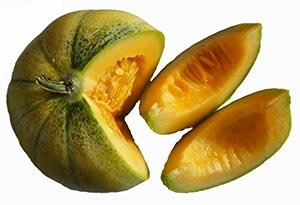 |
| Muskmelon |
Several varieties of cantaloupes are cultivated worldwide. However, two common types, named after their places of origin, have gained popularity in the Western world:
-
European cantaloupe (Cucumis melo cantalupensis) gets its name from the Italian papal village of "Cantalup." It features lightly-ribbed, pale green skin, distinct from the North American cantaloupe. Galia melon and charentais belong to this category.
-
North American cantaloupe (Cucumis melo reticulatus), renowned in the United States and parts of Canada, is named reticulatus due to its net-like (or reticulated) skin. Honeydew melons boast sweet, characteristic pale green succulent flesh.
-
Yubari melon (Yubari king) is a special hybrid cultivar grown in Yubari City, Hokkaido, Japan. Surrounded by mountains and well-drained volcanic ash soil, this produce is prized for its sweet, mellow flavor.
Similar to other members of the Cucurbitaceae family, melons grow along the ground surface, trailing as vines.
Typically, cantaloupe fruits are either round or oblong, measuring 4.5 to 6.5 inches in diameter and weighing between 450 to 850 grams, sometimes exceeding a kilogram.
Internally, the flesh color ranges from orange-yellow to salmon, possessing a soft consistency and juicy texture. They emit a sweet, musky aroma, most pronounced in fully ripe fruits. Towards the center, there's a hollow cavity filled with small off-white seeds enclosed in a network of mucilaginous netting.
8 Incredible Health Benefits of Cantaloupe
Cantaloupes, wonderfully delicious with a rich flavor, are remarkably low in calories (just 34 calories per 100g) and fats. Nevertheless, they are packed with numerous health-promoting polyphenolic plant-derived compounds, vitamins, and minerals essential for optimal health.
This fruit is an outstanding source of Vitamin-A, providing 3382 IU (about 112% of recommended daily levels) per 100g, one of the highest among Cucurbita fruits. Vitamin A acts as a powerful antioxidant, crucial for healthy vision and maintaining mucosa and skin health. Regular consumption of natural fruits rich in vitamin A can help protect against lung and oral cavity cancers.
Cantaloupes are also rich in antioxidant flavonoids such as beta-carotene, lutein, zeaxanthin, and cryptoxanthin. These antioxidants protect cells and other structures in the body from oxygen-free radicals, offering protection against colon, prostate, breast, endometrial, lung, and pancreatic cancers.
The total antioxidant strength, measured by oxygen radical absorbance capacity (ORAC), of cantaloupe melons is 315 µmol TE/100g, while honeydew melon has a value of 241 µmol TE/100g.
Zeaxanthin, an essential dietary carotenoid, is absorbed into the retinal macula lutea in the eye, providing antioxidant and protective UV light-filtering functions. It offers protection against "Age-related macular degeneration" (ARMD) disease in the elderly.
Cantaloupe serves as an excellent source of electrolyte potassium, providing 267 mg per 100g. Potassium is vital for cell and body fluid balance, helping to regulate heart rate and blood pressure, thus offering protection against stroke and coronary heart diseases.
The fruit contains moderate levels of B-complex vitamins such as niacin, pantothenic acid, and vitamin C, along with minerals like manganese.
Regular consumption of foods rich in vitamin C boosts the body's resistance against infectious agents and scavenges harmful oxygen-free radicals. Manganese, found in cantaloupes, acts as a co-factor for the antioxidant enzyme, superoxide dismutase. Additionally, muskmelons are commercially utilized to extract superoxide dismutase (SOD), a vital first-line antioxidant defense in the human body.
| Principle | Nutrient Value | Percent of RDA |
|---|---|---|
| Energy | 34 Kcal | 1.5% |
| Carbohydrates | 8.6 g | 6.5% |
| Protein | 0.84 g | 1.5% |
| Total Fat | 0.19 g | <1% |
| Cholesterol | 0 mg | 0% |
| Dietary Fiber | 0.9 g | 2.25% |
| Vitamins | ||
| Folates | 21 µg | 5% |
| Niacin | 0.734 mg | 4.5% |
| Pantothenic acid | 0.105 mg | 2% |
| Pyridoxine | 0.072 mg | 5.5% |
| Riboflavin | 0.026 mg | 2% |
| Thiamin | 0.017 mg | 1% |
| Vitamin A | 3382 IU | 112% |
| Vitamin C | 36.7 mg | 61% |
| Vitamin E | 0.05 mg | 0.5% |
| Vitamin K | 2.5 mcg | 2% |
| Electrolytes | ||
| Sodium | 1 mg | 0% |
| Potassium | 267 mg | 6% |
| Minerals | ||
| Calcium | 9 mg | 1% |
| Copper | 41 µg | 4.5% |
| Iron | 0.21 mg | 2.5% |
| Magnesium | 12 mg | 3% |
| Manganese | 0.041 mg | 2% |
| Zinc | 0.18 mg | 1.5% |
| Phyto-nutrients | ||
| Carotene-alpha | 2020 µg | -- |
| Cryptoxanthin-beta | 1 µg | -- |
| Lutein-zeaxanthin | 26 µg | -- |
Selection and storage
Cantaloupes thrive best during the summer months. When shopping, opt for organically grown muskmelons as they boast richer taste and higher nutritional content.
Assessing ripeness and flavor can be challenging without examining a wedge section of the melon. Look for melons that feel heavy for their size, with firm rinds that are neither overly shiny nor dull, and free of any cuts or bruises, which may have occurred during transportation.
Once home, store cantaloupes in a cool, well-ventilated area. However, cut sections should be refrigerated.
Preparation and serving methods
Cantaloupe's outer surface can potentially harbor harmful salmonella bacteria, particularly in areas with minor cracks and cuts. Hence, it's crucial to thoroughly wash the entire fruit under cold running water before consumption.
Once cleaned, depending on your preference, the fruit can be sliced, cubed, or scooped into balls.
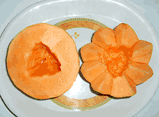
|
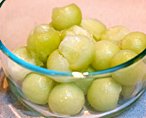 |
| Muskmelon sections! | Honeydew melon balls! Photo courtesy: sethbaur |
Here are some serving tips:
Enjoy fresh cantaloupe as is, without any additional ingredients, to savor its delicious, natural taste.
Incorporate fruit sections into fruit salads for added flavor and variety.
JCreate nutritious and tasty items such as jam, sorbet, and juice using muskmelon.
Enhance desserts by adding cantaloupe sections, pairing them with ice cream or custard.
Safety profile
No allergic reactions to muskmelons have been reported thus far, making them safe for consumption during pregnancy and while nursing. However, as members of the Cucurbita family, some fruits may contain cucurbitacin toxin. Therefore, it's advisable to avoid unripe or bitter-tasting melons. (Medical disclaimer).
Read further on:
≻≻ Do Potassium-Rich Foods Help Lower Blood Pressure?
≻≻-Horned Melon Nutrition Facts and health benefits.
≻≻-Pepino Melon Nutrition Facts and health benefits.
≻≻-Galia Melon Nutrition Facts and health benefits.
≻≻-Back to Fruits from Cantaloupe nutrition facts. Visit here for an impressive list of all kinds of fruits with complete illustrations of their nutrition facts and health benefits.
≻≻-Back to Home page.
Further Reading and Resources:
Stanford School of Medicine Cancer information Page- Nutrition to Reduce Cancer Risk.
Specialty melons-University of Kentucky -PDF.