Shallots nutrition facts
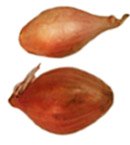
Shallots or eschalots are long, slender, underground fleshy stems in the Allium family of tunicate bulb vegetables. In general, they differ from the onions in being smaller and growing in clusters of bulbs from each plant-root system. The bulbs are characteristically less pungent than that of onions and garlic, which makes them one of the favorite ingredients in cuisine across the regions.
Botanically, it too like its fellow bulb and stem (leeks) vegetables belongs to the Alliaceae family, in the genus, Allium.
Scientific name: Allium cepa var. aggregatum.
 |
 |
| Shallot. Photo: joelk75 |
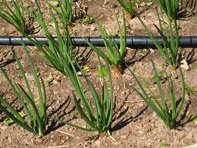
Allium cepa var. aggregatum in a field. Photo: malibu |
This bulb vegetable probably originated in the Central Asian region. Today, it is the major commercial crop on all continents, particularly in Asia and Africa.
Shallots are cool-season perennials. However, they can be grown as annual crops, just like onions. The quickest way to raise them is by implanting 'ready-made sets' that are normally available from nearby nurseries.
Shallot grows quickly. It reaches about 50 cm in height and produces 1-5 cloves of bulblets just underneath the soil surface. The whole crop takes about 100 days when the bulbs are ready for harvesting. Mature bulbs are then air-dried and stored in the same manner as onions.
Like in other allium species, shallot's top greens and flower heads are also eaten in many parts of the world.
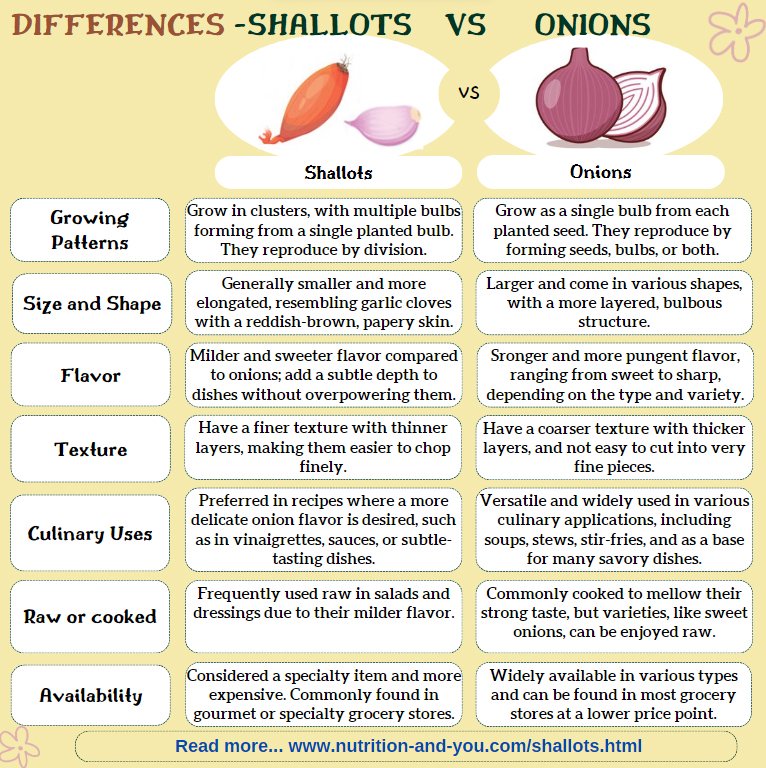
Find the below infographic- Differnces between onions and shallots
 |
7 Amazing Health Benefits of Shallots
Overall, shallots have a better nutrition profile than onions. On a weight-per-weight basis, they have more antioxidants, minerals, and vitamins than onions.
They are a rich source of flavonoid antioxidants such as quercetin, kaempferfol, etc. Further, they contain sulfur antioxidant compounds such as diallyl disulfide, diallyl trisulfide, and allyl propyl disulfide. These compounds convert to allicin through enzymatic action following disruption of their cell surface while crushing, and chopping.
Research studies show that allicin reduces cholesterol production by inhibiting the HMG-CoA reductase enzyme in the liver cells. Further, it was also found to have antibacterial, antiviral, and anti-fungal activities.
Allicin also decreases blood vessel stiffness by releasing vasodilator chemical nitric oxide (NO) and thereby helps bring a reduction in total blood pressure. Further research studies suggest that allicin inhibits platelet clot formation inside the blood vessels, and thereby helps decrease an overall risk of coronary artery disease (CAD), peripheral vascular diseases (PVD), and stroke attacks.
The phytochemical compounds allium and Allyl disulfide in eschalots have anti-mutagenic (protects from cancers) and anti-diabetic properties (helps lower blood sugar levels in diabetics).
Shallots hold proportionately more concentration of vitamins and minerals than onions, especially vitamin-A, pyridoxine, folates, thiamin, vitamin-C, etc. Pyridoxine (B-6) raises GABA chemical levels inside the human brain which helps to soothe nervous irritability. Also, 100 g fresh shallots carry 1190 IU (35% RDA) of vitamin A. Vitamin A is a powerful antioxidant that helps protect from lung and oral cavity cancers.
Further, they are also good in minerals and electrolytes than onions; particularly iron, calcium, copper, potassium, and phosphorus.
| Principle | Nutrient Value | Percent of RDA |
|---|---|---|
| Energy | 72 Kcal | 3.6% |
| Carbohydrates | 16.80 g | 13% |
| Protein | 2.50 g | 5% |
| Total Fat | 0.10 g | 0.5% |
| Cholesterol | 0 mg | 0% |
| Vitamins | ||
| Folates | 34 µg | 9% |
| Niacin | 0.200 mg | 1.5% |
| Pantothenic acid | 0.290 mg | 6% |
| Pyridoxine | 0.345 mg | 26.5% |
| Riboflavin | 0.020 mg | 2% |
| Thiamin | 0.060 mg | 5% |
| Vitamin A | 1190 IU | 35% |
| Vitamin C | 8 mg | 13% |
| Electrolytes | ||
| Sodium | 12 mg | 1% |
| Potassium | 334 mg | 7% |
| Minerals | ||
| Calcium | 37 mg | 4% |
| Copper | 0.088 mg | 10% |
| Iron | 1.20 mg | 15% |
| Magnesium | 21 mg | 5% |
| Manganese | 0.292 mg | 13% |
| Phosphorus | 60 mg | 8.5% |
| Selenium | 1.2 µg | 2% |
| Zinc | 0.40 mg | 4% |
Selection and storage
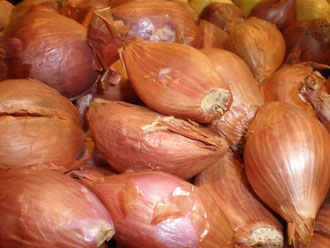 |
| Shallots Photo:joebielawa |
Fresh shallots can be readily available during the spring and early summer seasons. Wet and humid conditions hamper their flavor and storage life. In the supermarkets, however, you can choose from fresh, frozen, canned, pickled, powdered, and dehydrated shallots.
While buying fresh produce, look for well-developed, clean, uniform bulbs with dry, thin, coppery-brown, outer scales.
Like in onions, avoid those that show sprouting or signs of black mold (a type of fungal attack) as they indicate old stock. Also, poor-quality bulbs often bulbs often inflicted by soft spots, moisture at their neck, and dark patches, which may all be indications of decaying.
Unlike onions, eschalots tend to perish early. At home, store them in a cool dark place away from moisture and humid conditions where they keep fresh for several days. They can also keep well in the refrigerator; however, you should use them soon after you remove them from the fridge since they tend to spoil soon if they are kept at room temperature for a while.
Preparation and serving methods
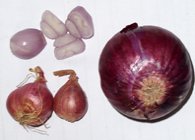 |
| Shallots and onion; note the size difference. |
Unlike in onions, shallots will not hurt your palate, or sinuses, or burn the tongue. They are sweeter and gently pungent in flavor than onions. Also, unlike garlic, they have less of an impact on your breath smell.
To prepare, trim the ends using a paring knife. Then peel the outer 2-3 layers of skin until you find fresh thick pinkish-white whorls. Small shallots may be used as a whole, or you can slice or cut them into fine cubes/rings depending upon the recipe, in a way similar to onions.
Being smaller, eschalots cook easily. Eschalots, indeed, cook easily because of their smaller size.
Here are some serving tips:

|
| Shallot served over a sandwich! Photo: addpowers |
Fresh shallots are being either used in salads; whole or chopped into cubes.
In much of Asian cooking, the bulbs are employed liberally in the preparation of curries, gravy, chutney, soups, stews, and paste.
|
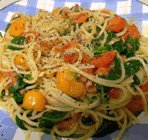
| Spaghetti prepared with spinach, eschalots and cherry tomatoes. Photo: naotakem |
Thinly sliced bulbs caramelized and served as a spicy garnish over burgers, grilled chicken, parathas, kachori, pakora (India and Pakistan), etc.
Like in onions, they are one of the common ingredients in pasta, pizza, noodles, stew-fries, spice stuffing, etc.
The bulbs are also used in pickling, sauces, etc.
Safety profile
Although not as severe as onions, raw shallots can cause irritation to skin, mucosa membranes, and eyes. This effect is because of the release of allyl sulfide gas while chopping or slicing them, which when comes in contact with a moist surface turns into sulfuric acid.
Allyl sulfide is concentrated more at the ends, particularly in the root end. Its effect can be minimized by immersing the trimmed bulbs in cold water for a few minutes before you chop or slice them. (Medical disclaimer).
Also read on <<Vidalia Onion Nutrition Facts
Read on <<Onion Nutrition Facts & Health Benefits
≺≺ Back to Vegetables from Shallots. Visit here for an impressive list of vegetables with complete illustrations of their nutrition facts and health benefits.
≺≺ Back to Home page.
Further reading:
Refer Stanford School of Medicine Cancer information Page-Nutrition to reduce cancer risk (Link opens in new window).